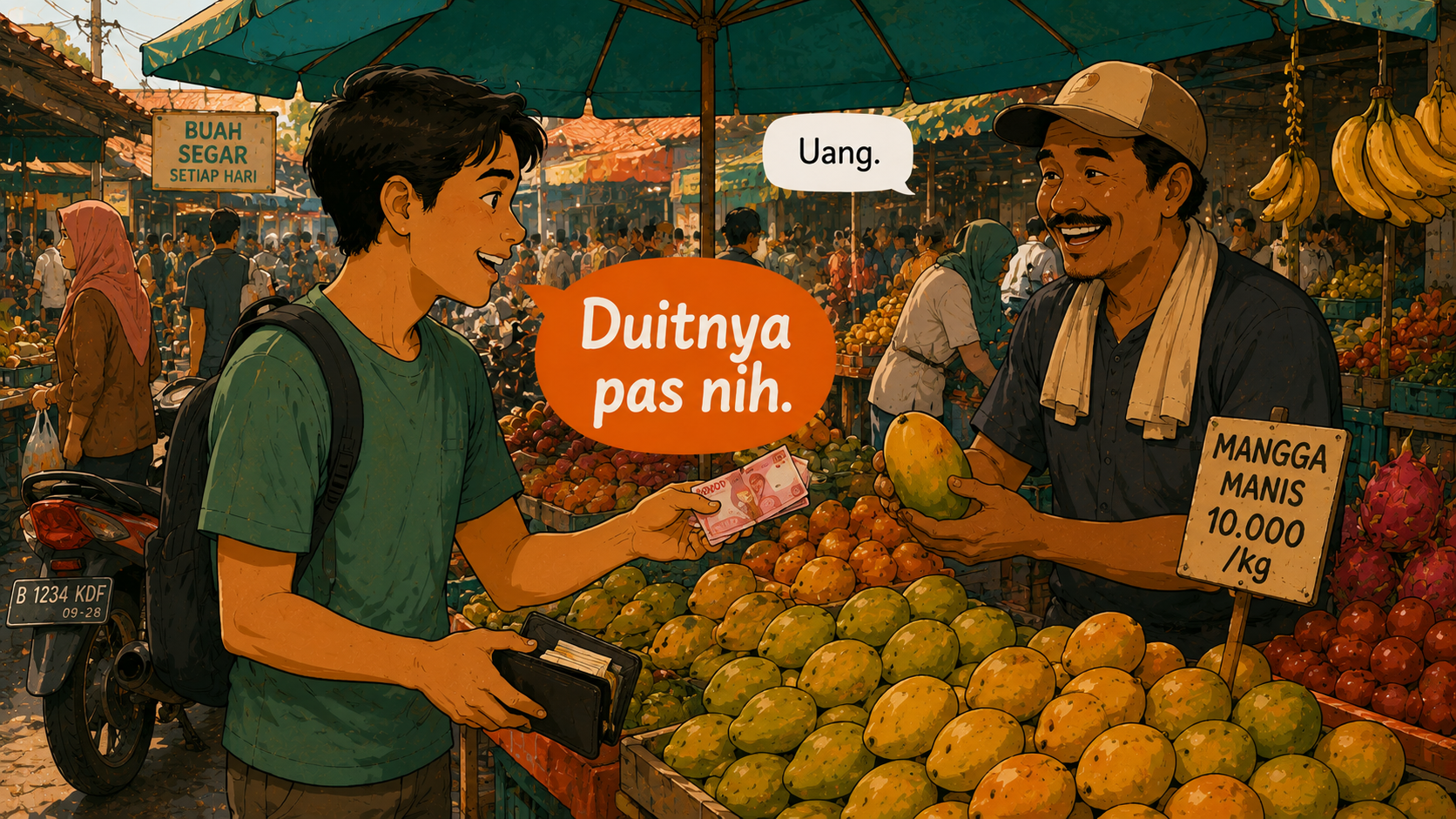
How to Say 'Uang' in Casual Indonesian (Duit)
Uang is the textbook word for money in Indonesian.. but duit is what people actually say. Plus the slang terms for common rupiah amounts.
Thoughts on language learning, Indonesian culture, and building Slangua.
Explore by topic
The strongest guides are grouped by what you are trying to sound more natural doing.

The register map for sounding natural instead of textbook-stiff.
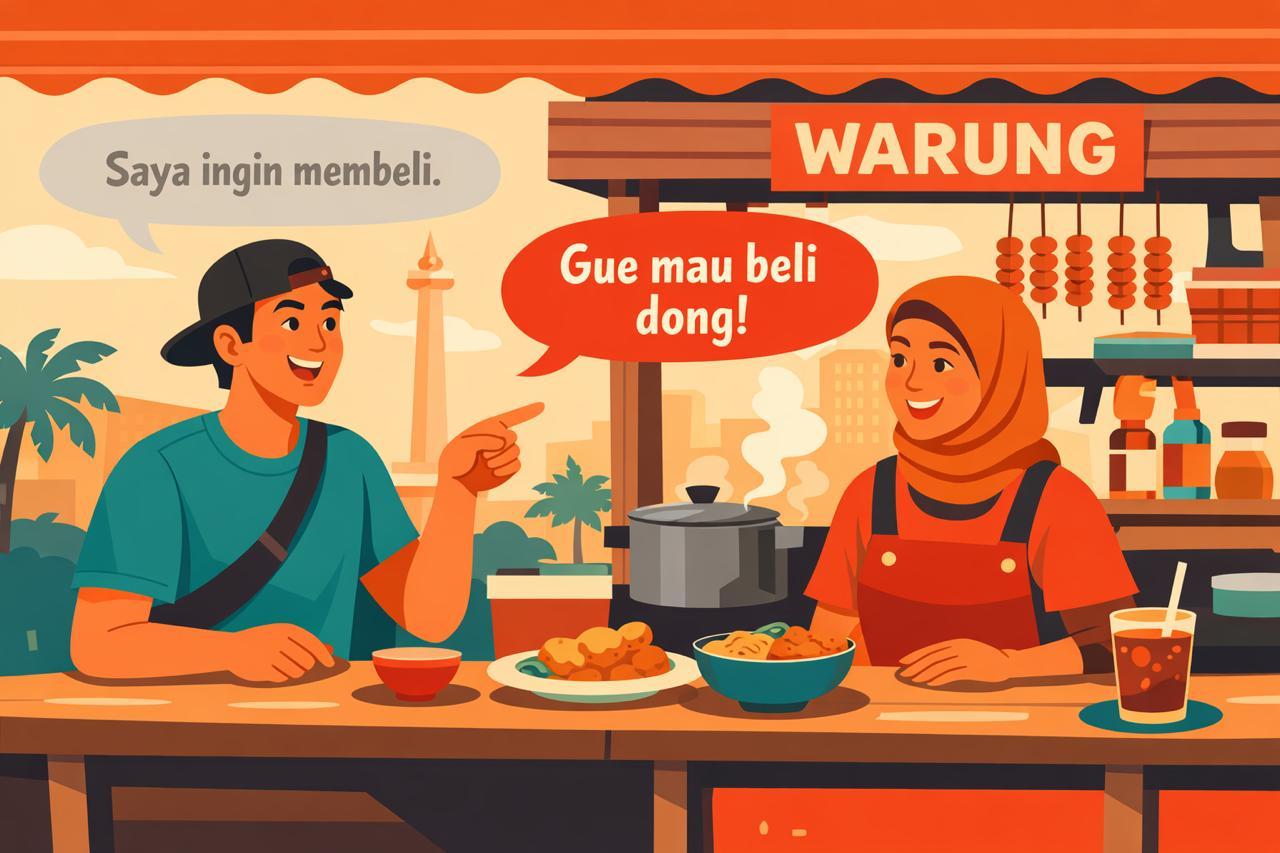
Gue, lo, filler words, texting shortcuts, and the social language locals use.

Formal verbs and their spoken forms, from membaca to ngirim.
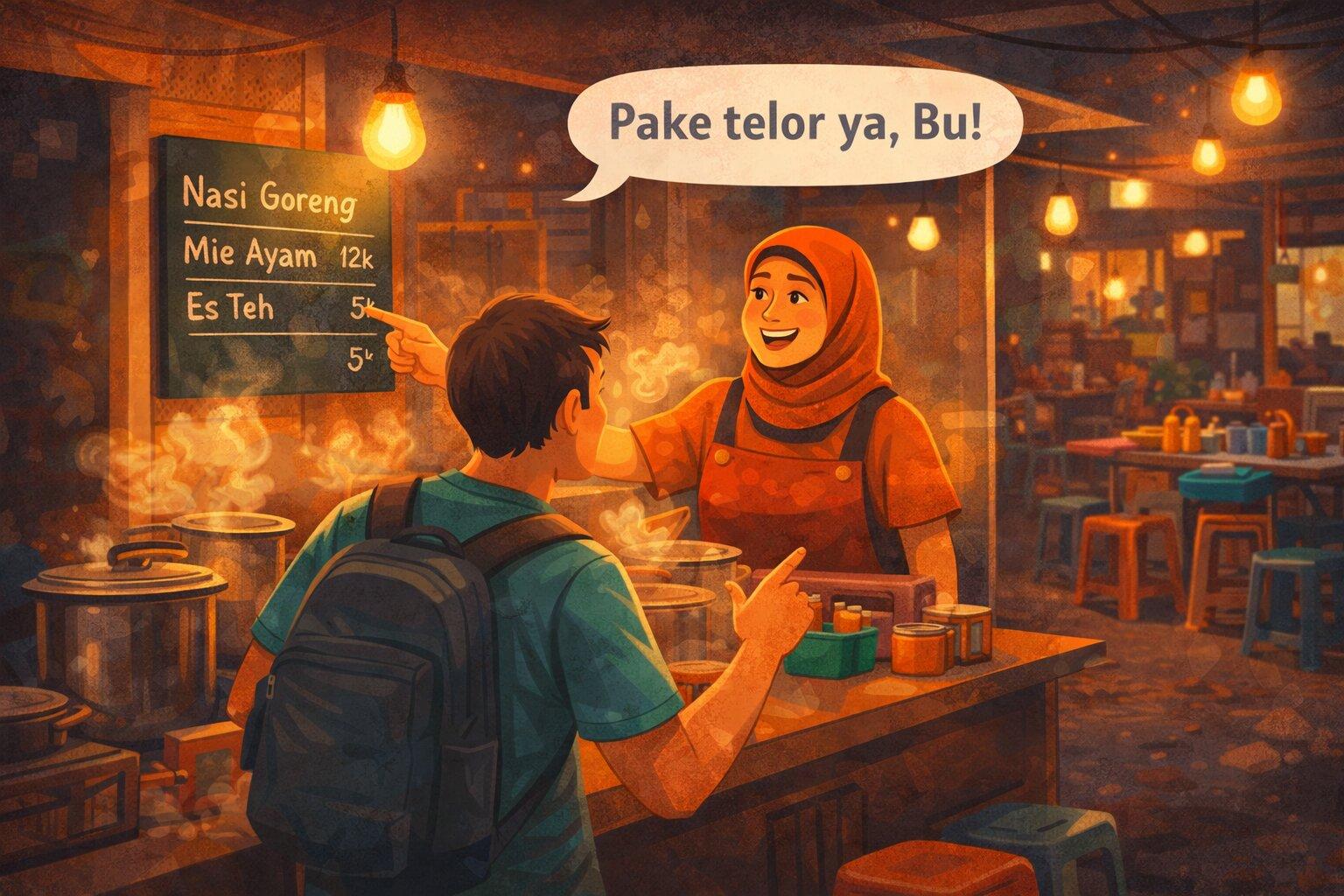
Warungs, markets, ride-hailing chats, greetings, and everyday moments.
Uang is the textbook word for money in Indonesian.. but duit is what people actually say. Plus the slang terms for common rupiah amounts.

Terima kasih is textbook Indonesian for thank you. But nobody actually talks like that. Here's what people really say - makasih, thanks, tengkyu, and more.

Teman sounds like a textbook. Indonesians say temen, bestie, bro, sob, and a bunch more. Here's the full lineup of casual friend words you actually need.

Sudah is textbook Indonesian for 'already.' Nobody actually says it. Learn udah, the casual version used in 90% of daily conversation.

Stop sounding like a textbook. Learn the casual Indonesian connectors real people use — makanya, jadinya, terus, abis itu, soalnya, biar — and ditch oleh karena itu forever.

Meskipun is the textbook 'although' but it's too formal for everyday speech. Learn how Indonesians actually say 'even though' with walaupun, walau, and sometimes just tapi.

Nobody says 'menutup' on the street. Learn the casual Indonesian words for closing — tutup, nutup — plus everyday expressions like tutup mulut, tutup mata, and the flexible meaning of 'udah tutup.'
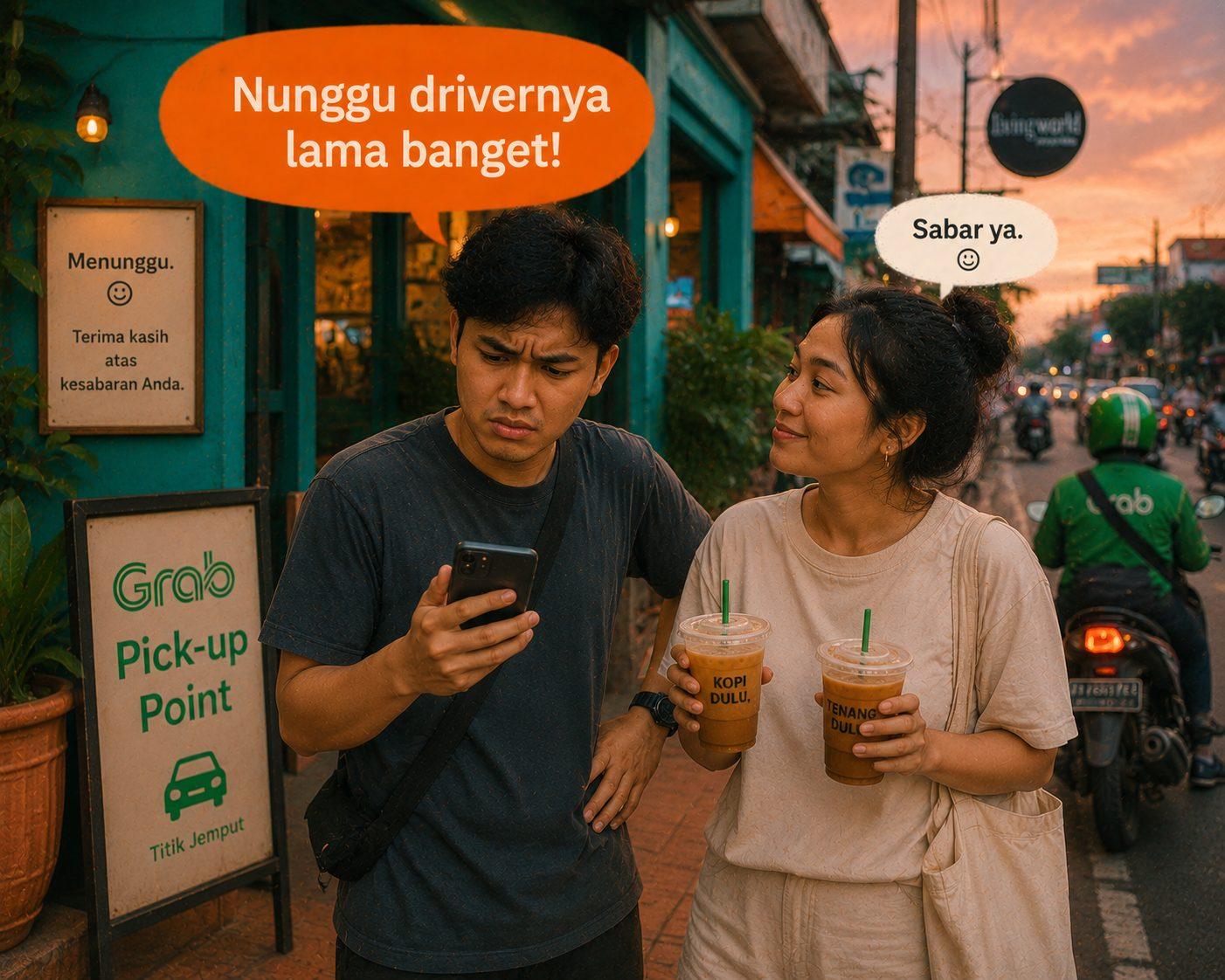
Learn the casual ways Indonesians say 'to wait' in everyday conversation. From menunggu to nunggu and tunggu, plus the nasal prefix pattern behind it all.
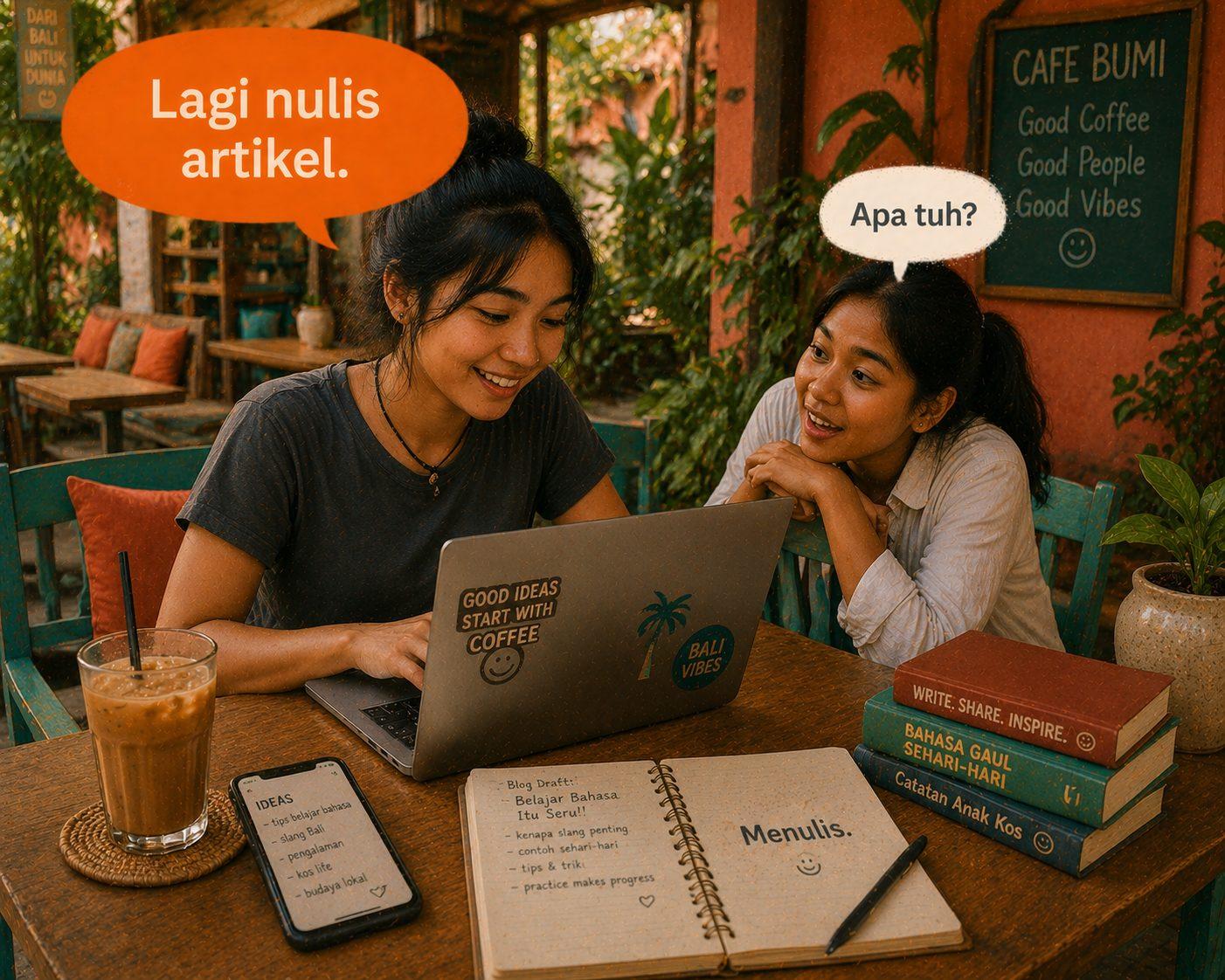
Menulis is the textbook word for 'to write' in Indonesian. In real life, people say nulis. Learn the pattern, common phrases, and related casual verbs.
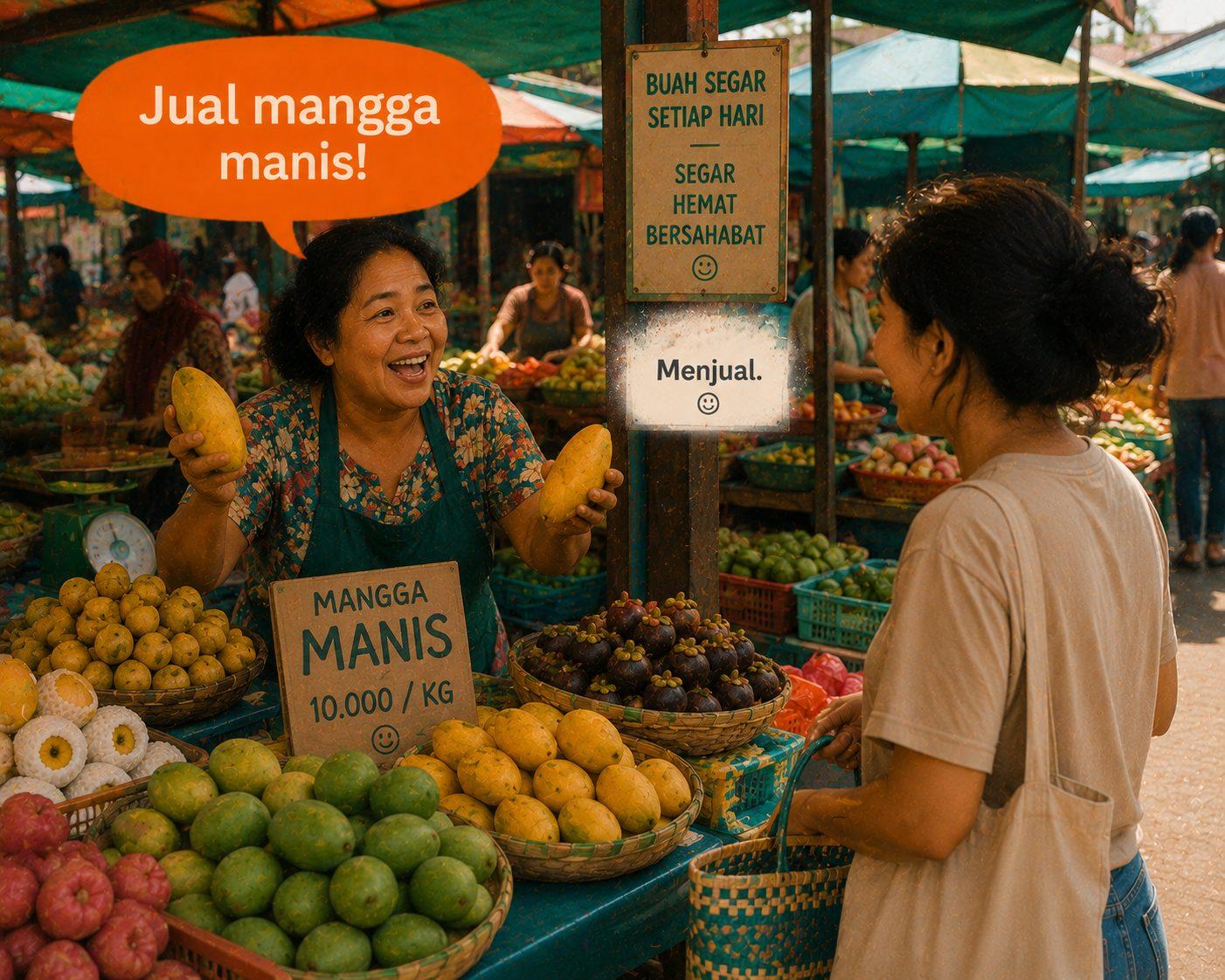
Learn how Indonesians actually say 'menjual' in everyday conversation. Spoiler: nobody says menjual. It's jual, jualan, dijual — and it's everywhere.
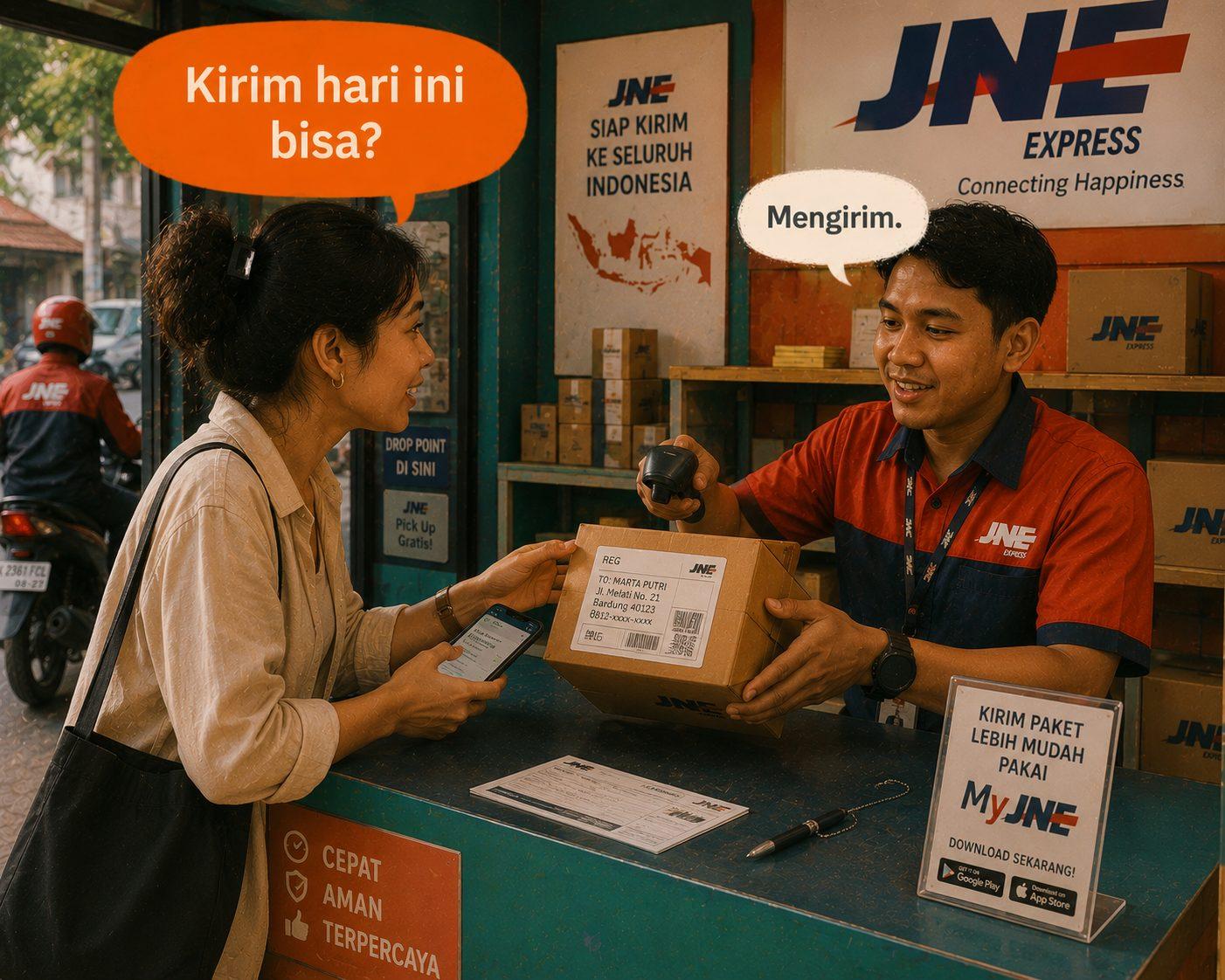
Mengirim is the textbook word for 'to send' in Indonesian.. but nobody actually says it. Here's how kirim and ngirim work in real life.
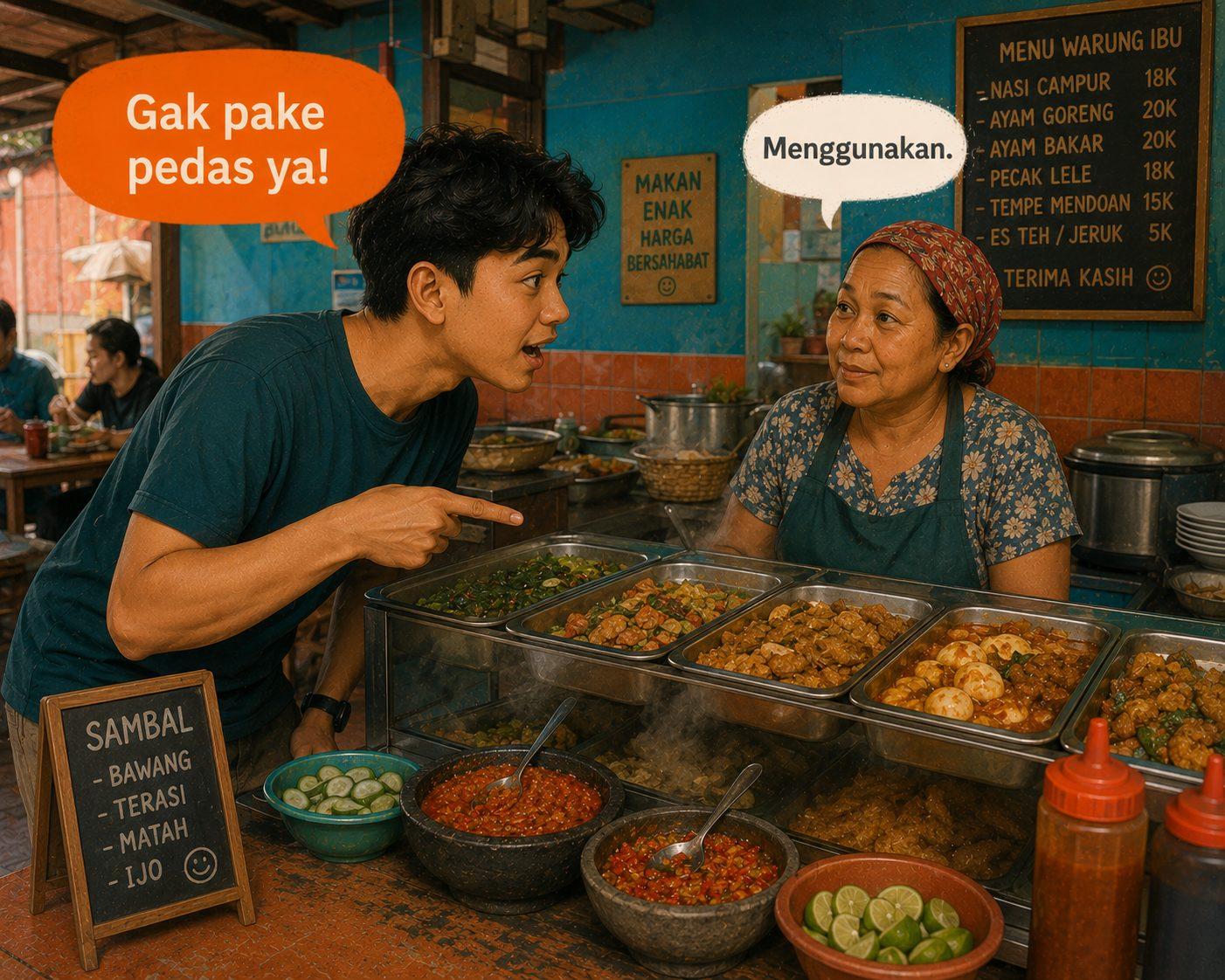
Drop the meng- prefix and sound way more natural. Menggunakan becomes pake in everyday Indonesian conversation.
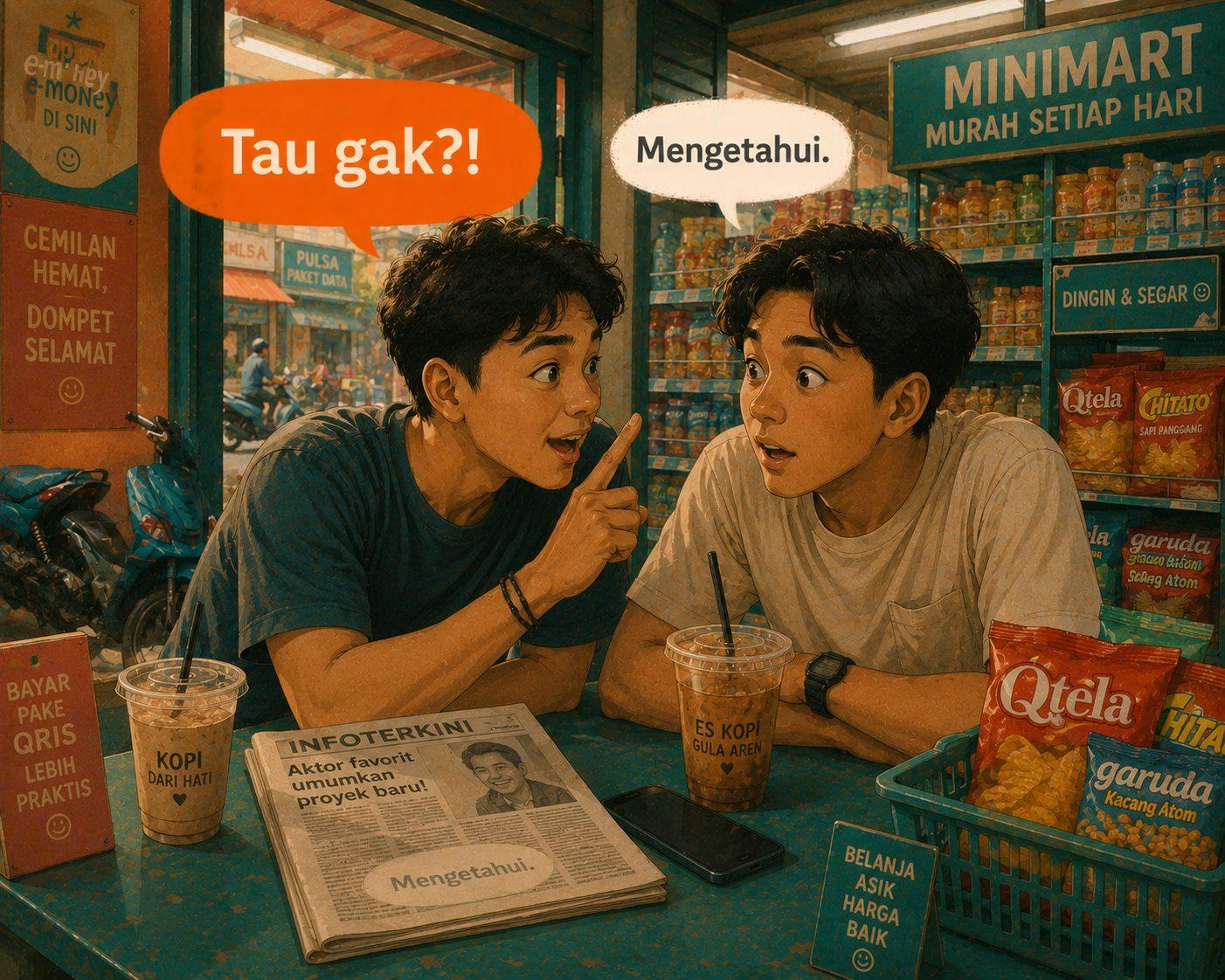
Nobody actually says mengetahui in real life. Learn how Indonesians really say 'to know' with tau, plus common phrases like tau gak, gak tau, and kasih tau.
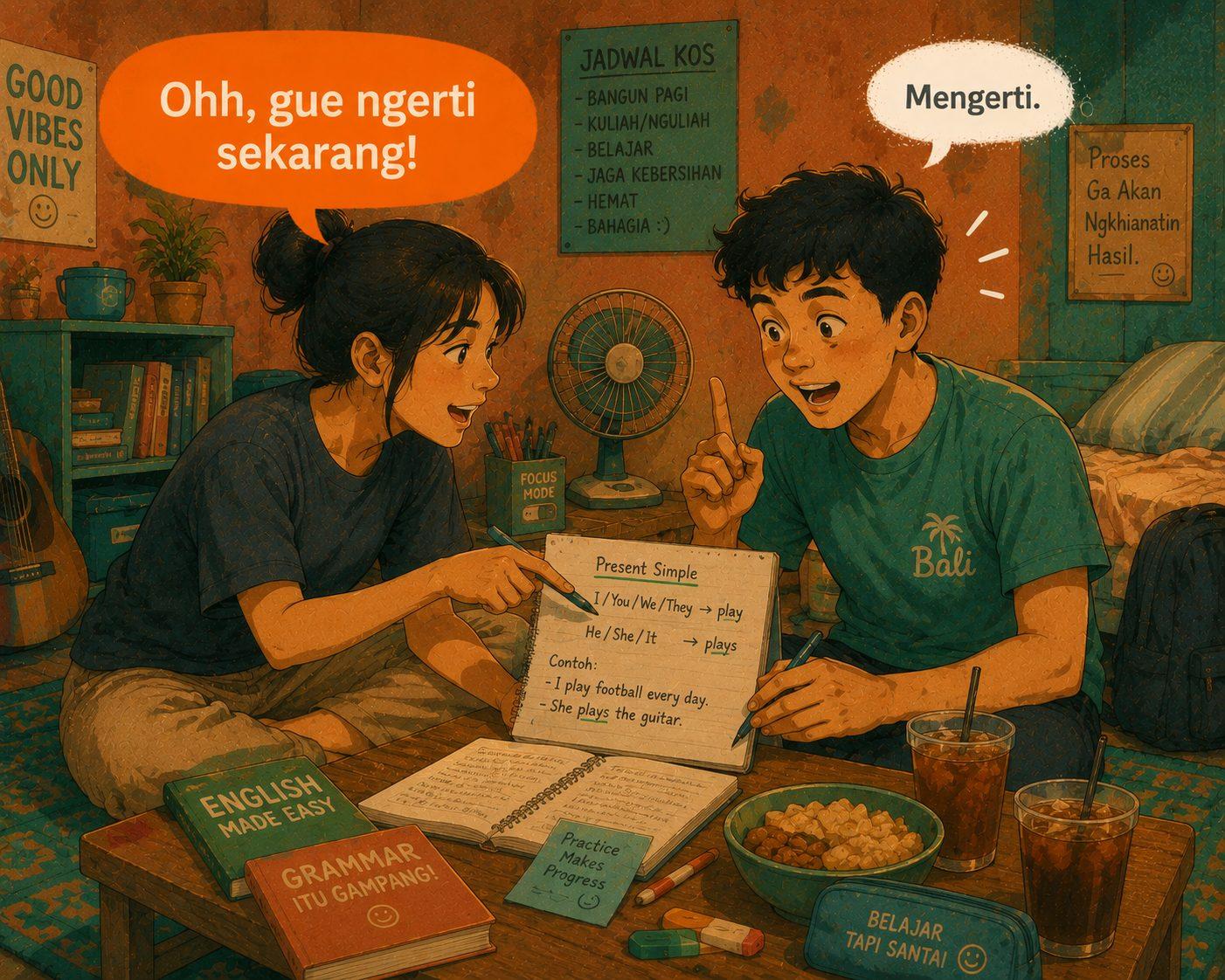
Mengerti is textbook. Ngerti is what Indonesians actually say when they mean 'to understand.' Learn the casual forms, common phrases, and how paham fits in.
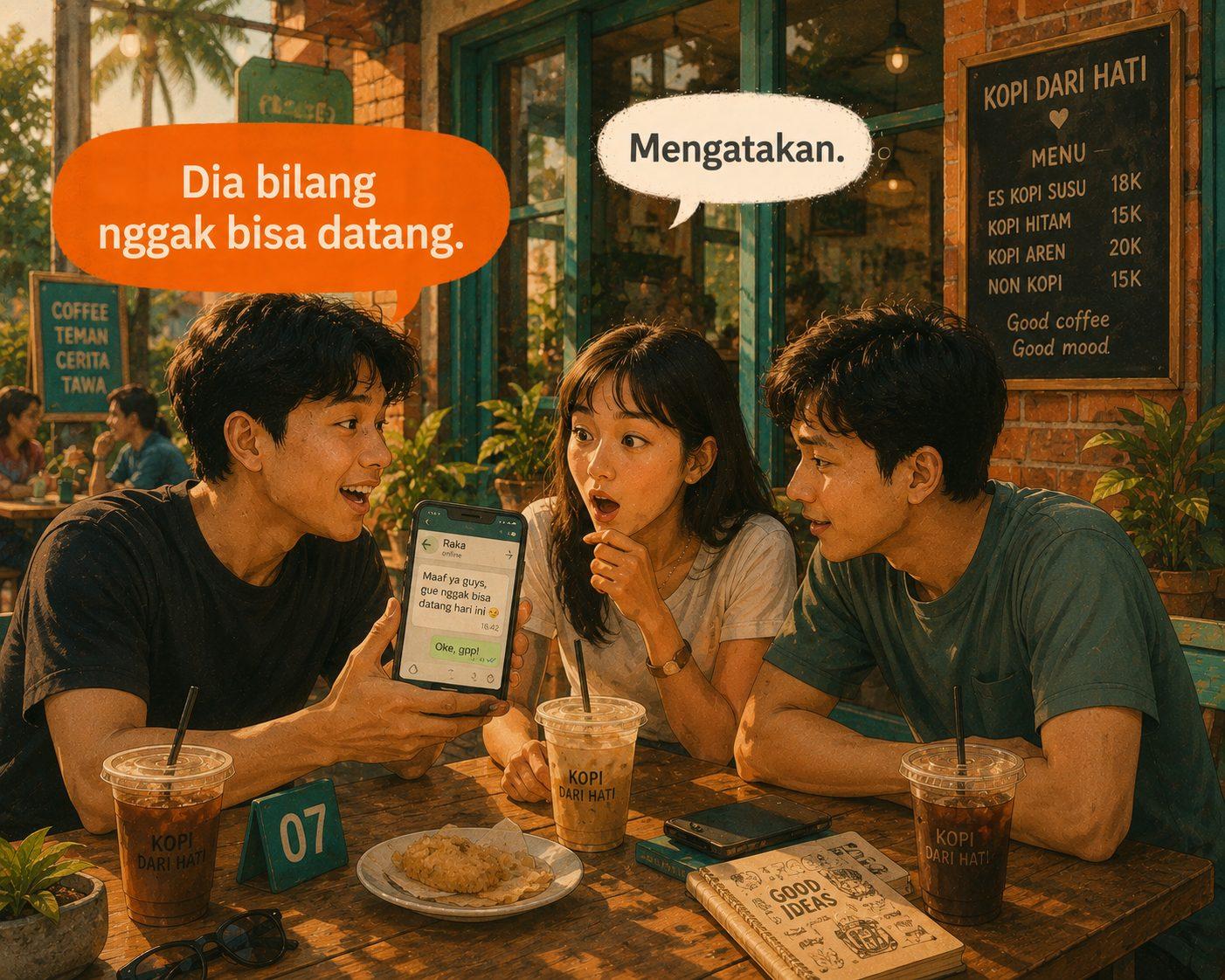
Mengatakan is the formal Indonesian word for 'to say' or 'to tell.' In real life, everyone just says bilang. Here's how it works and why you'll use it 20 times a day.
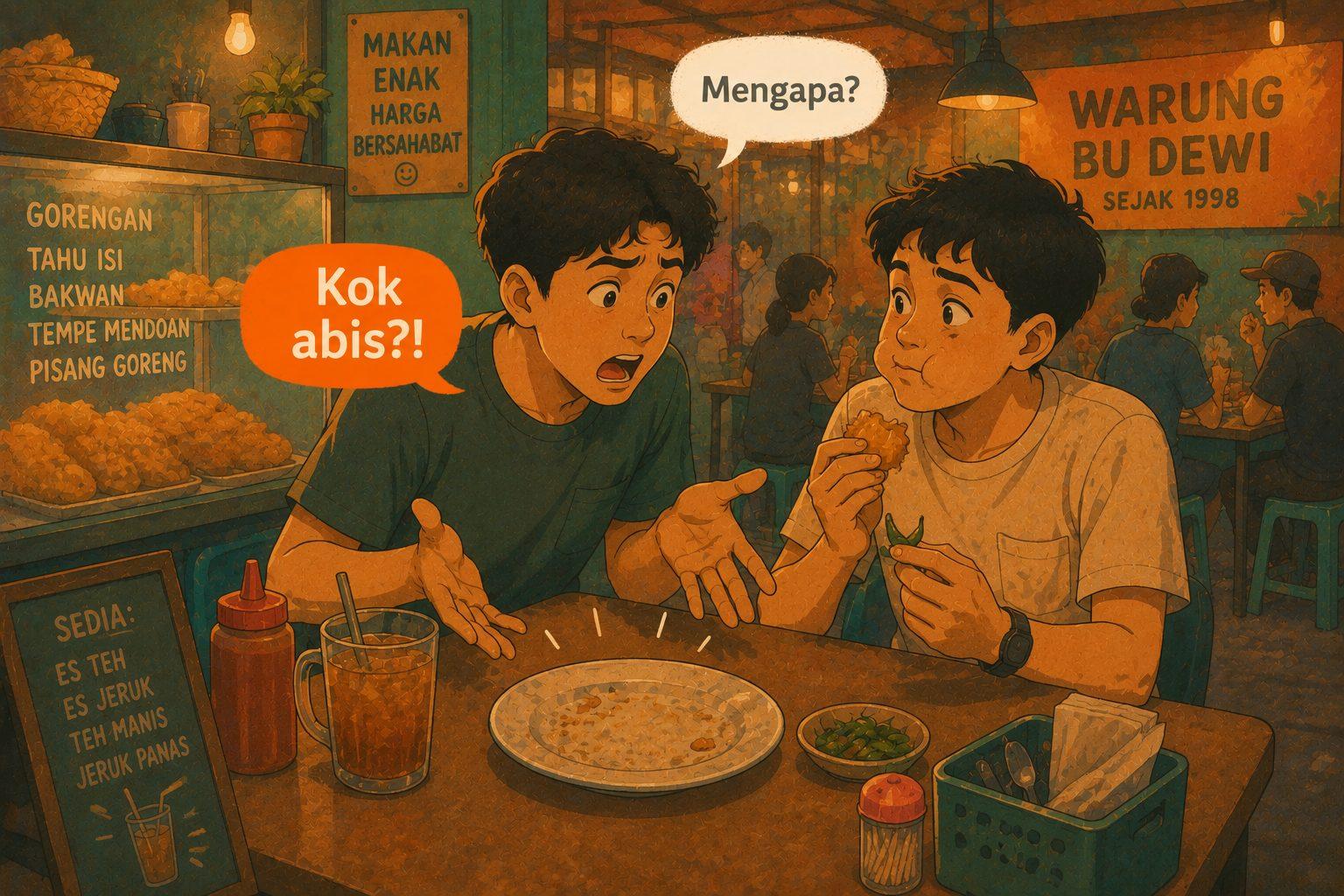
Mengapa is the textbook Indonesian word for 'why' - but real conversations use kenapa. Learn the casual way to ask 'why' plus the versatile particle kok.
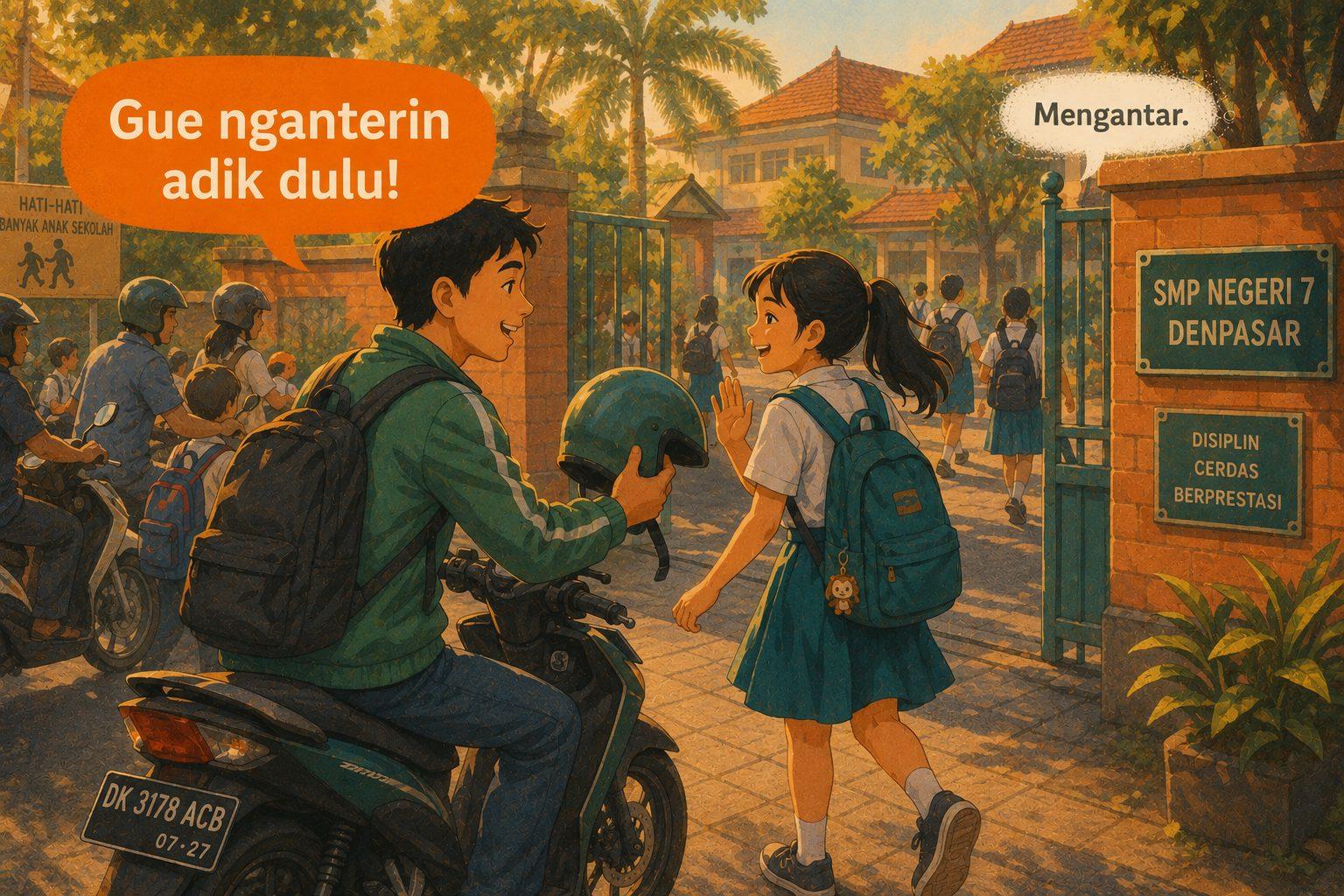
Nobody in Indonesia actually says mengantar. Learn the casual forms — ngantar, antar, anterin — and how ojek and delivery culture made this one of the most-used verbs in daily life.
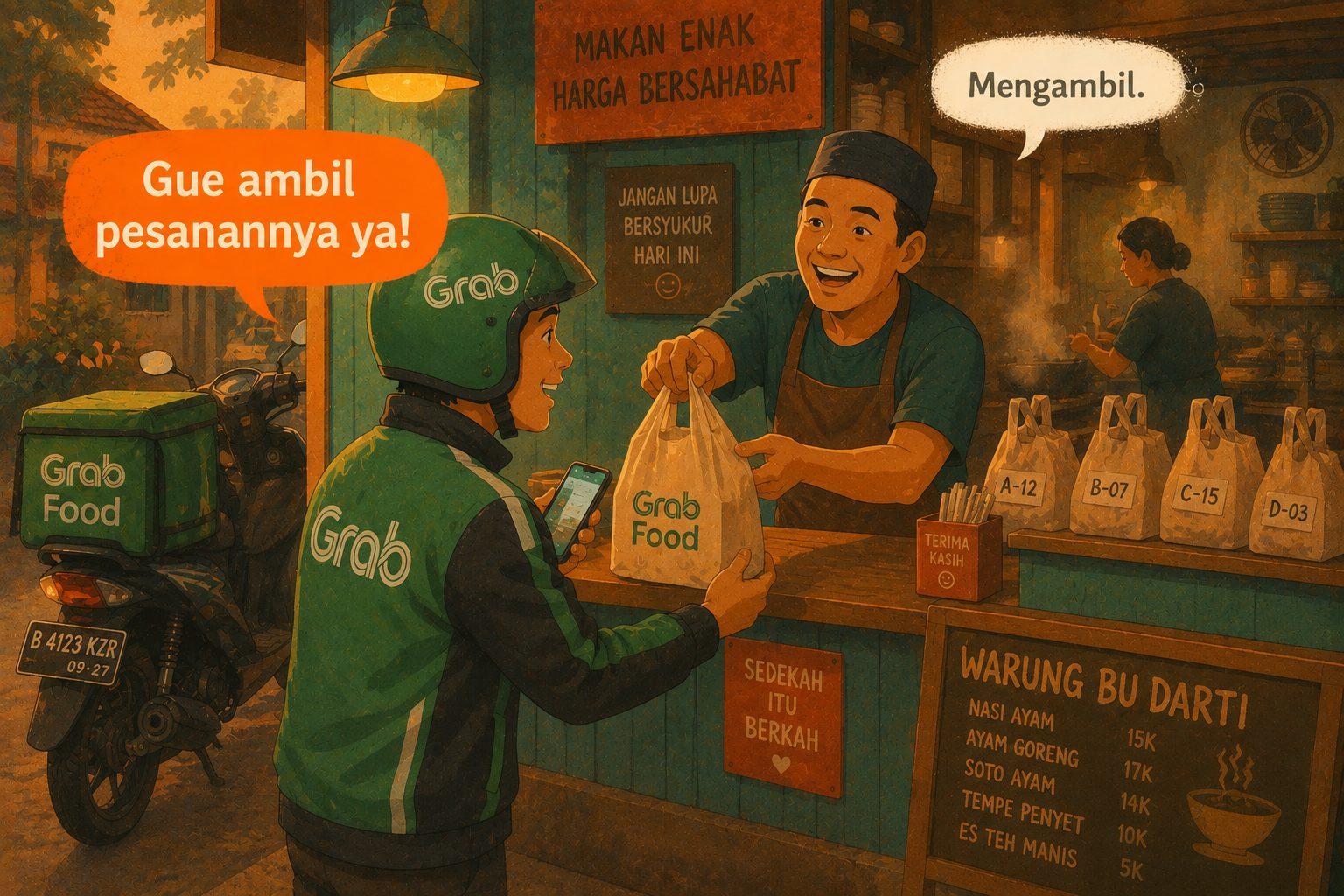
Learn how Indonesians really say 'to take' or 'to pick up' in everyday speech. Two casual forms, both useful.
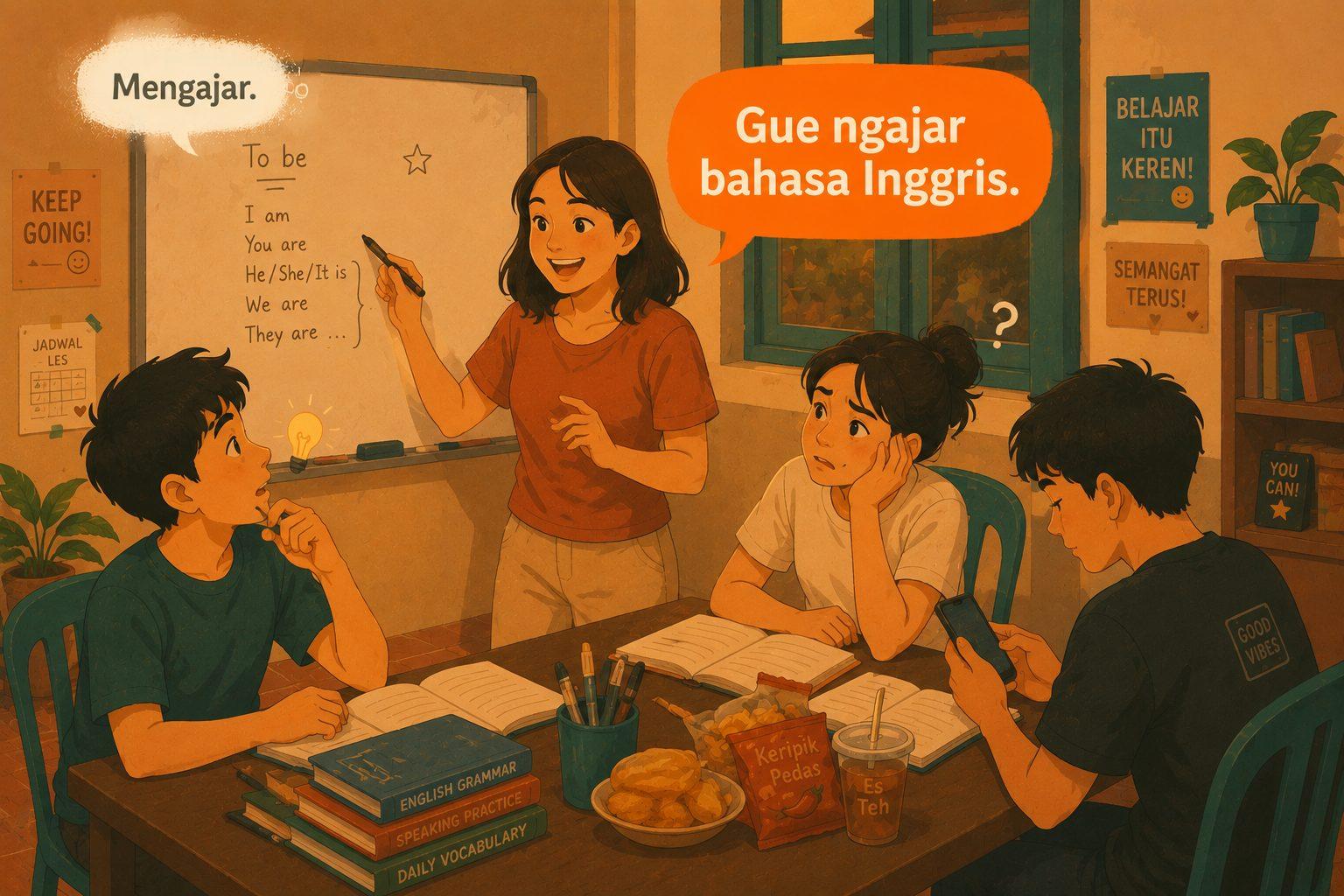
Learn how Indonesians actually say 'teach' in everyday conversation. Mengajar becomes ngajar, plus all the casual education vocab you need — from les privat to bimbel culture.

Mengajak is the textbook word for 'to invite' in Indonesian. But nobody actually says it. Learn how Indonesians really invite people using ngajak, ajak, and the all-powerful yuk.
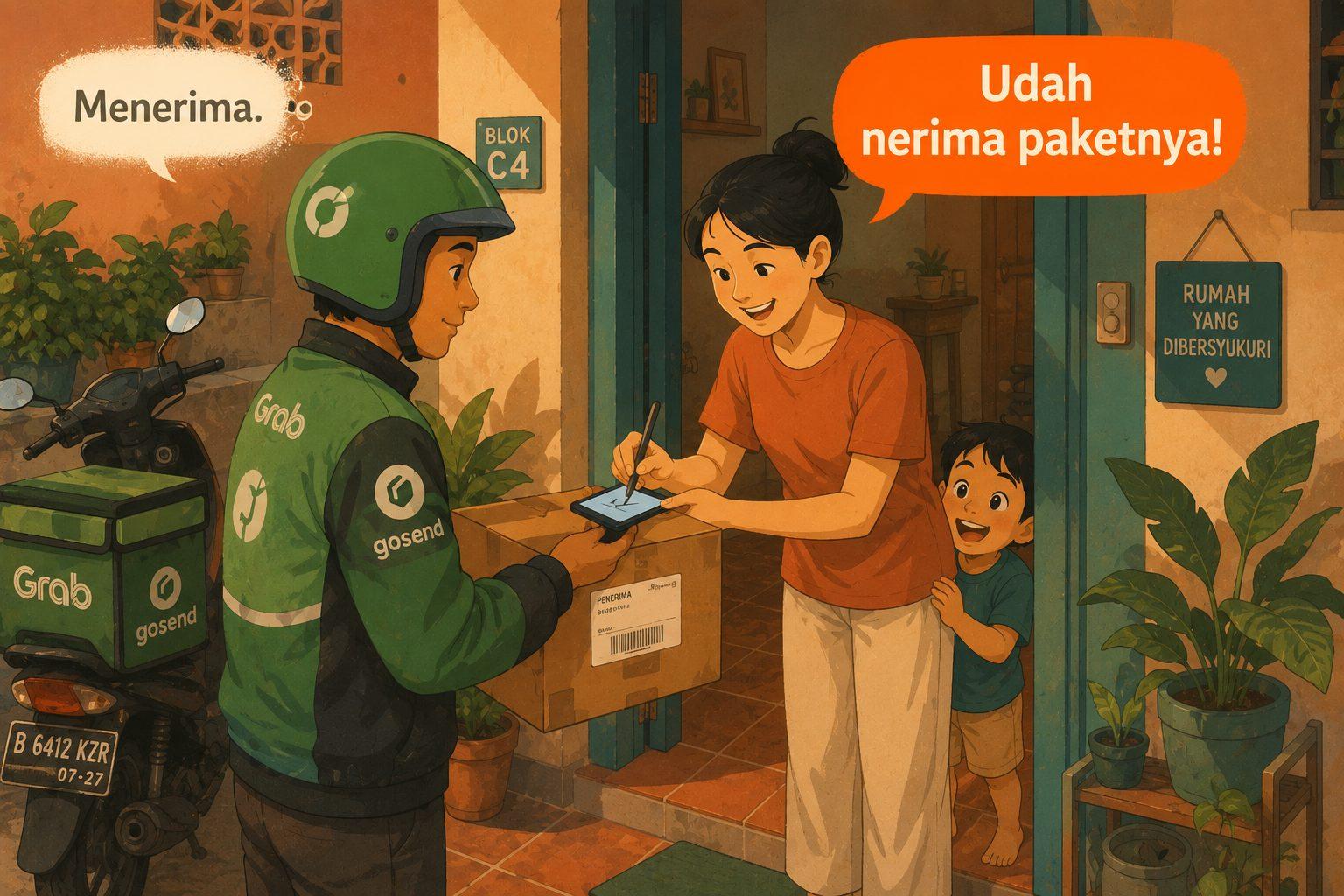
Learn how Indonesians actually say 'menerima' in everyday conversation. Hint: nobody says menerima. It's terima or nerima — and thanks to Shopee and Tokopedia, you'll hear it everywhere.

Learn how Indonesians actually say 'to hear' in everyday conversation. Spoiler: it's not mendengar.
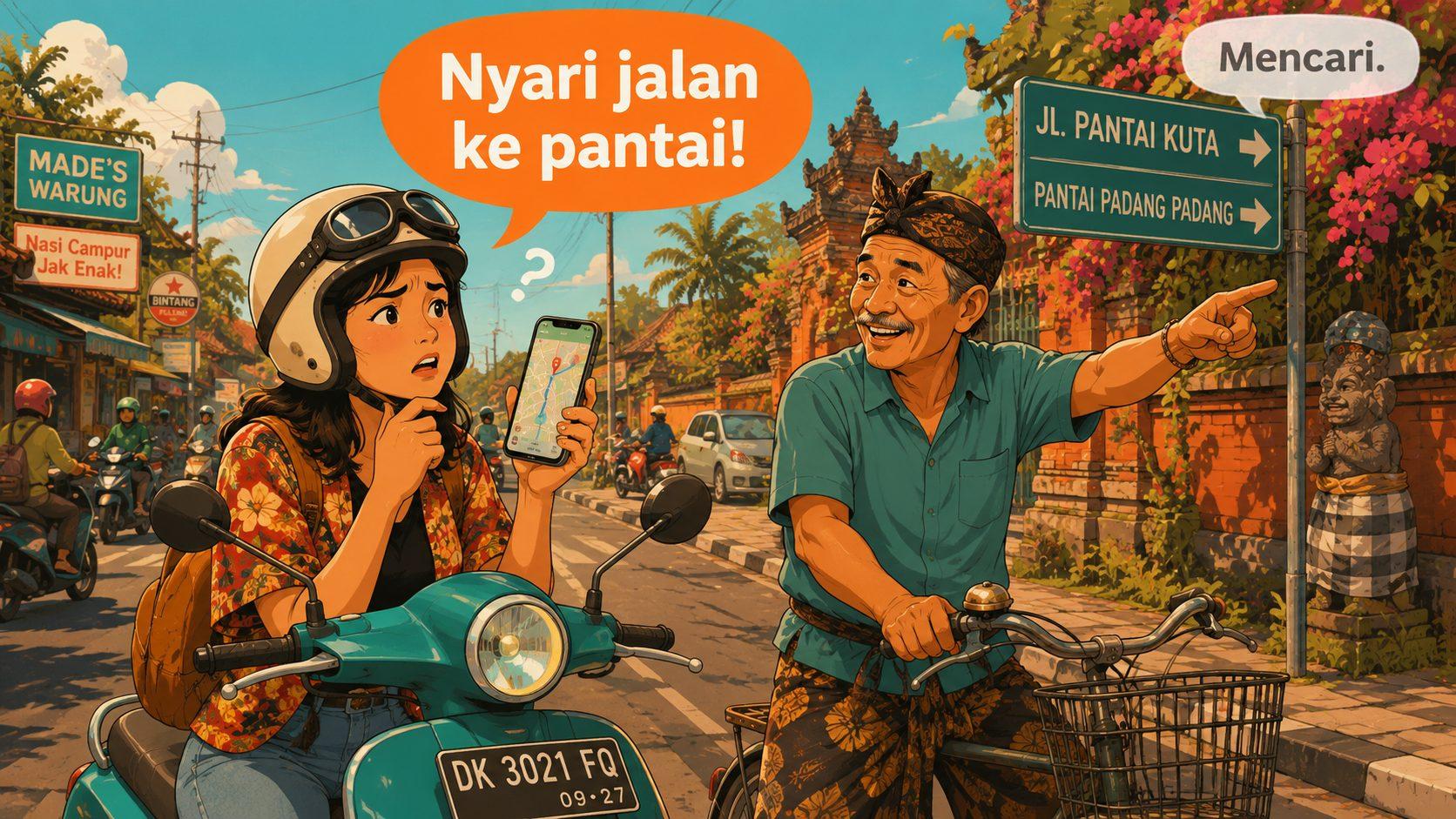
Learn the casual ways Indonesians actually say 'to search' in everyday speech. From formal mencari to street-level nyari.
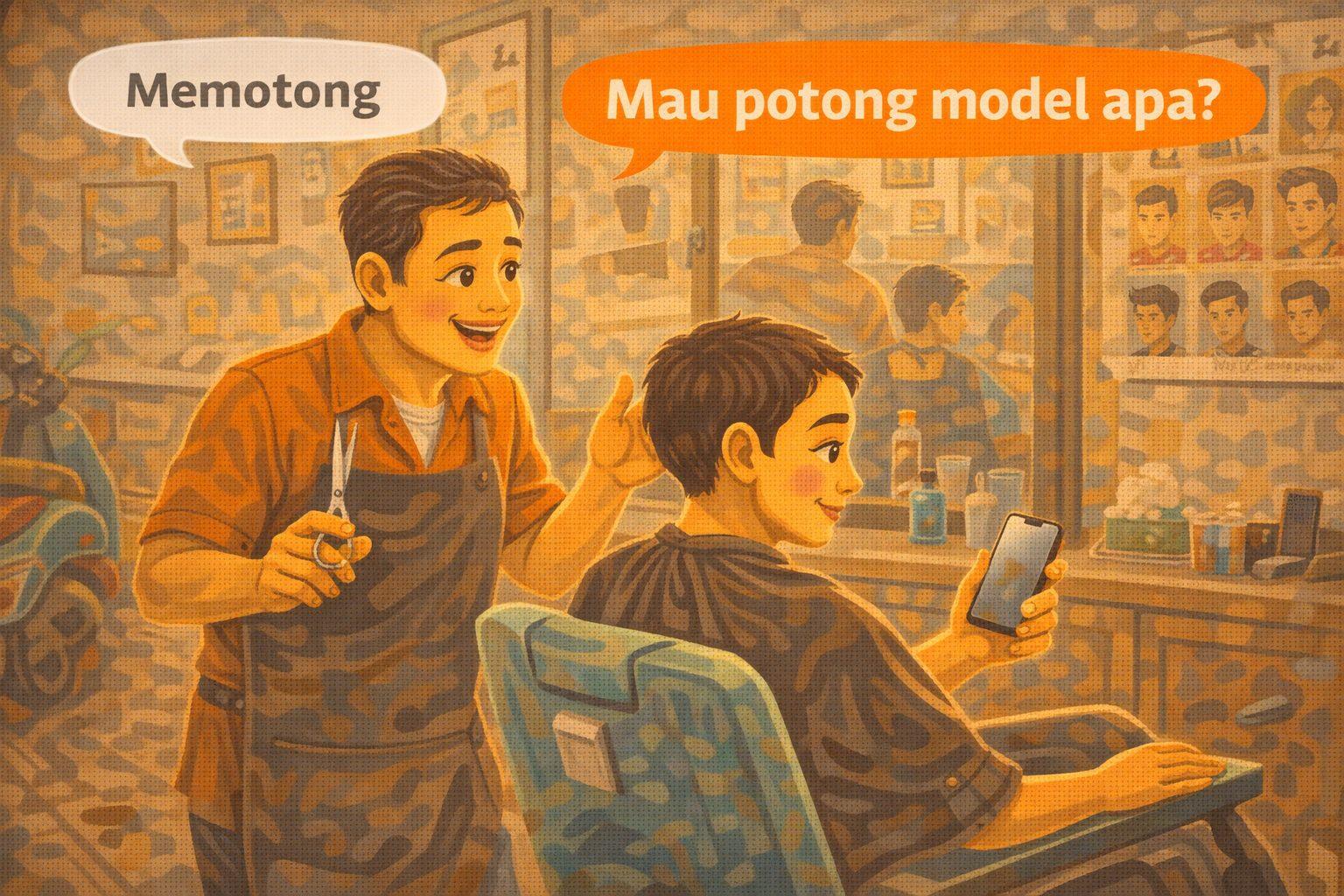
Nobody says memotong in real life. Learn how Indonesians actually say 'to cut' using motong, potong, and all the slang variations you'll hear daily on the streets.

Learn why Indonesians never say 'meminum' in real life. Discover minum, ngopi, es teh manis, and the incredible drink culture that makes Indonesia one of the best places on earth to grab a beverage.
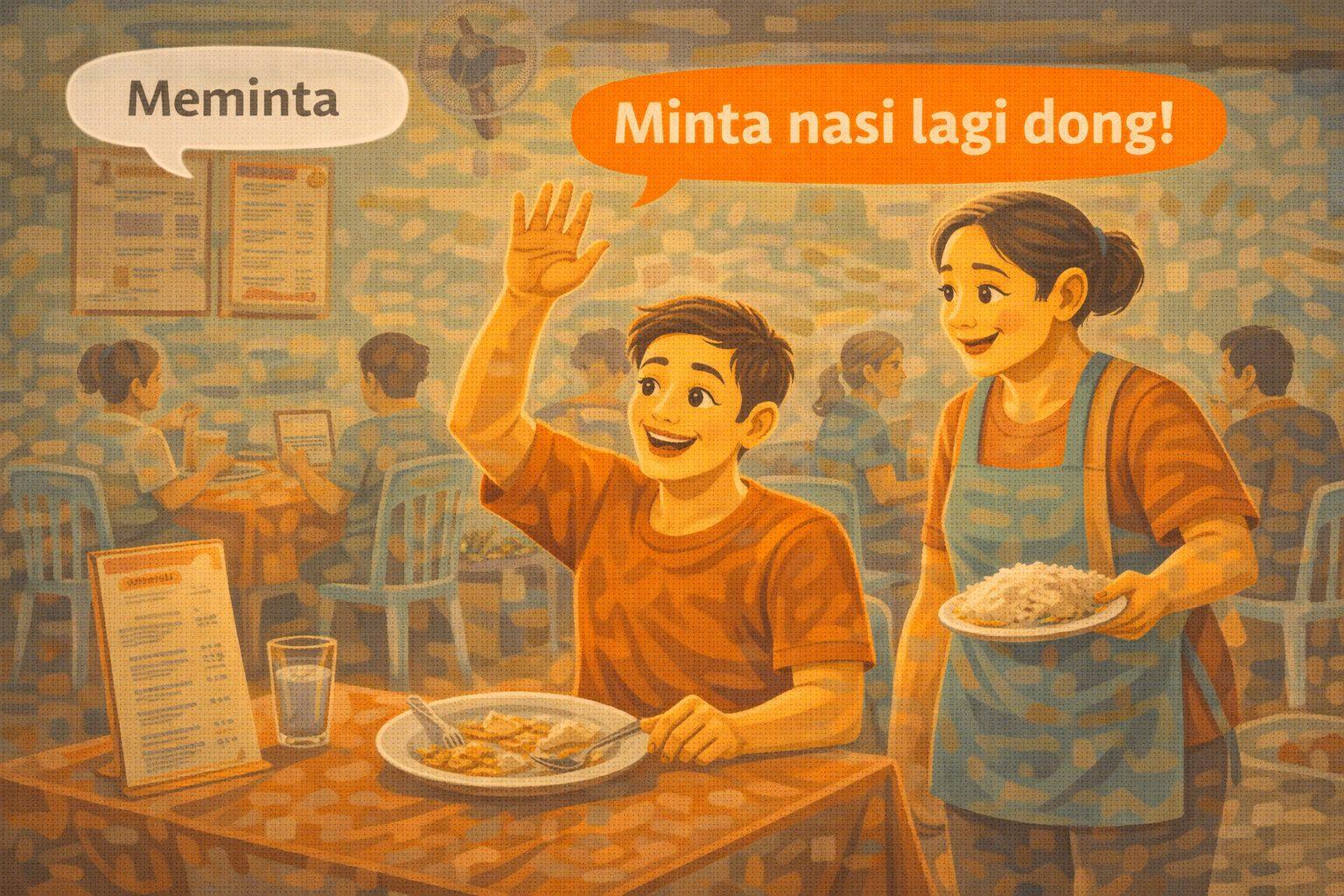
Learn how Indonesians actually say 'to ask for' in everyday conversation. Hint: nobody says meminta.

Memiliki means 'to have' in formal Indonesian. In real conversation, everyone says punya. Learn how to use it naturally.

Membuka is textbook Indonesian. Real people say buka. Learn how this one word covers opening doors, unlocking phones, breaking fast during Ramadan, and more.

Membuat is the textbook word for 'to make' in Indonesian.. but nobody actually talks like that. Learn bikin and its surprisingly versatile patterns.
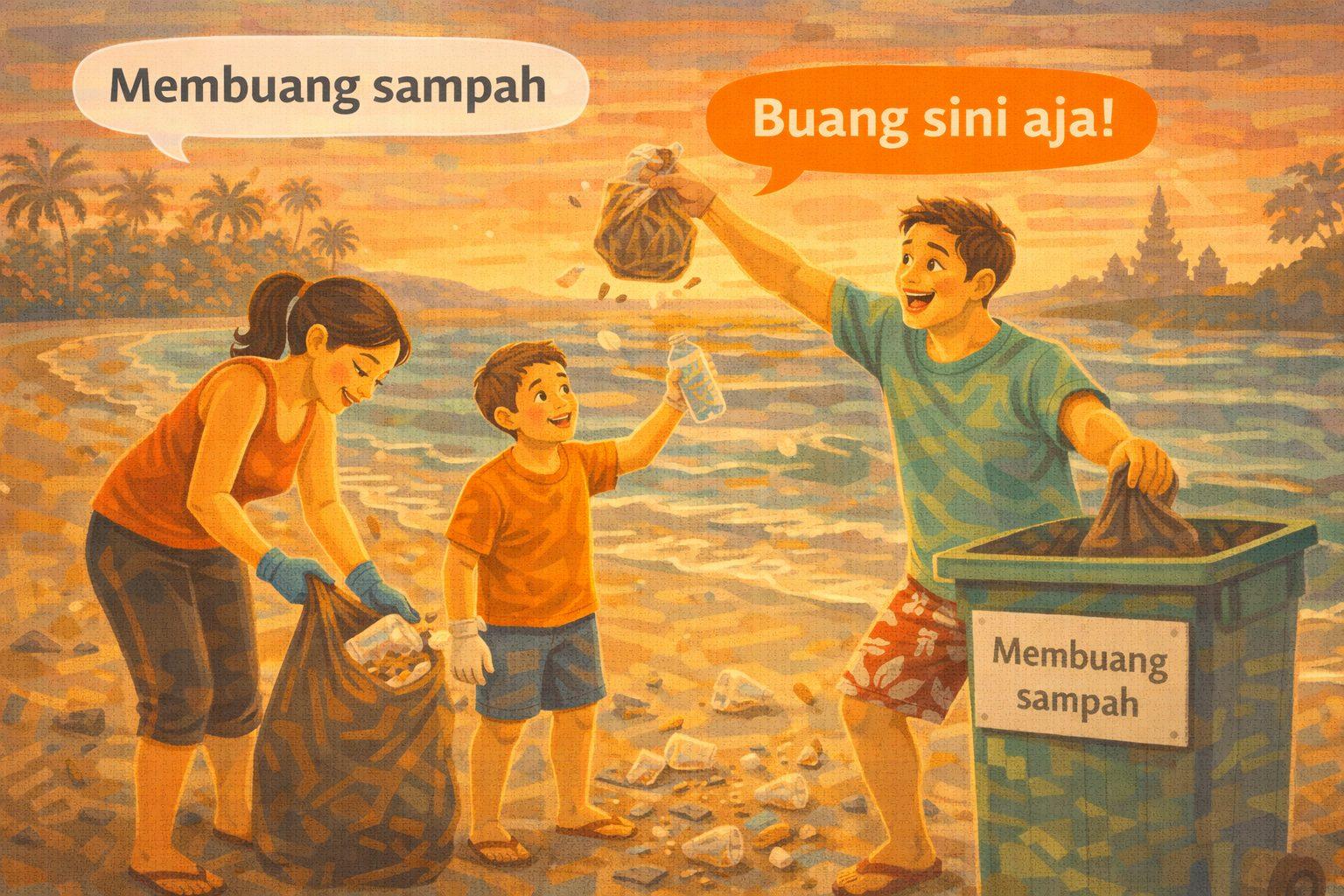
Membuang is textbook Indonesian. Real people say buang. Learn how Indonesians actually use buang in everyday conversation — from throwing trash to bathroom euphemisms.
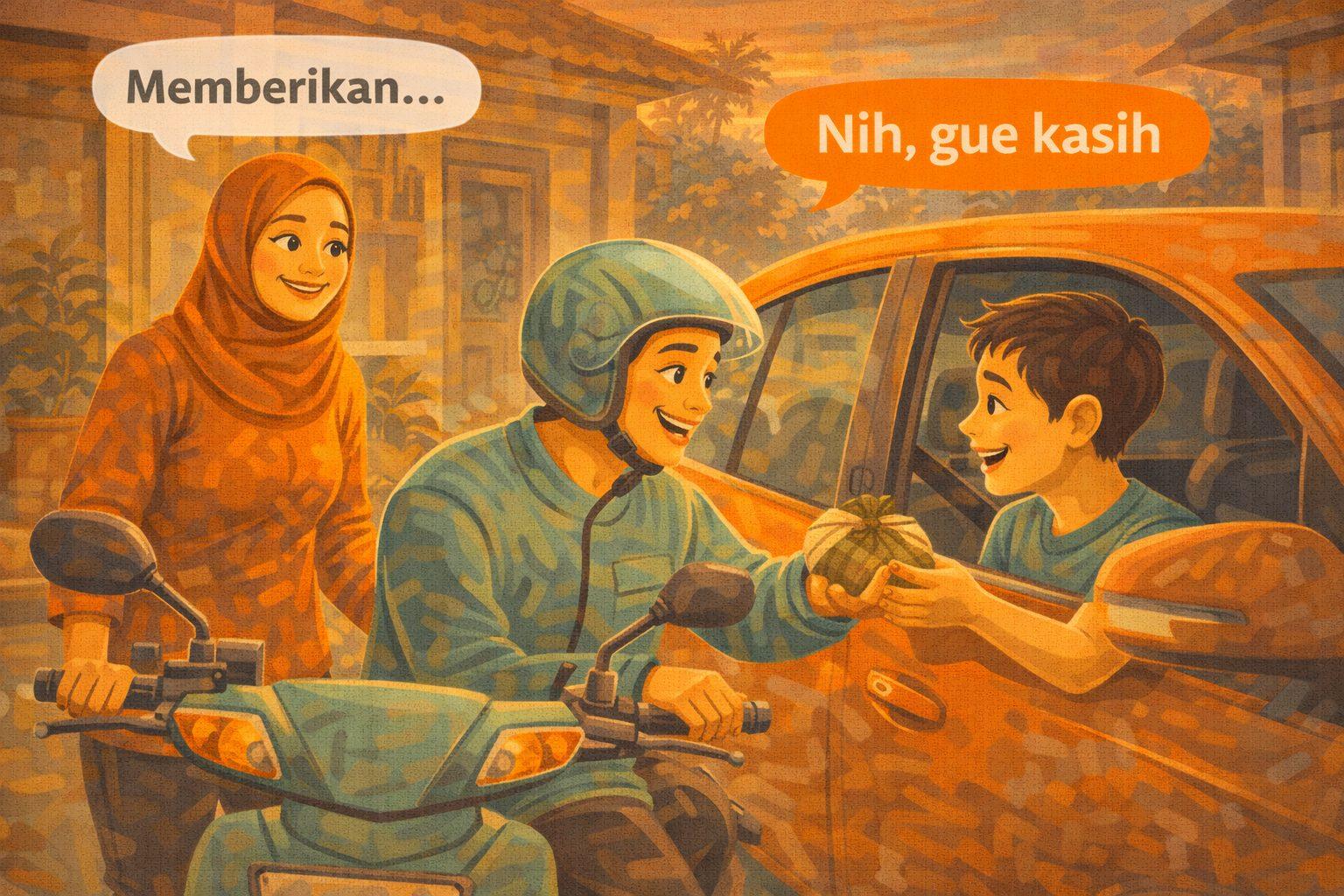
Memberikan is the formal way to say 'to give' in Indonesian.. but in real life, everyone just says kasih or ngasih. Here's how they actually work.
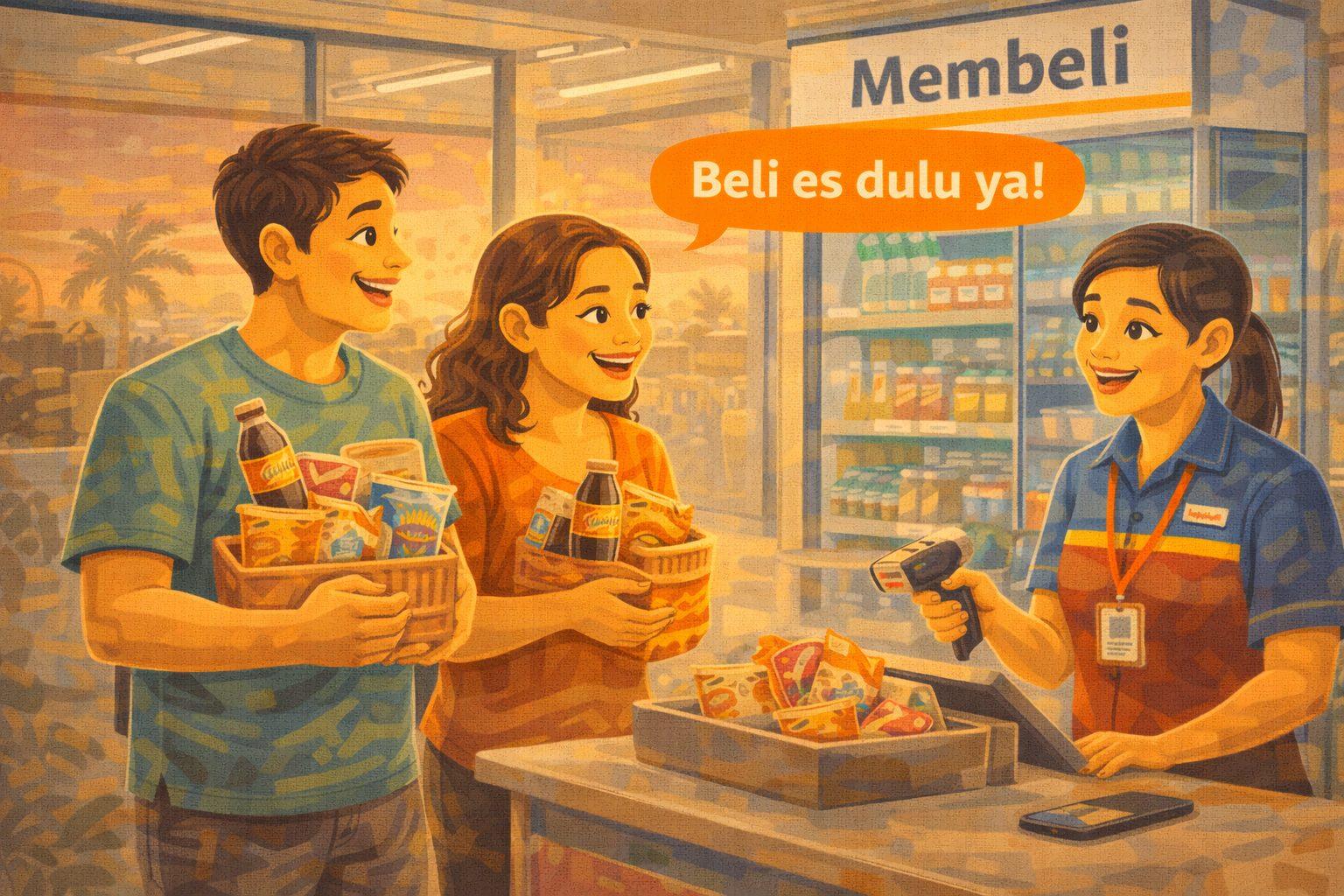
Learn how Indonesians actually say 'to buy' in everyday conversation. Spoiler: nobody says membeli.
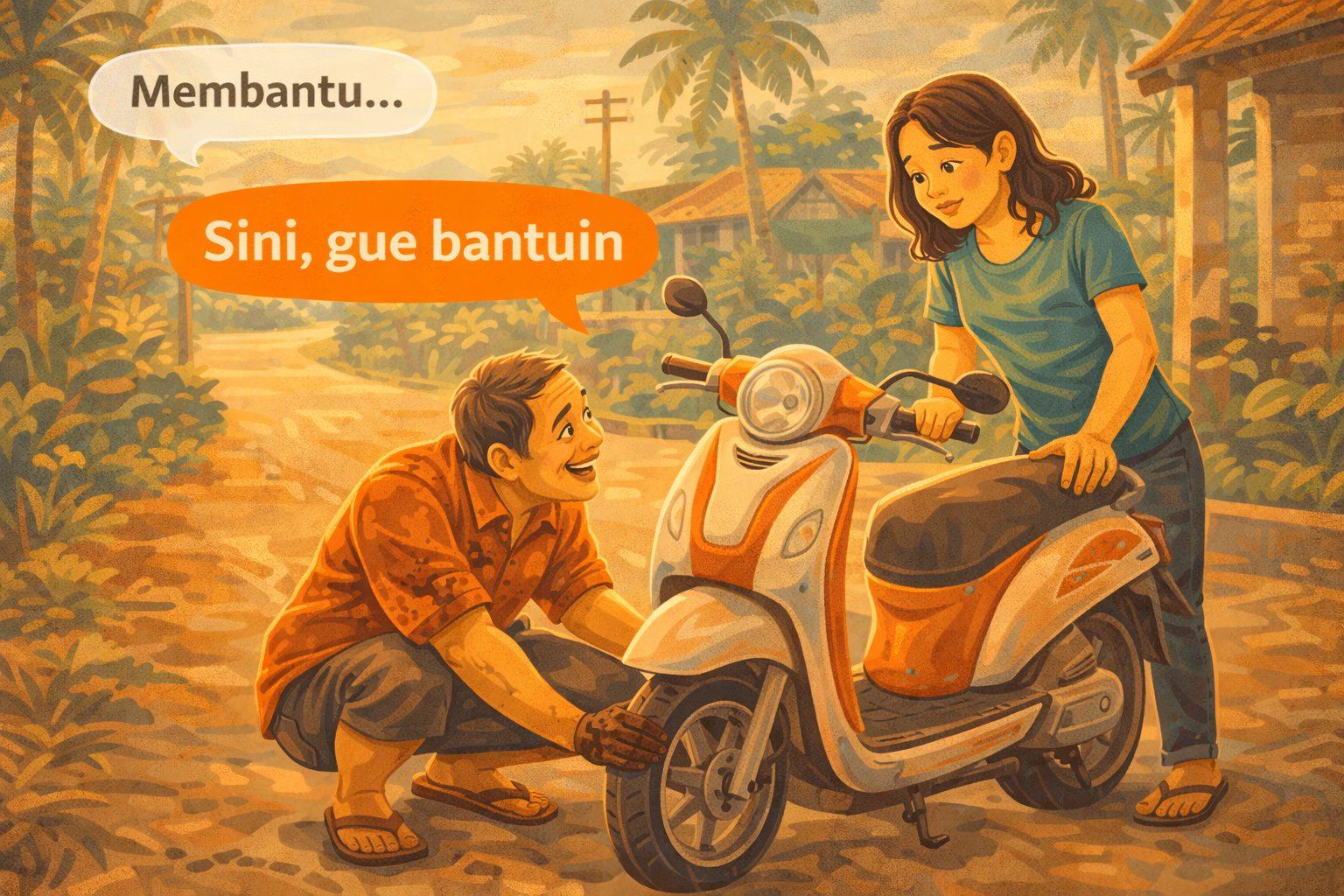
Learn how Indonesians actually say 'to help' in everyday conversation. From formal membantu to casual bantu and bantuin, plus the -in suffix pattern.

Membaca is the formal way to say 'to read' in Indonesian. In everyday speech, everyone just says baca. Here's how it works.
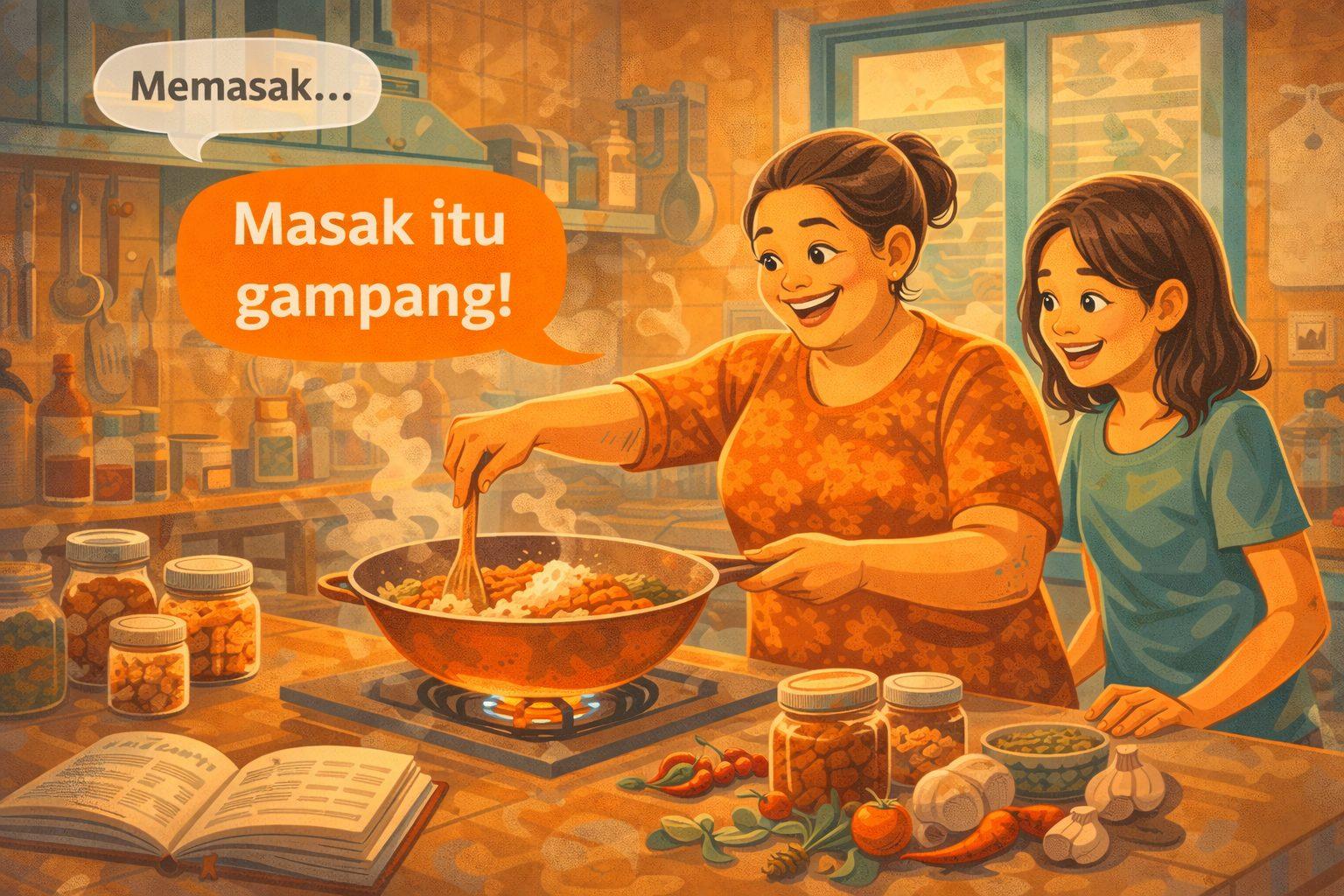
Memasak sounds like a TV cooking show. Real Indonesians say masak. Learn casual cooking vocabulary, common kitchen phrases, and warung culture that textbooks skip.

Learn why nobody says memakan in real Indonesian conversation.. and how makan is way more than just 'to eat.'
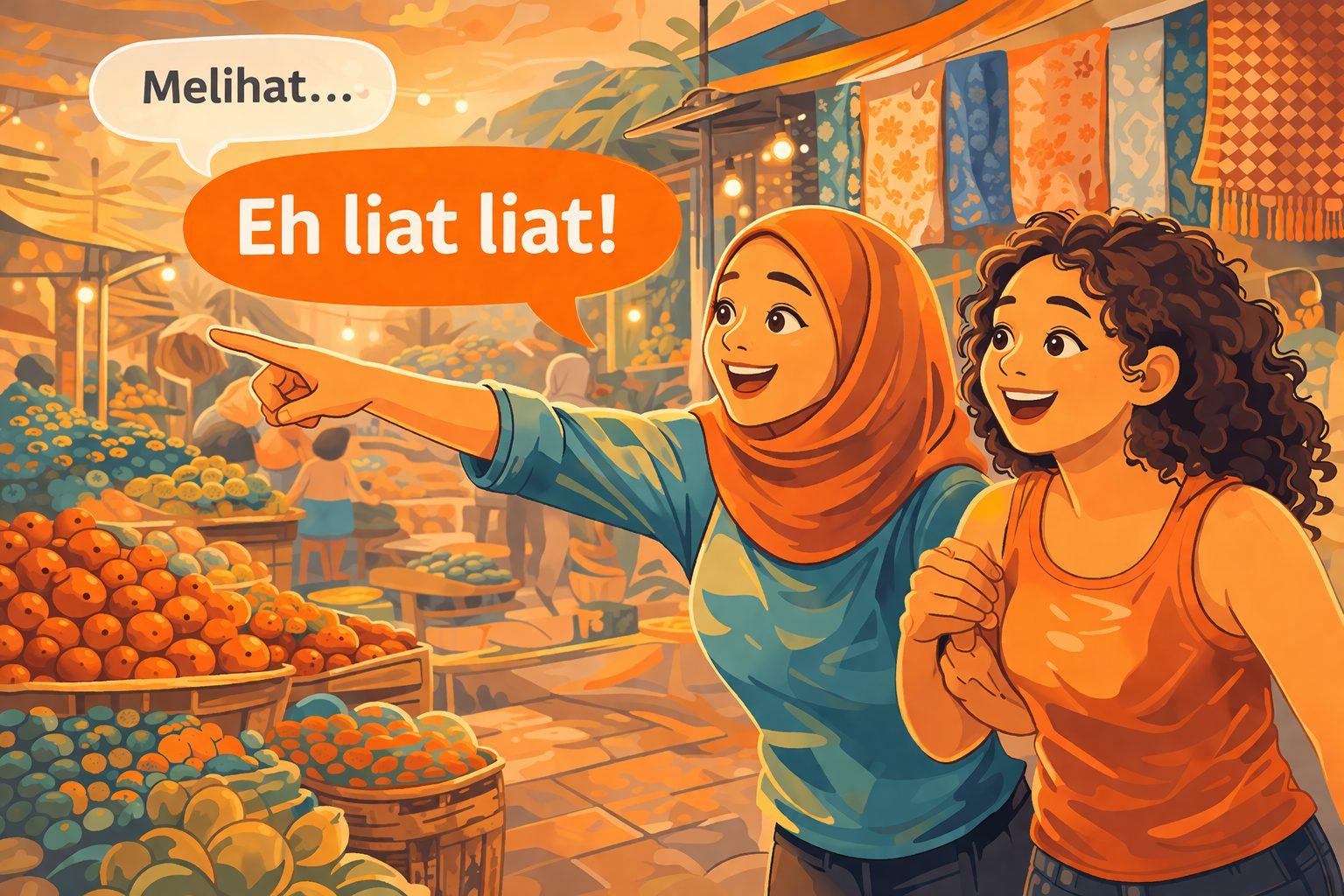
Learn the casual Indonesian alternatives to melihat.. because nobody actually says melihat in real conversations.

Dapat is the textbook word for 'can' in Indonesian.. but nobody talks like that. Here's how bisa runs the show in daily conversation.

Bermain means play in Indonesian. But nobody actually says bermain. Learn how 'main' is used for gaming, hanging out, visiting friends, and more in everyday Indonesian slang.

Nobody in Indonesia actually says 'berlari' in conversation. Learn the casual way to say run in Indonesian — lari, kabur, and all the slang that goes with it.

Berjalan is the textbook word for 'walk' in Indonesian. Nobody says it. Learn how Indonesians actually use 'jalan' — from jalan-jalan to jalan kaki to 'jalan yuk!' — and why this one word unlocks a huge chunk of daily conversation.

Learn how Indonesians actually say 'berenang' in everyday speech. Spoiler: it's just 'renang.' Plus essential casual water vocab for beach life in Bali, Lombok, and beyond.
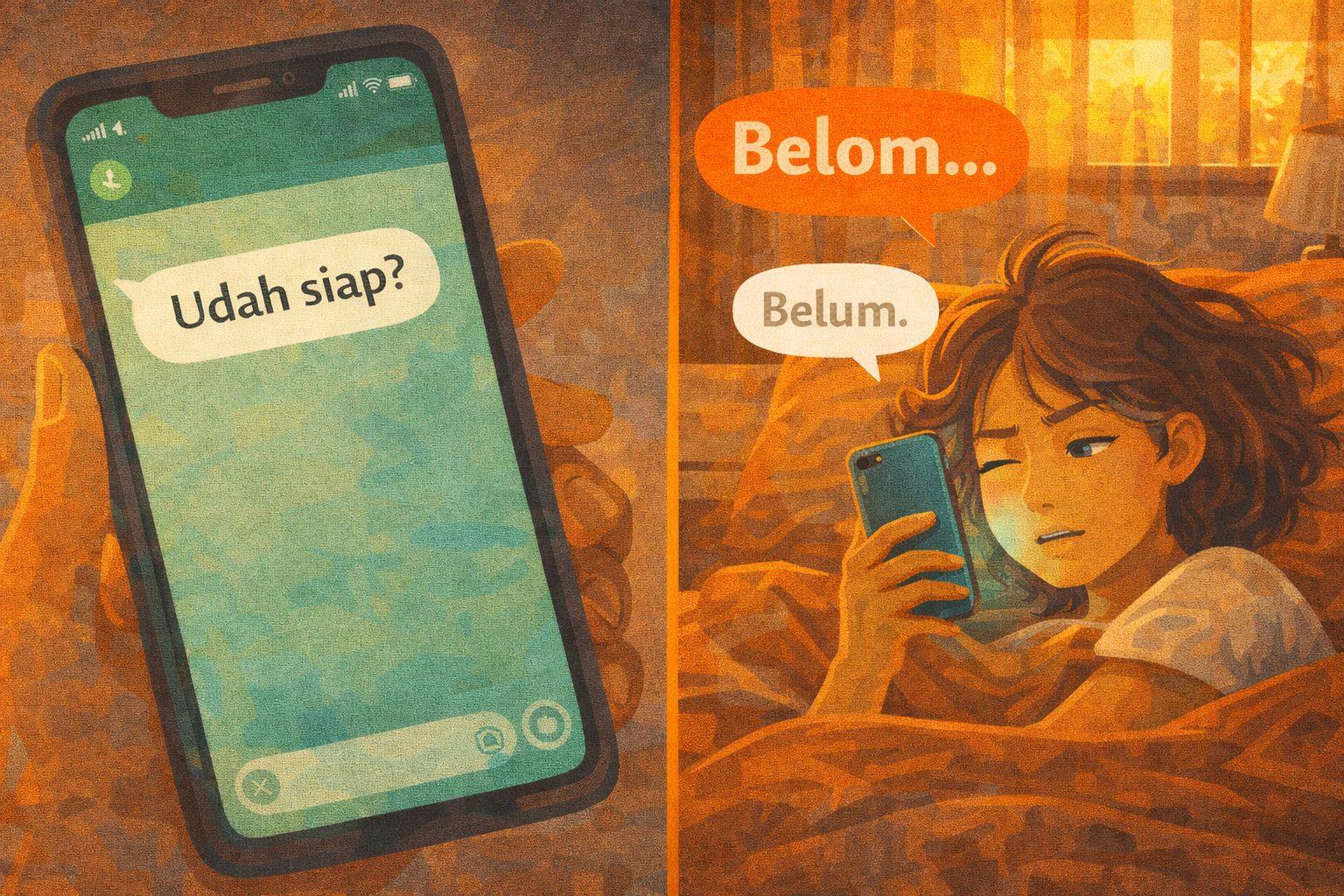
Belum means 'not yet' in Indonesian, but in casual speech everyone says belom. Learn why this tiny word is one of the most powerful in the language.

Beliau is the ultra-respectful Indonesian pronoun you'll learn in textbooks. But nobody uses it at the warung. Here's what Indonesians actually say instead — dia, doi, si dia, and more.

Bagaimana is the formal Indonesian word for 'how' - but almost nobody says it in conversation. Learn why gimana is the version you actually need, plus other casual question words.

Apabila is way too formal for everyday conversation. Here's how Indonesians actually say 'if' and 'when' in real life.

Akan is the textbook way to say 'will' in Indonesian. But nobody talks like that. Here's how real Indonesians talk about the future.

Silakan is technically correct. It's also the fastest way to sound like a hotel receptionist talking to their best friend.

In casual Indonesian, the formal -kan suffix becomes -in. Learn how bikinin, ambilin, beliin, and cariin work with real examples you'll actually hear.
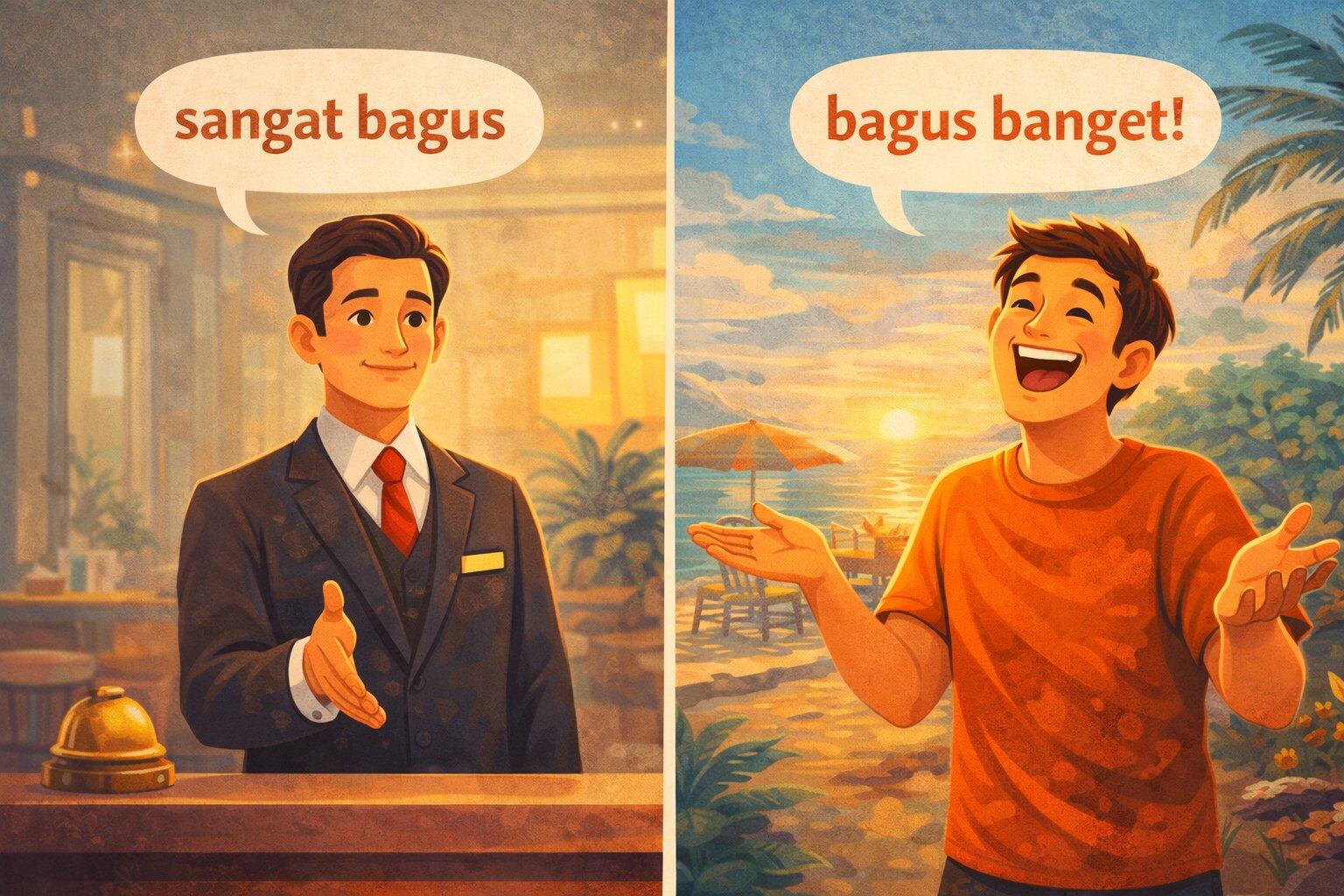
Learn the difference between sangat and banget in Indonesian. One is formal, one is casual - and the word order flips. Here's how to get it right.
Forget the textbook. Here's how Indonesians really order food at a warung - the small street stalls where the best food lives.

A quick reference for every Indonesian pronoun you actually need. Formal, casual, and slang versions of I, you, and they. With a big comparison table.

Forget selamat tinggal. Here's how Indonesians actually say goodbye in real life, from 'duluan ya' to 'cabut dulu ya'.
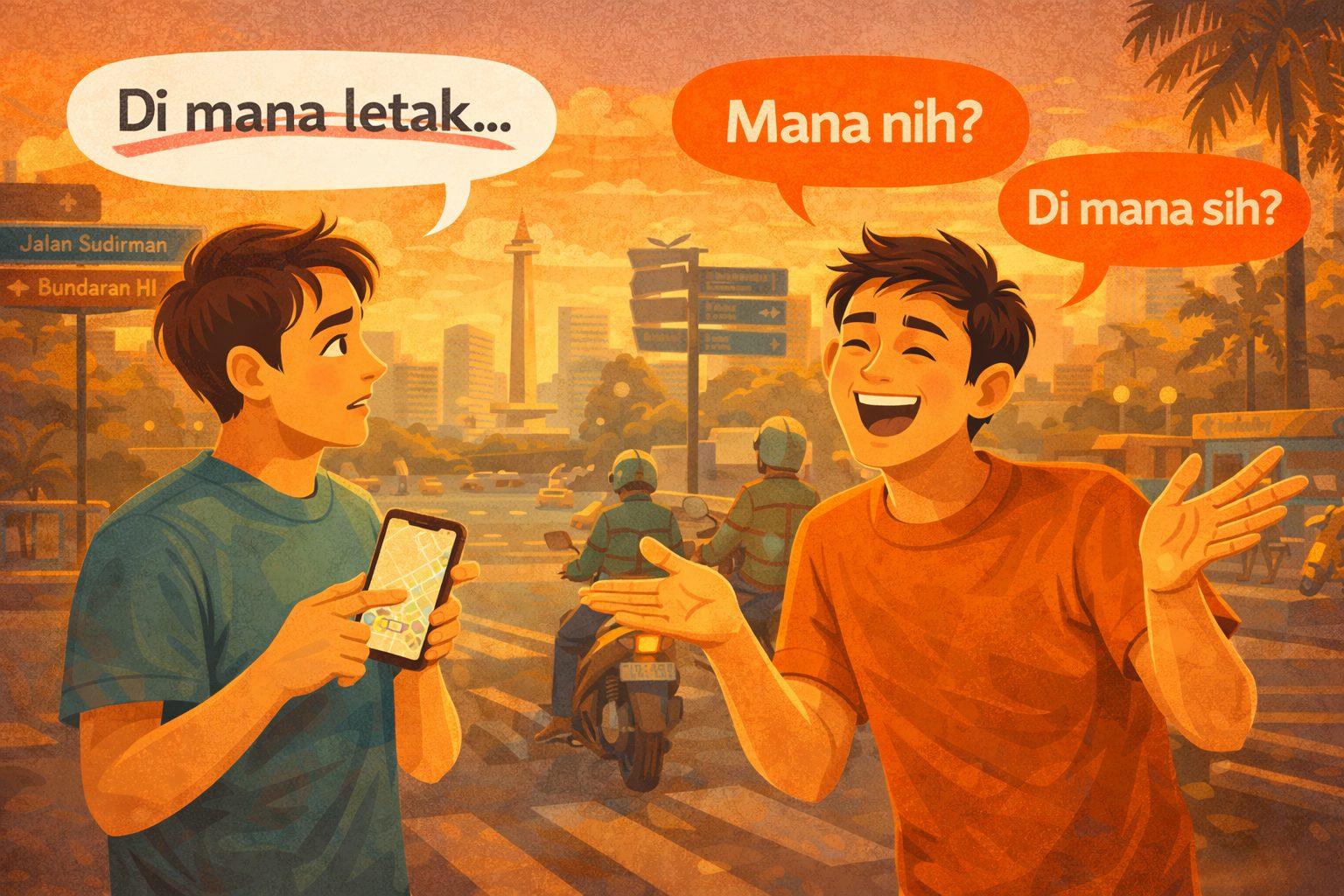
Learn how Indonesians really ask 'where' in everyday conversation. From 'dimana' to just 'mana' — plus all the slang variations you'll hear on the street and on WhatsApp.
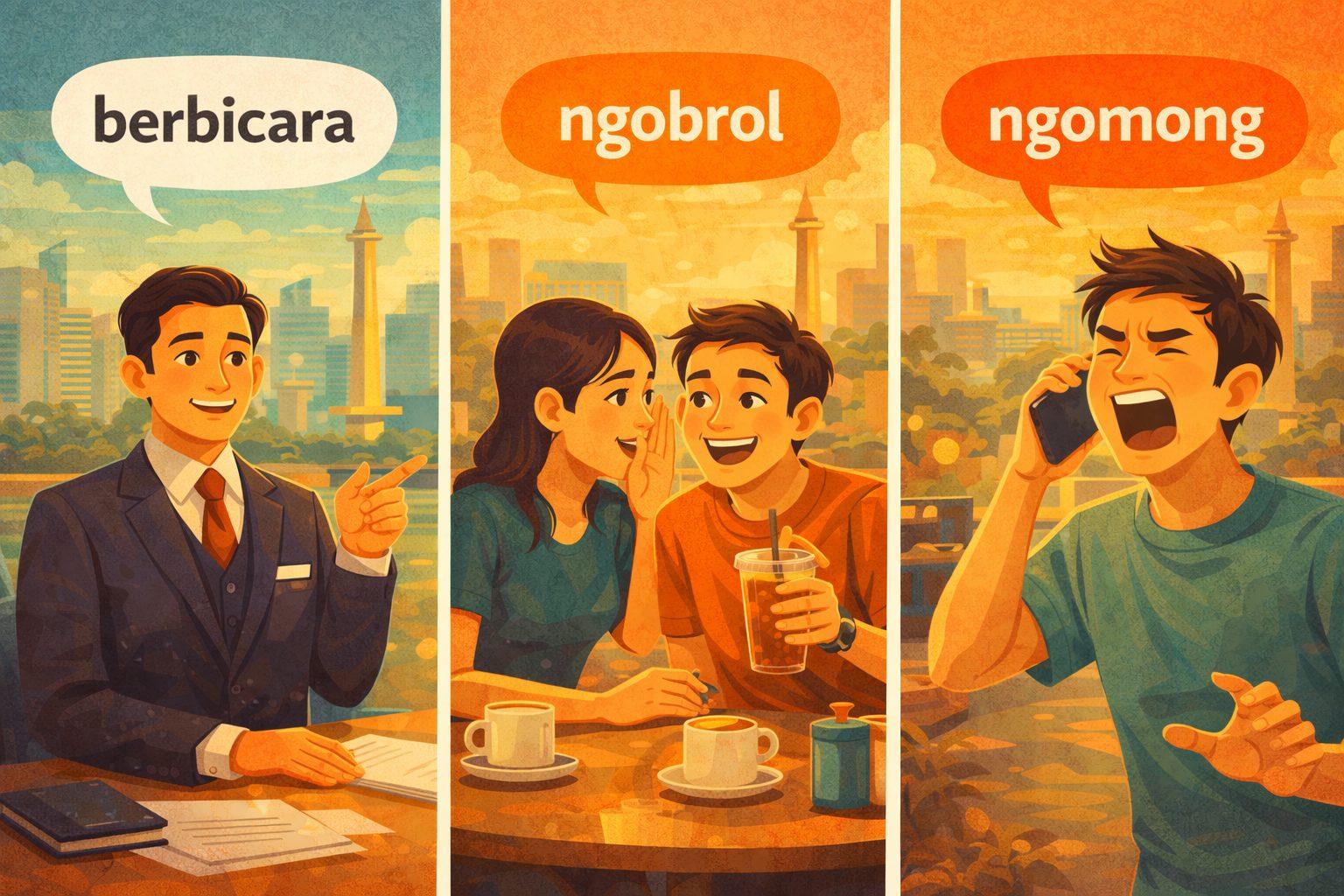
Berbicara is the formal Indonesian word for 'to speak.' But nobody talks like that. Learn ngomong, ngobrol, and bicara — the words Indonesians actually use.

Your textbook taught you bekerja. Nobody actually says that. Here's what Indonesians really say when they talk about work.
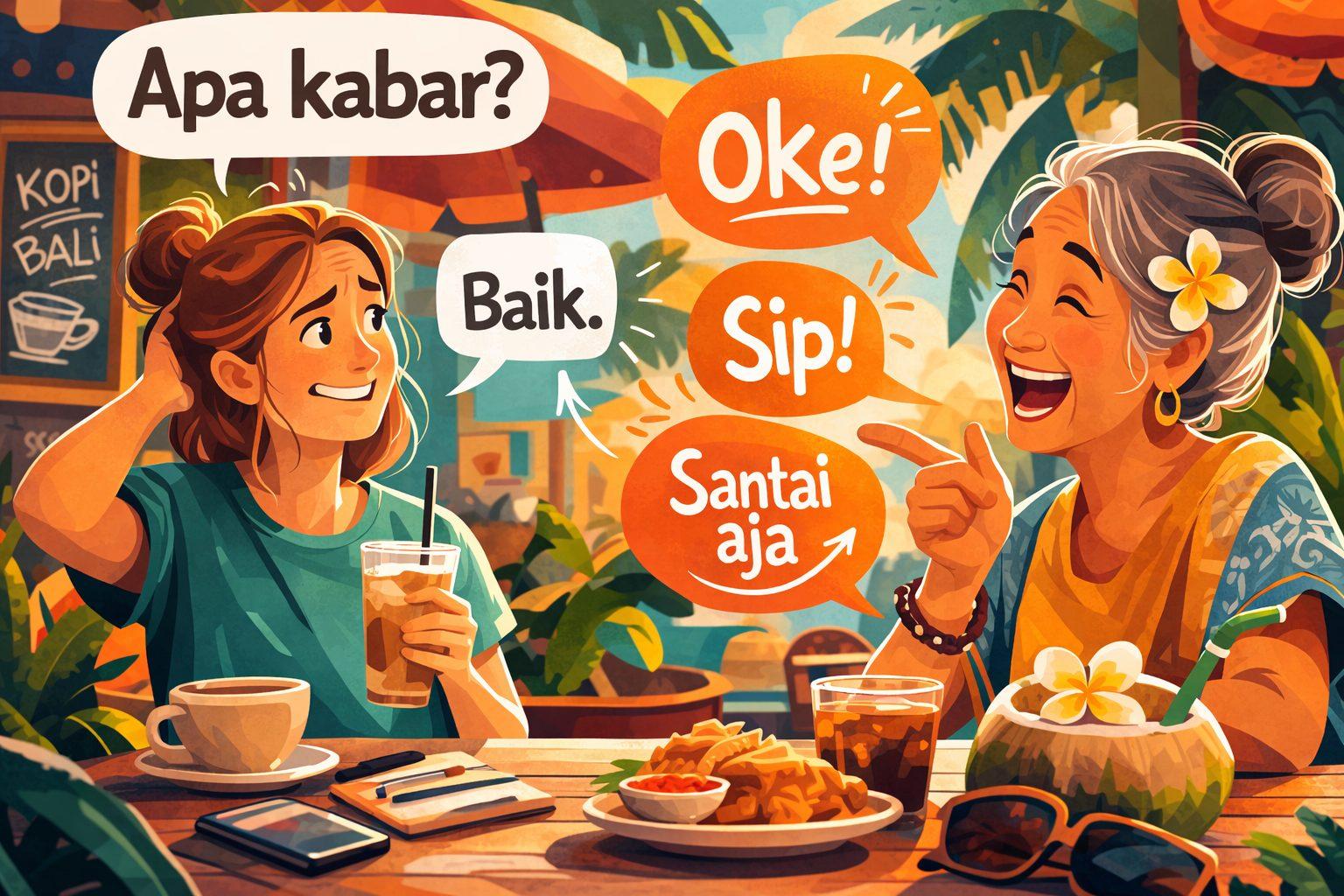
Baik sounds stiff and formal. Learn the casual Indonesian alternatives — oke, sip, siap, yaudah, gas — and when to use each one.
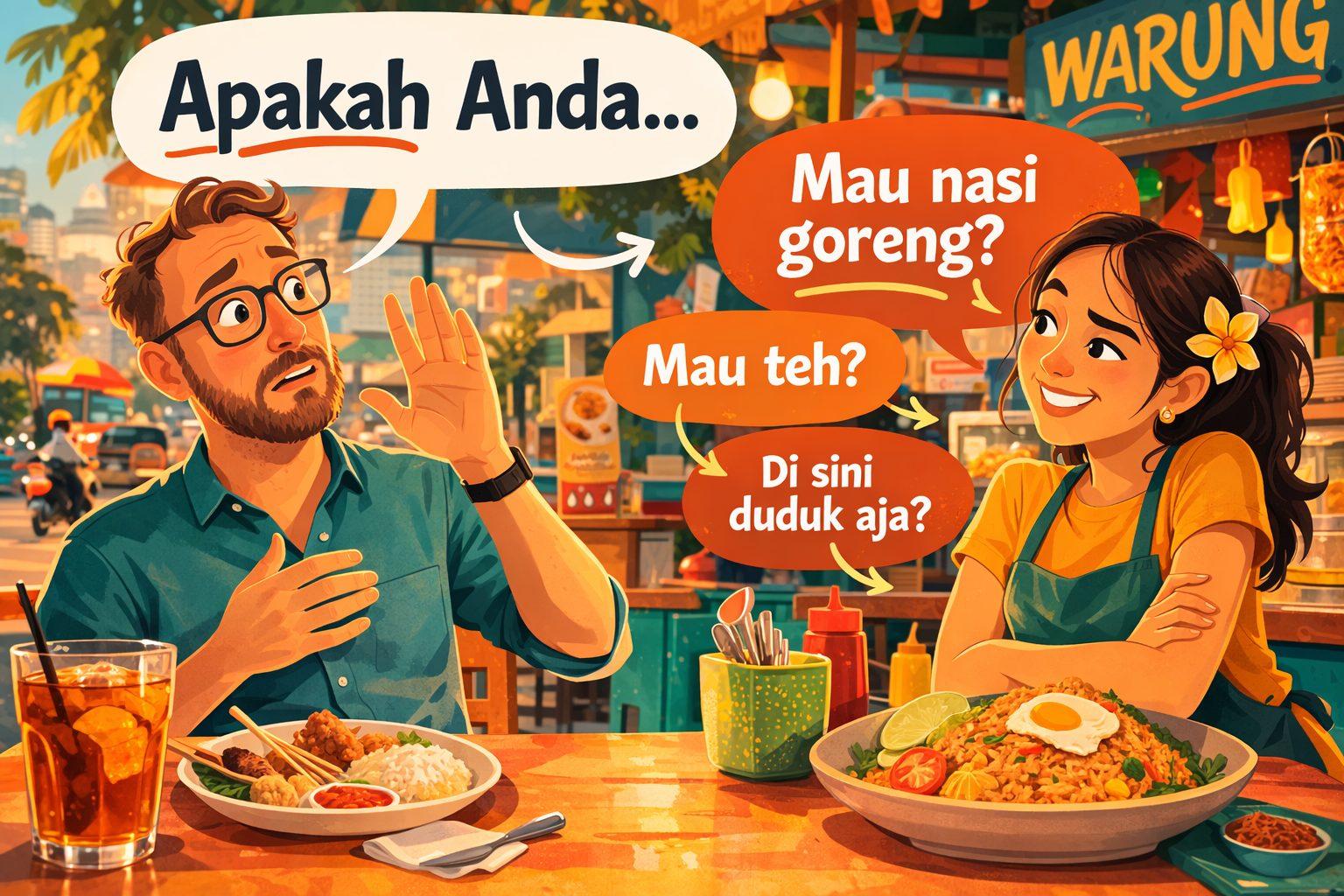
Stop using 'apakah' in conversation. Real Indonesians drop it entirely or just say 'apa'. Here's how casual Indonesian questions actually work — with gak, nggak, and intonation.
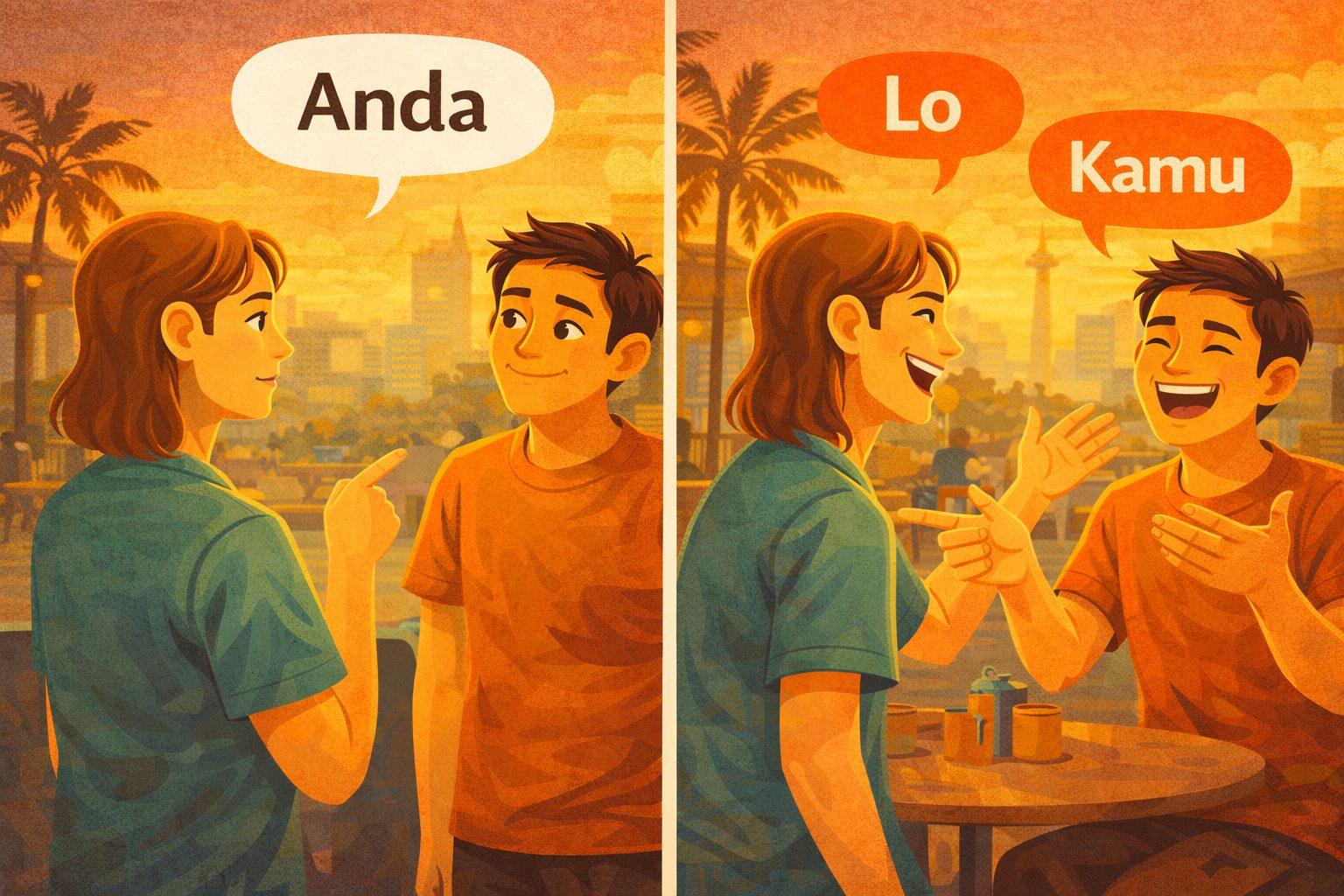
Anda is formal. Stiff. Weird with friends. Here's what to actually say instead: kamu, lo, lu, or just skip 'you' entirely.
Indonesian has a massive gap between textbook formal and real-life casual. Here's how to navigate pronouns, verb prefixes, negation, intensifiers, and question words across five dimensions of formality.
A cheat sheet of formal Indonesian words that make you sound like a textbook. Here's what real Indonesians say instead.
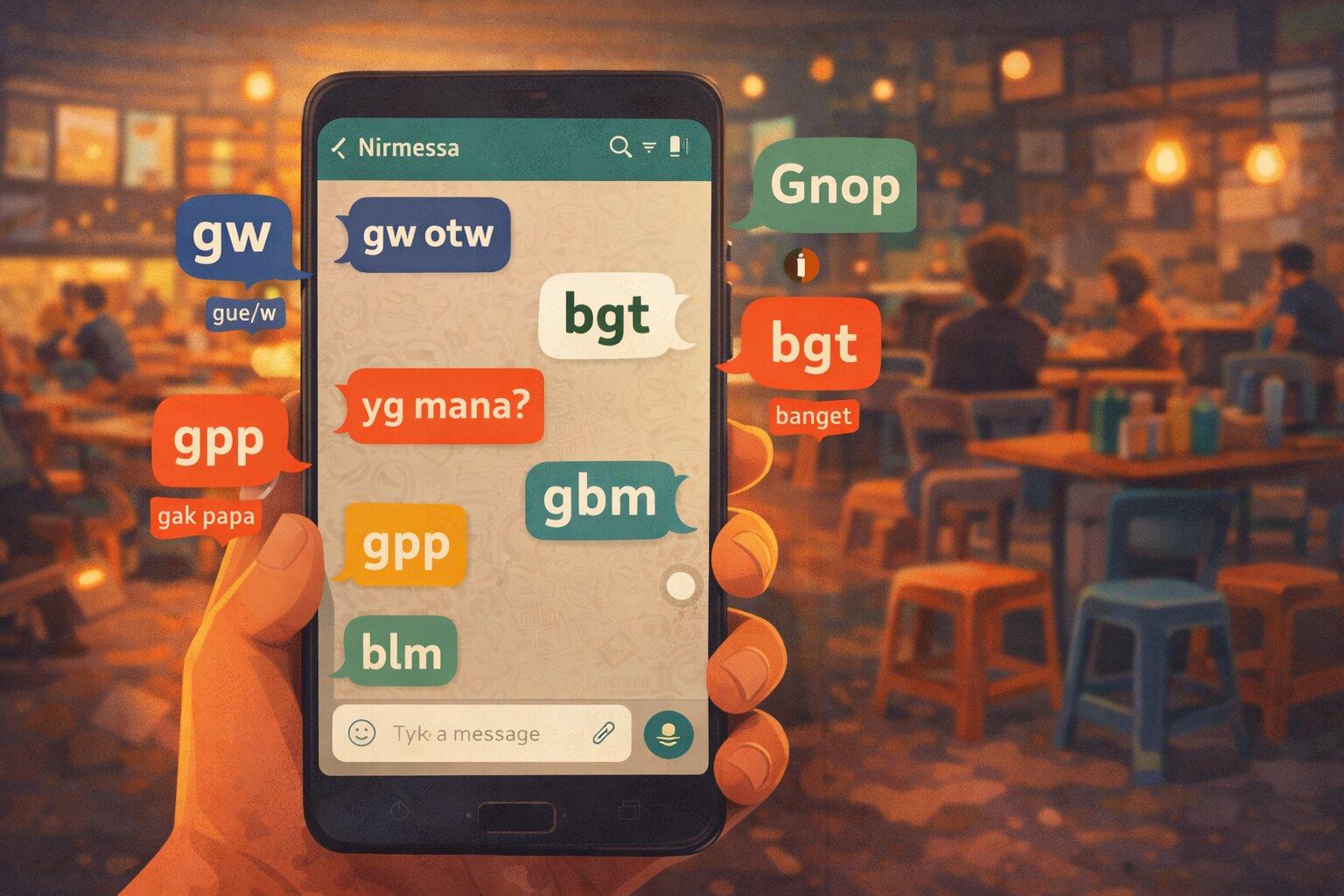
Indonesian WhatsApp messages look like code. Here are 30+ texting abbreviations you need to decode real Indonesian conversations.

A guide to Indonesian greetings from the most formal to the most casual. Learn when to use 'Selamat pagi' and when to just nod.
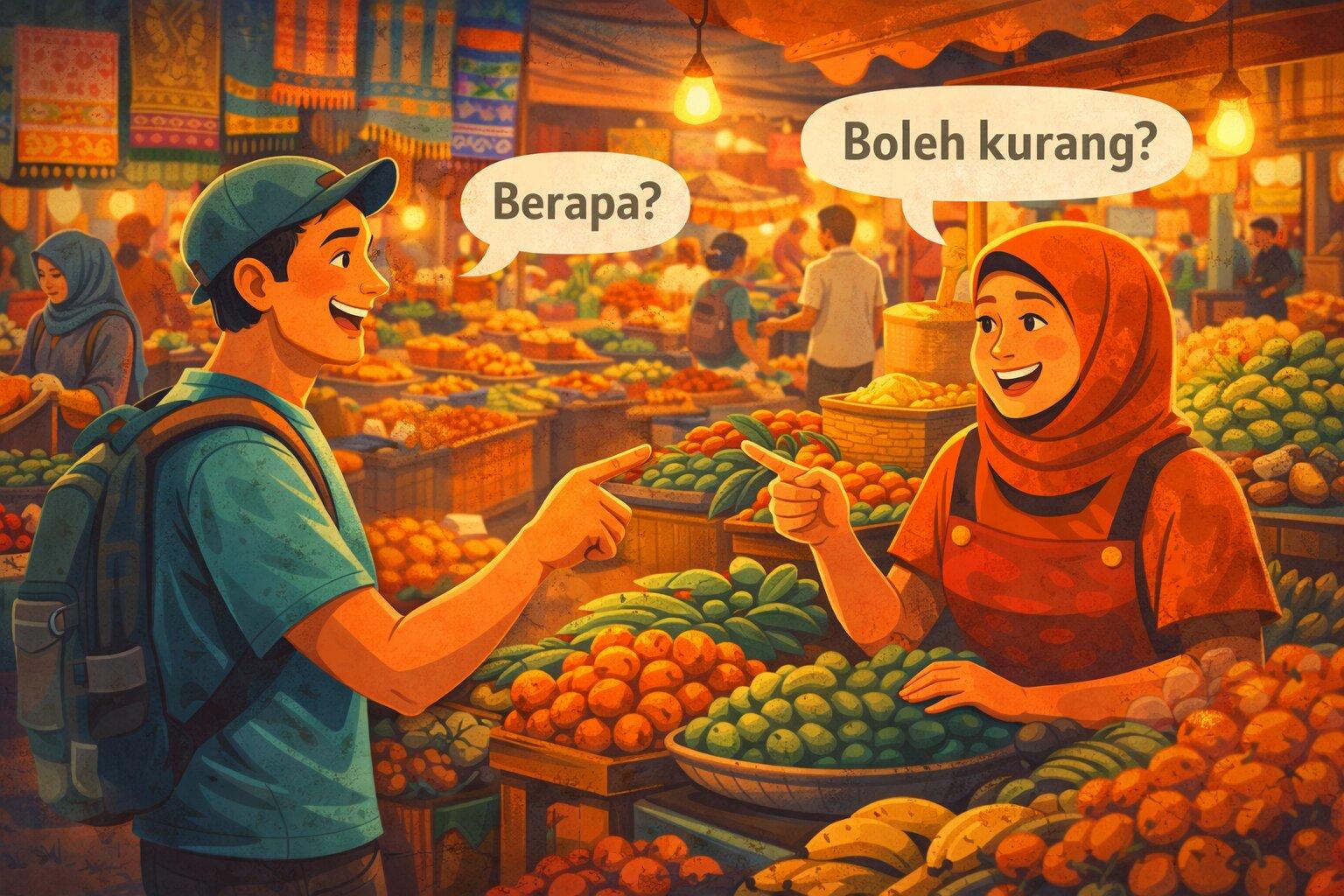
Learn the real phrases Indonesians use when haggling at traditional markets. No textbook language. Just the casual, street-smart Indonesian you actually need.
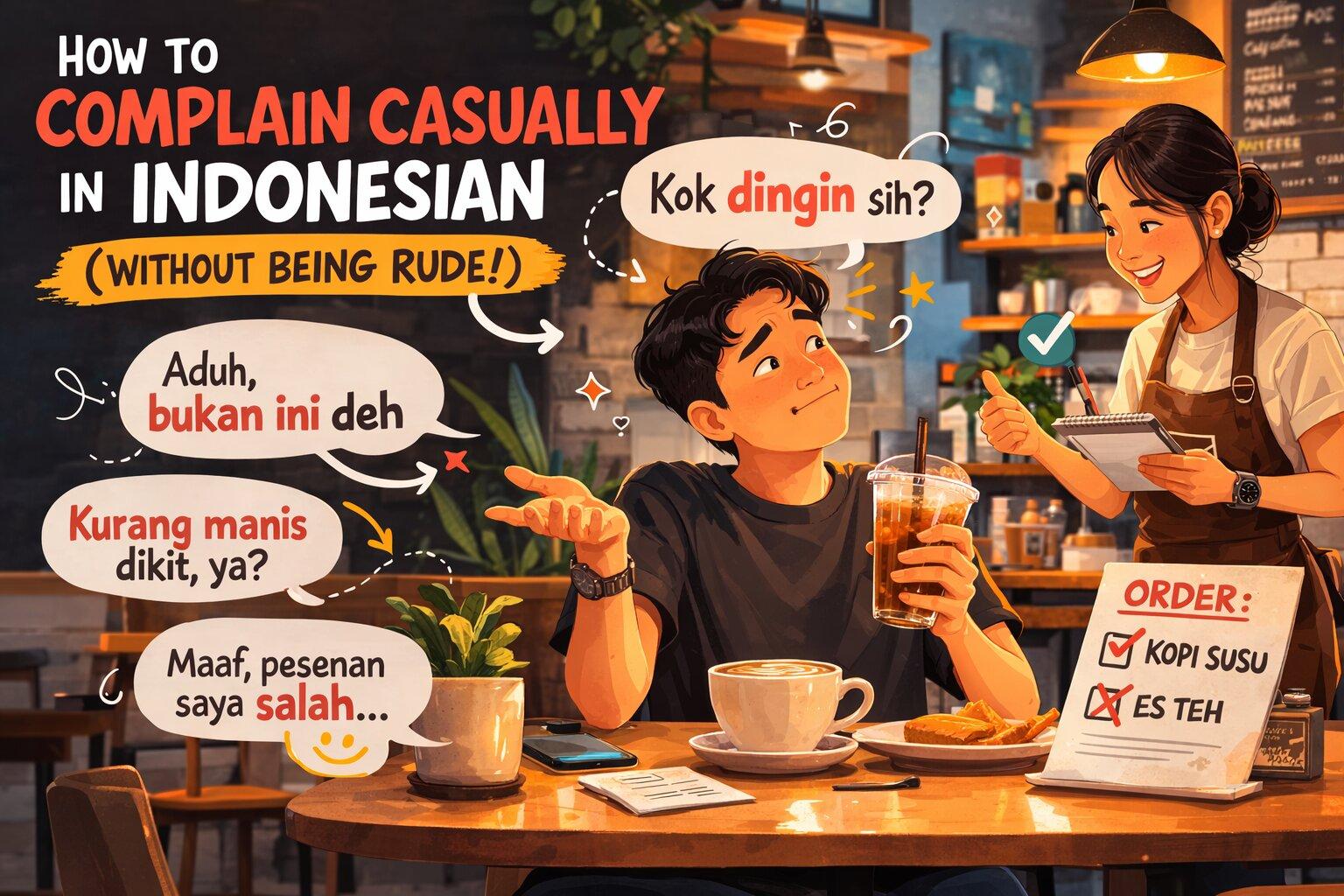
Learn the art of complaining in Indonesian the way locals do. Soft, indirect, and surprisingly effective.

Your textbook taught you saya and anda. Nobody in Jakarta actually talks like that. Here's the real casual Indonesian you need to know.
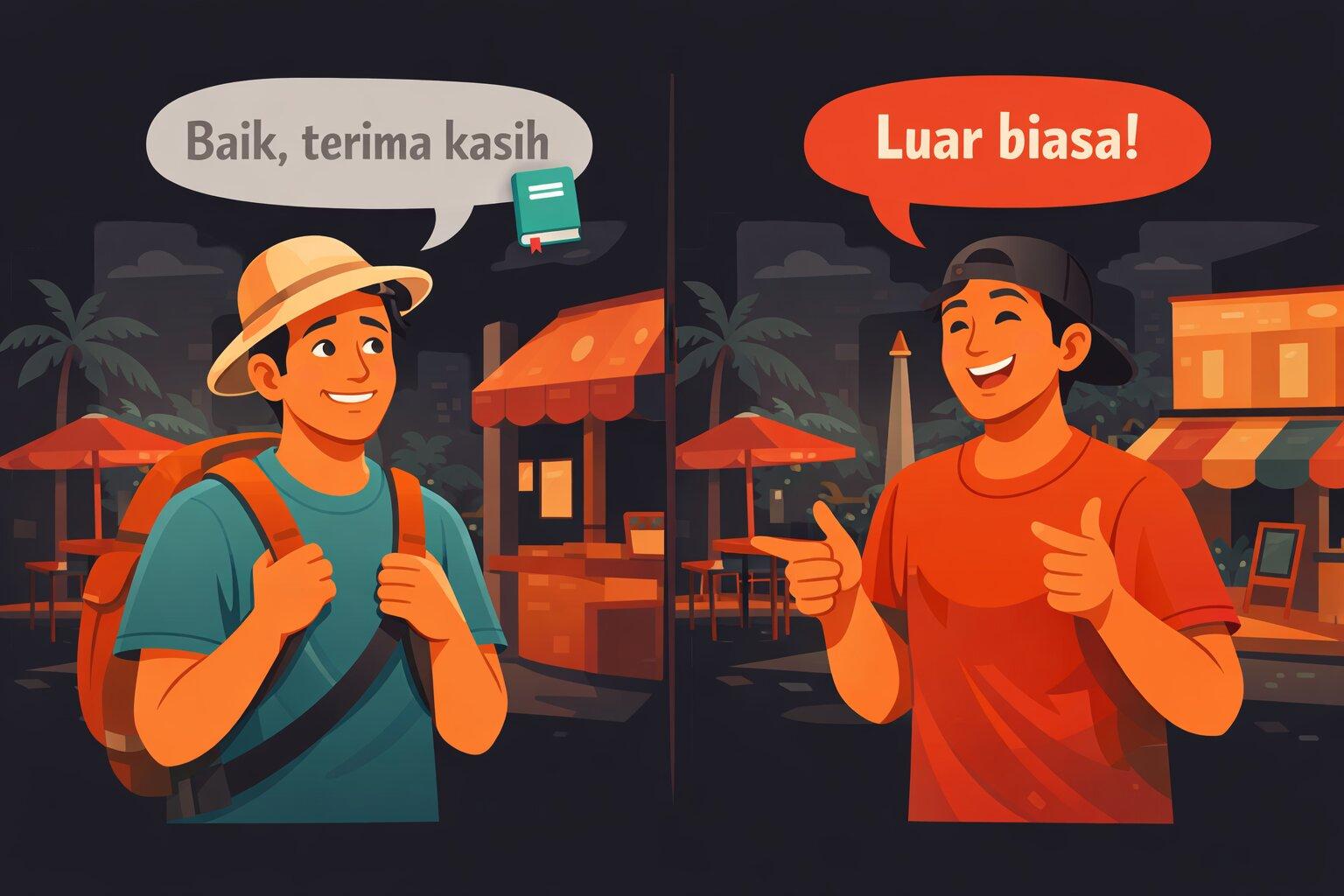
Stop saying 'Baik, terima kasih' like a textbook robot. Here's how Indonesians actually respond to 'Apa kabar?' in real life - from casual to enthusiastic to brutally honest.

The secret to sounding natural in Indonesian isn't grammar or vocabulary. It's tiny particles like sih, dong, deh, kok, and lho that carry all the emotional weight.

You studied hard. You learned the grammar. So why does every conversation with a local feel like you're speaking a different language? Here's what's really going on.
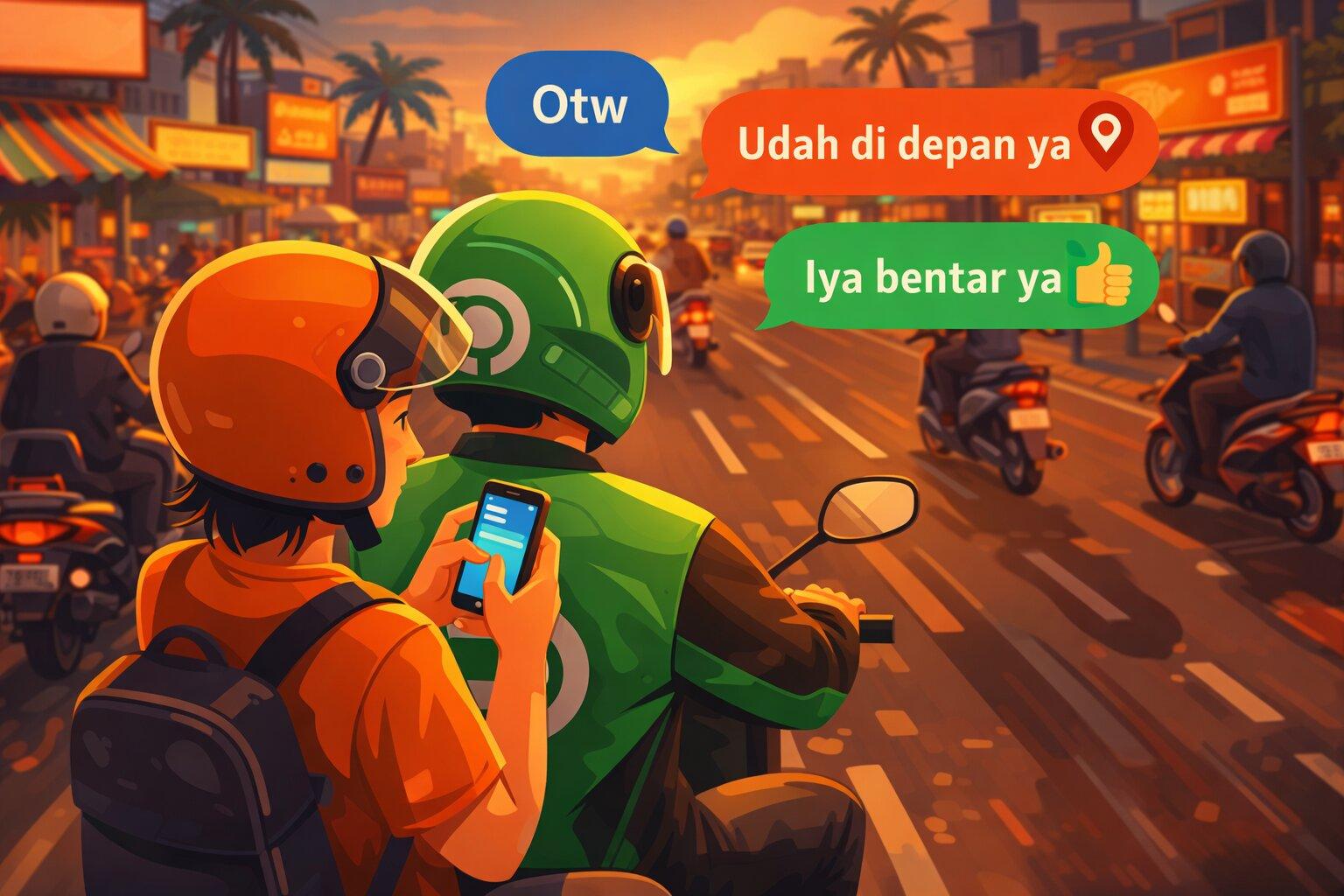
The Indonesian phrases you actually need for ride-hailing apps. What drivers text you, how to reply, and what to say in the car.
Textbook Indonesian won't prepare you for real conversations. Here's your intro to bahasa gaul — the language Indonesians actually speak.