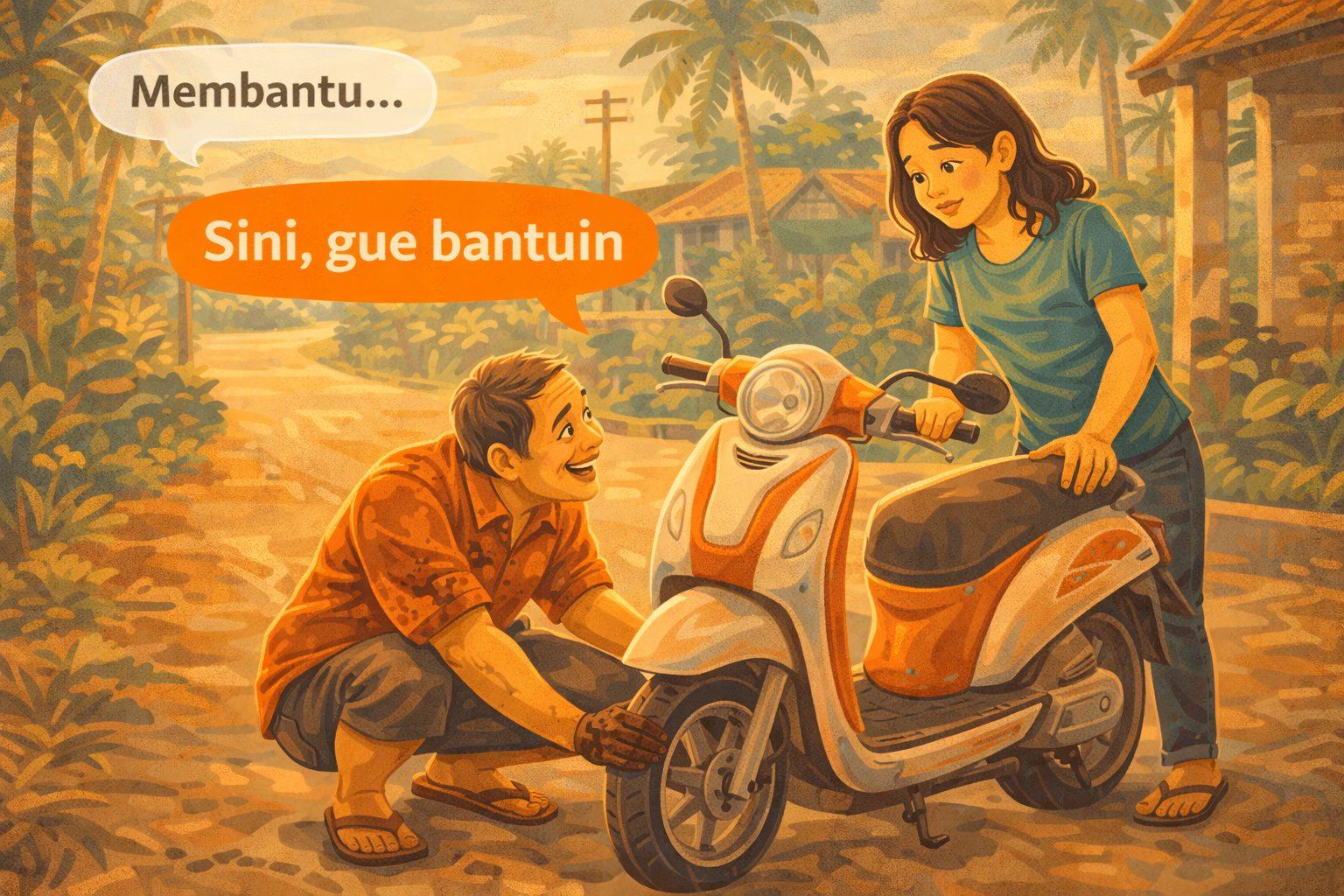
How to Say 'Membantu' in Casual Indonesian (Bantu, Bantuin)
You learn membantu in textbooks. It means "to help." Totally correct. But.. nobody really talks like that day to day.
Here's how it actually works on the street.
Bantu: The Casual Default
Drop the me- prefix. That's it. Membantu becomes bantu. This happens with tons of Indonesian verbs. The prefix is formal. Conversation is not.
"Bisa bantu?" = Can you help?
Short. Direct. You'll hear this everywhere.. at a warung, in a grab chat, asking a friend. No need for the full membantu unless you're writing an essay or giving a speech.
Bantuin: Help Me Specifically
Now add -in to the end. Bantuin. This shifts the meaning slightly. It's not just "help" in general. It's "help me" or "help someone specific." Very casual. Very common.
"Bantuin dong" = Help me out
That dong at the end? It softens the request. Makes it friendly. Almost pleading but in a cute way. You'll hear this between friends constantly.
"Makasih udah bantuin" = Thanks for helping (me)
Notice udah instead of sudah. Same pattern.. drop the formal bits, keep it real.
The -in Suffix Is Everywhere
This is the big takeaway. The -in suffix isn't just for bantu. It's one of the most productive patterns in casual Indonesian. It usually means "do something for someone." Look:
- bikinin = make (something) for me (bikin + -in)
- ambilin = grab/get (something) for me
- beliin = buy (something) for me
- cariin = search/find (something) for me
So "Beliin kopi dong" means "Buy me a coffee, would you?" Friendly. Easy. Natural.
Once you start noticing -in, you hear it in almost every casual conversation. It's one of those patterns that instantly makes your Indonesian sound less like a textbook and more like.. a person.
Quick Recap
| Formal | Casual | Very Casual |
|---|---|---|
| membantu | bantu | bantuin |
Start with bantu. Add -in when you mean "help me out." Throw in a dong when you want to sound friendly.
What other formal Indonesian words have you been struggling to make sound natural? 🤔
Keep learning
Related articles

How to Say 'Mencari' in Casual Indonesian (Cari, Nyari)
Learn the casual ways Indonesians actually say 'to search' in everyday speech. From formal mencari to street-level nyari.

How to Say 'Uang' in Casual Indonesian (Duit)
Uang is the textbook word for money in Indonesian.. but duit is what people actually say. Plus the slang terms for common rupiah amounts.

How to Say 'Menulis' in Casual Indonesian (Nulis)
Menulis is the textbook word for 'to write' in Indonesian. In real life, people say nulis. Learn the pattern, common phrases, and related casual verbs.