Bahasa Gaul: A Beginner's Guide to Indonesian Slang
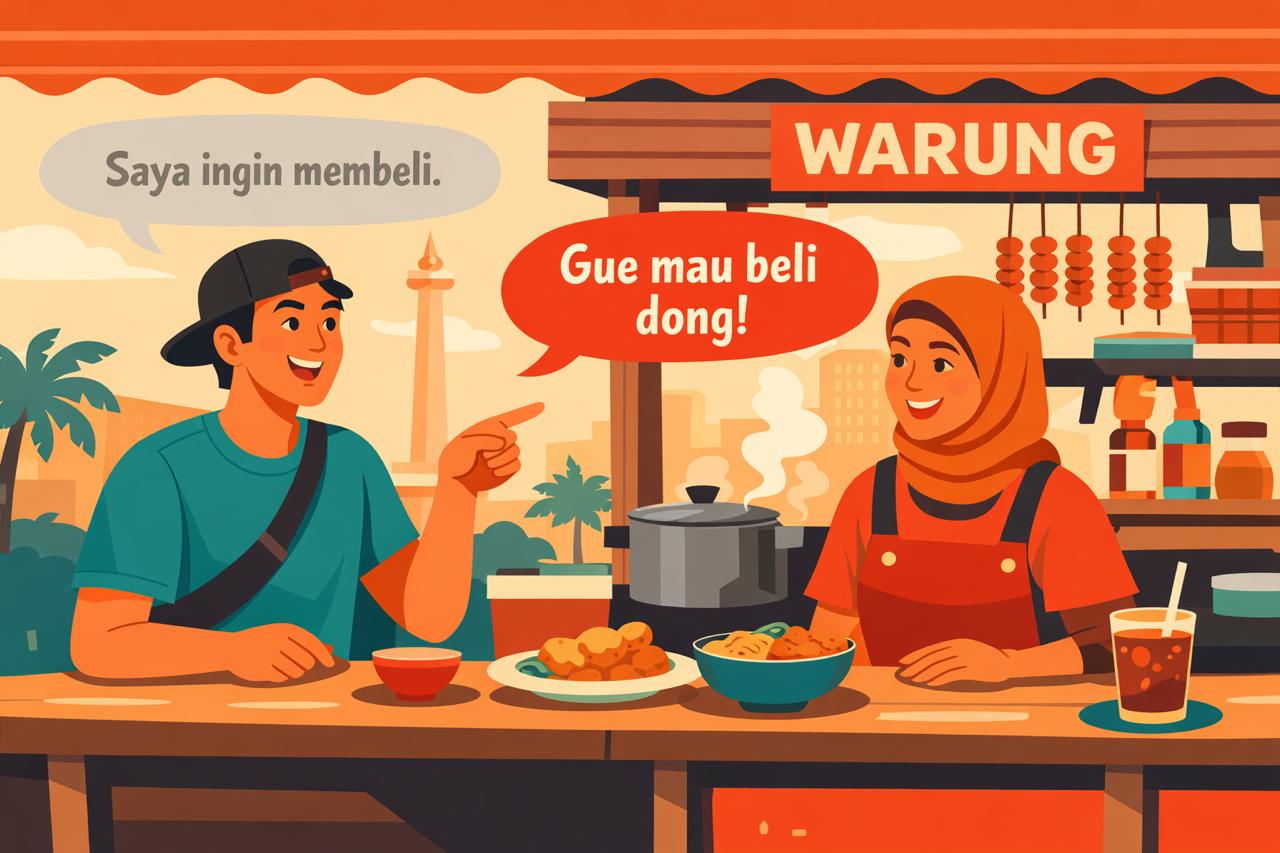
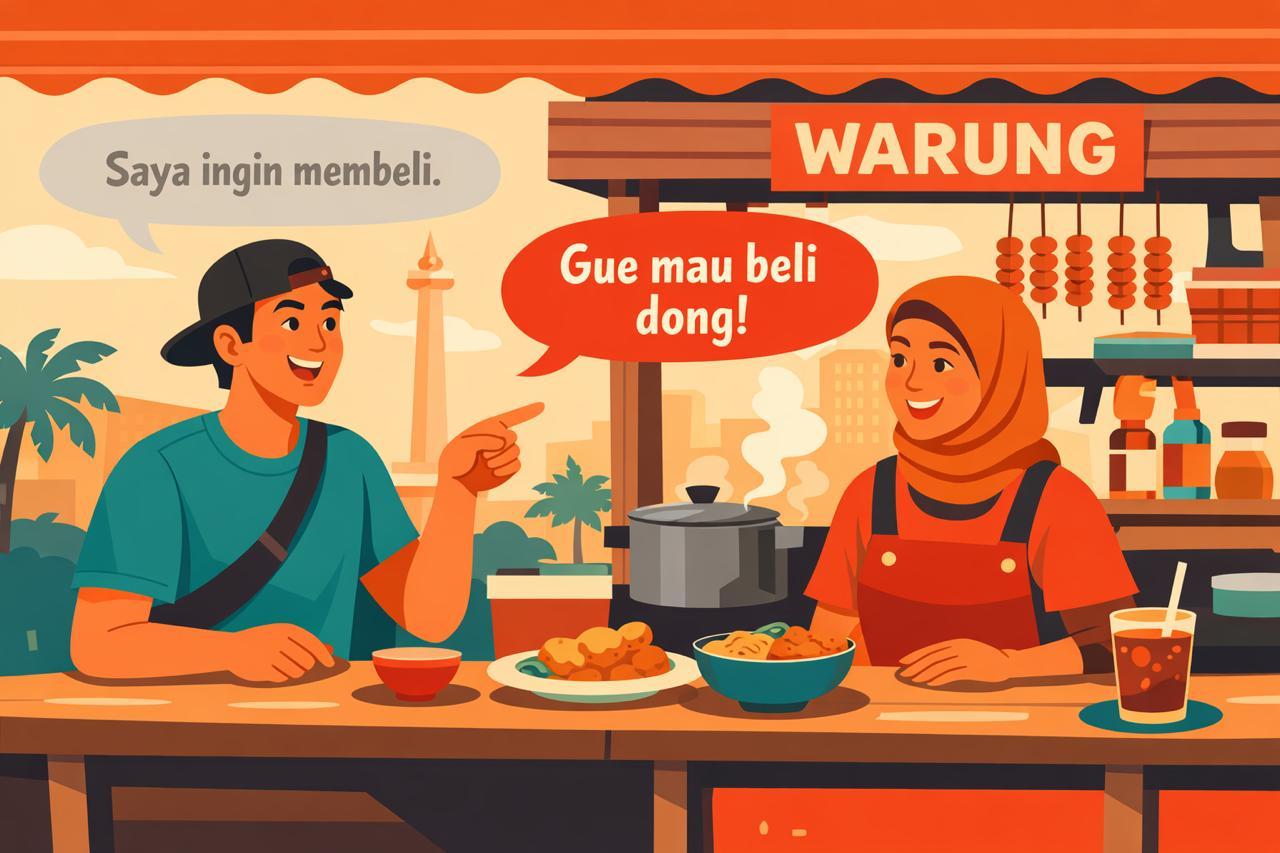
So you learned Indonesian from a textbook. You can say "Saya ingin membeli nasi goreng" (I would like to buy fried rice) with perfect grammar. You land in Jakarta. You open your mouth. And nobody talks like that.
Welcome to bahasa gaul.
What even is bahasa gaul?
Literally.. "sociable language." Or "social language." It's Indonesian slang, but calling it slang undersells it. Bahasa gaul isn't separate from Indonesian. It IS how most Indonesians talk daily. At the warung. In group chats. At the office (yes, the office). On dates. Everywhere except maybe a presidential speech.
It started as Jakarta youth slang. Kids in the capital riffing on standard Indonesian, bending it, shortening it, mixing in English and Betawi (the local Jakarta dialect). Then TV happened. Then social media happened. Now it's national. A teenager in Surabaya uses the same slang as one in Bandung. TikTok made sure of that.
How it differs from textbook Indonesian
If you learned formal Indonesian (bahasa baku), bahasa gaul is going to mess with your head a little. Here's what changes.
1. Pronouns get swapped
Your textbook taught you "saya" (I) and "Anda" (you). Nobody under 50 says those in casual conversation. Instead:
- saya → gue or aku (I/me)
- Anda → lo or kamu (you)
"Gue lagi di jalan" (I'm on the way) sounds normal. "Saya sedang di jalan" sounds like you're reading a news broadcast.
2. Verb prefixes disappear
Formal Indonesian loves its prefixes. Meng-, mem-, men-.. they're grammatically correct and completely ignored in daily speech.
- menggunakan → pake (to use)
- membicarakan → ngomongin (to talk about)
Shorter is better. Always.
3. Vowels shift
This one catches learners off guard. Common words just.. change their vowels.
- belum → belom (not yet)
- sudah → udah (already)
- tidak → nggak or gak (no/not)
You'll hear "udah makan belom?" (already eaten yet?) roughly 400 times a day. It's basically a greeting.
4. English loan words everywhere
Indonesians mix in English constantly. No code-switching hesitation. Just straight into it.
"Sorry ya, gue harus cancel meeting-nya." (Sorry, I have to cancel the meeting.)
Words like weekend, thanks, cancel, meeting, update, follow-up.. they're just part of the vocabulary now. Especially in work contexts.
5. Texting abbreviations 🙈
Indonesian texting is its own beast. Common ones:
- gw = gue (I)
- bgt = banget (very/really)
- gpp = gapapa (it's fine/no problem)
- otw = on the way
- yg = yang (which/that)
Your first Indonesian group chat will look like encrypted messages. Give it a week.
6. Particles for emotion
This is the secret sauce. Little words tacked onto sentences that carry feeling, emphasis, softness, surprise. They don't translate cleanly into English.
- sih = softener, adds "well.." or "though" (mild emphasis)
- dong = "come on" or adds friendly insistence
- deh = concession, like "fine" or "just do it"
- kok = "how come?" or expresses surprise
- lho = "wait what?" or "you know!"
"Kok mahal sih?" doesn't just mean "why is it expensive?" It means "why is it expensive though?" with a hint of complaint. The particle changes the vibe. 🤯
Essential bahasa gaul vocabulary
Here's your starter pack. Memorize these and you'll sound 10x more natural.
- santai = chill, relax. Used as an adjective ("orangnya santai" = he's chill) and a command ("santai aja" = just relax).
- nongkrong = hanging out. Specifically the kind where you sit at a cafe or on the street doing.. not much. Indonesia's national pastime.
- kepo = nosy, overly curious. "Jangan kepo deh!" (Stop being so nosy!)
- baper = overly emotional, taking things too personally. From "bawa perasaan" (carrying feelings). "Gue baper nih.." (I'm catching feelings.. 😬)
- gokil = crazy, awesome. Always positive. "Gokil sih tempat ini!" (This place is insane!)
- lebay = over the top, dramatic. "Jangan lebay deh." (Don't be so dramatic.)
- cewek / cowok = girl / guy. The default casual words. You'll hear these way more than perempuan and laki-laki.
- jomblo = single (not in a relationship). Slightly self-deprecating. "Masih jomblo" (still single) comes with a sigh.
- bucin = whipped, simp. From "budak cinta" (slave of love). A newer one. Very TikTok. Very brutal.
- gabut = bored, nothing to do. "Lagi gabut nih" (I've got nothing going on right now).
Who actually uses bahasa gaul?
Basically everyone under 50 in urban areas. And increasingly in smaller cities too. Older generations understand it even if they don't use it. It's not "young people slang" anymore.. it's just how Indonesian is spoken.
The formal register (bahasa baku) still matters for writing, news, official documents, academics. But conversation? Bahasa gaul runs the show.
And here's the thing.. it evolves constantly. New words appear every few months via TikTok, Twitter, and memes. "Bucin" barely existed five years ago. Now everyone's grandmother knows what it means. The slang of 2026 will sound dated by 2028.
So where does that leave you?
If you're learning Indonesian, you need both. Bahasa baku for reading and understanding structure. Bahasa gaul for actually talking to people without sounding like a government pamphlet.
Start listening. Watch Indonesian YouTube. Follow Indonesian TikTok creators. Pay attention to how words get shortened, bent, mixed with English. The patterns click faster than you'd expect.
Your textbook gave you the skeleton. Bahasa gaul is the personality.
So.. udah siap belajar bahasa gaul belom? 🤯
Keep learning
Related articles
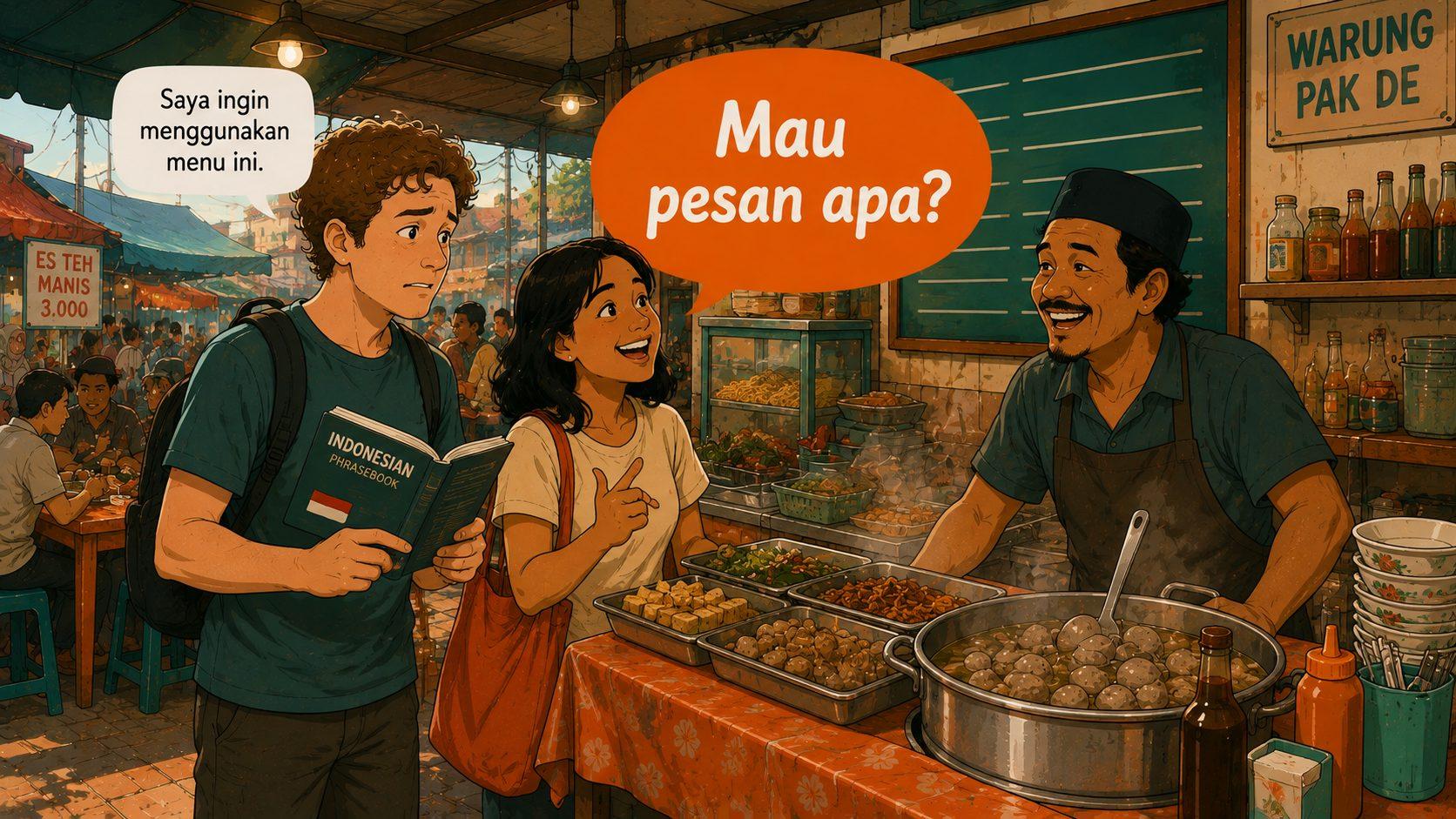
Why You Sound Like a Textbook When Speaking Indonesian (And How to Fix It)
Most Indonesian courses teach formal Bahasa Indonesia. Real Indonesians speak bahasa gaul. Here are the 5 biggest giveaways that you learned from a textbook - and what to say instead.
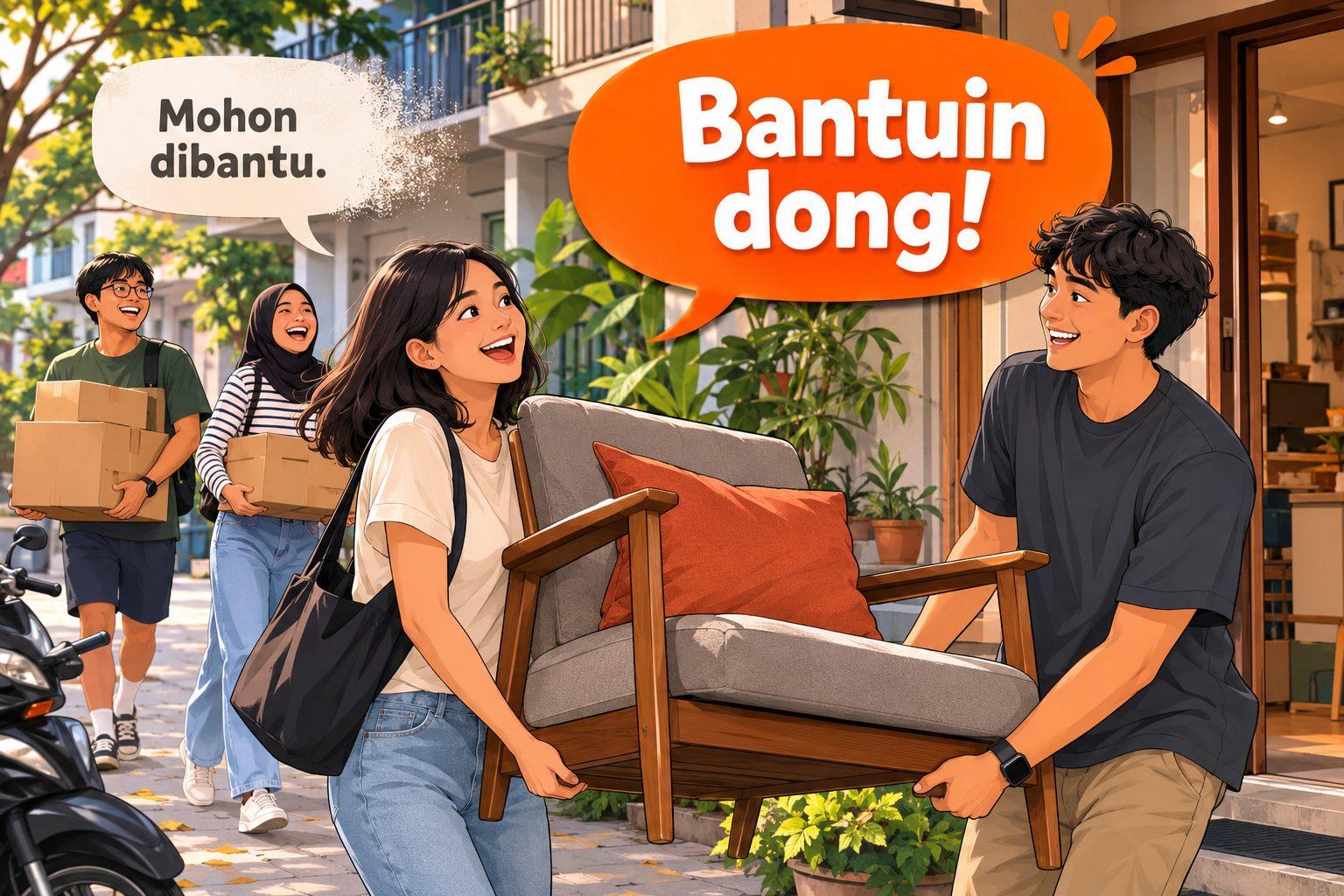
How to Say 'Mohon' in Casual Indonesian (Hint: You Don't)
Mohon is way too formal for everyday Indonesian. Learn the casual alternatives — tolong, dong, and the -in + dong pattern that makes any verb a friendly request.
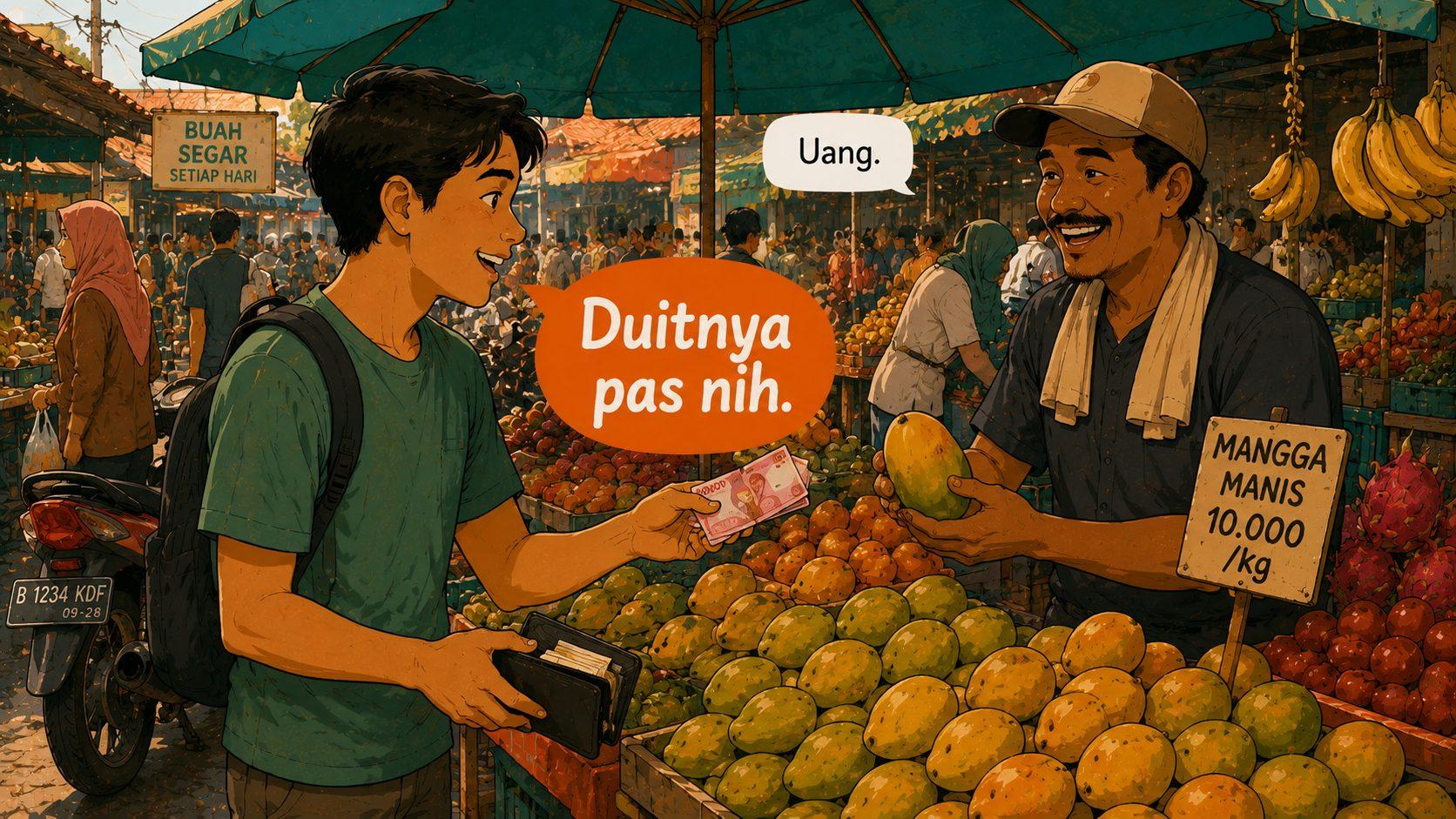
How to Say 'Uang' in Casual Indonesian (Duit)
Uang is the textbook word for money in Indonesian.. but duit is what people actually say. Plus the slang terms for common rupiah amounts.