
Why Indonesian Friends Laugh When You Say 'Silakan'
You learned it in class. You practiced the pronunciation. You finally used it in real life.
"Silakan duduk."
And your Indonesian friend.. just laughed.
Here's the thing. Silakan isn't wrong. It means "please" or "go ahead." Textbooks love it. Your teacher probably drilled it into you. But in casual conversation? It lands weird.
Where silakan actually lives
Think customer service language. Hotel lobbies. Formal invitations. Airport announcements.
"Silakan duduk" is what the receptionist says when you check into a fancy hotel. "Silakan masuk" is what the MC says at a wedding. It's polite. It's proper. It's stiff.
Now imagine using that energy with your buddy at a warung.
That's the vibe. You're basically saying "I cordially invite you to partake in this meal" at a backyard BBQ. No wonder they're laughing.
What people actually say
"Aja" does most of the heavy lifting. It means "just (go ahead and do it)."
- "Duduk aja" (just sit down) instead of "Silakan duduk" (please be seated)
- "Makan aja" (just eat) instead of "Silakan makan" (please, do eat)
- "Ambil aja" (just take it) instead of "Silakan ambil" (please help yourself)
See the pattern? Shorter. Warmer. Less like a waiter, more like a friend.
"Monggo" is another good one. It's Javanese for "please" or "go ahead," but it's crossed over into casual Indonesian across most of Java. You hear it everywhere.. at someone's house, at the market, between strangers on the street. It's polite without being formal. The sweet spot.
And sometimes? People just drop the pleasantry entirely.
"Makan!" (Eat!)
"Masuk!" (Come in!)
No "please." No softener. Just direct. And somehow.. it feels friendlier than silakan ever could. 😄
It gets worse with "mohon"
If silakan is hotel-lobby polite, mohon is corporate-apology polite. "Mohon maaf" means "I humbly apologize." You see it on official signs. Government letters. Customer complaint responses.
Casual version? "Sori" or "Maaf ya." Done.
The real lesson
Indonesian formality isn't about memorizing polite words. It's about knowing when not to use them. Your textbook gave you the formal register. Your friends live in a completely different one.
So next time you're about to say "silakan".. maybe just say "aja" instead.
What's the most weirdly formal thing you've accidentally said in Indonesian?
Keep learning
Related articles
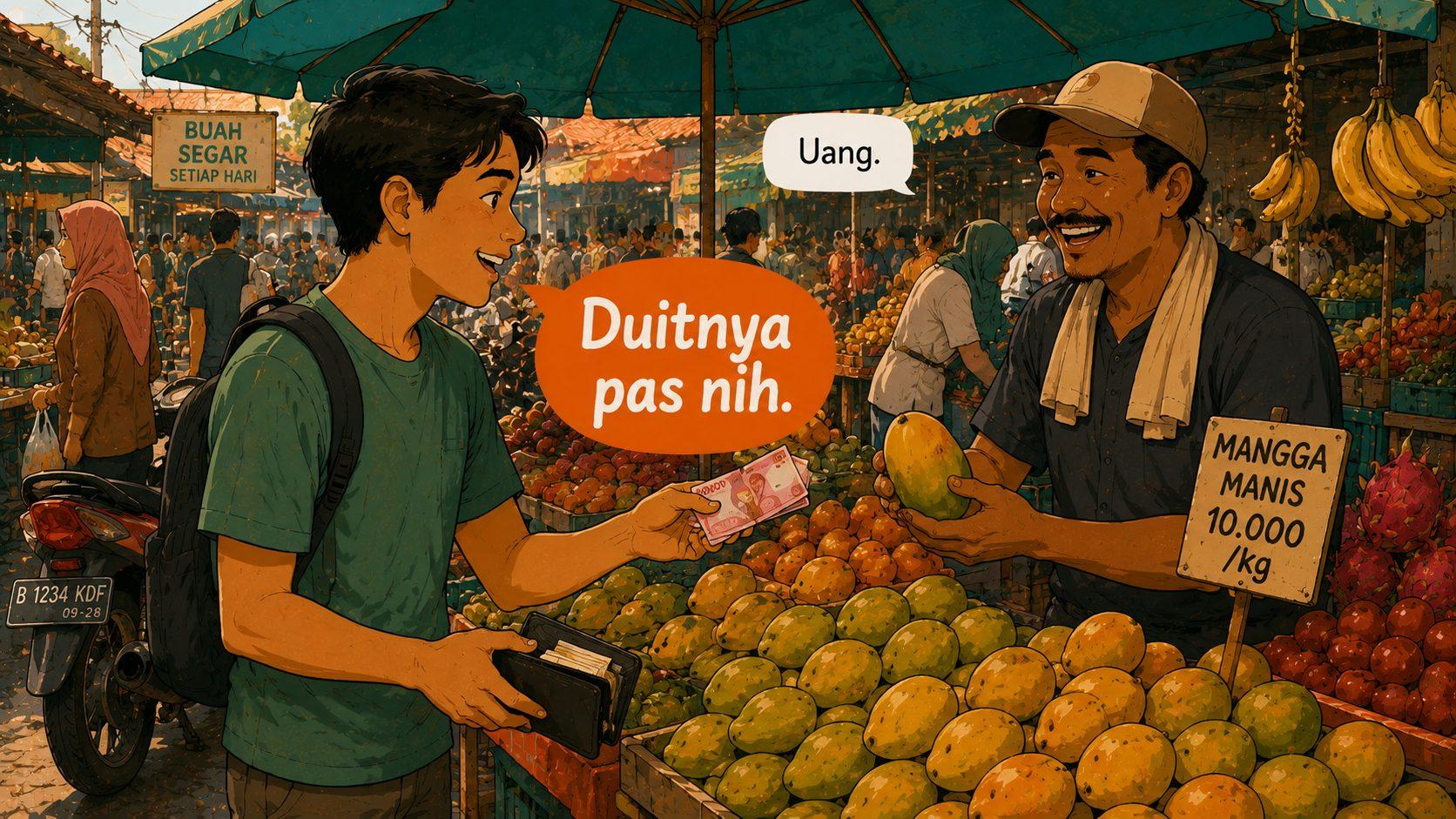
How to Say 'Uang' in Casual Indonesian (Duit)
Uang is the textbook word for money in Indonesian.. but duit is what people actually say. Plus the slang terms for common rupiah amounts.

How to Say 'Mendengar' in Casual Indonesian (Denger)
Learn how Indonesians actually say 'to hear' in everyday conversation. Spoiler: it's not mendengar.
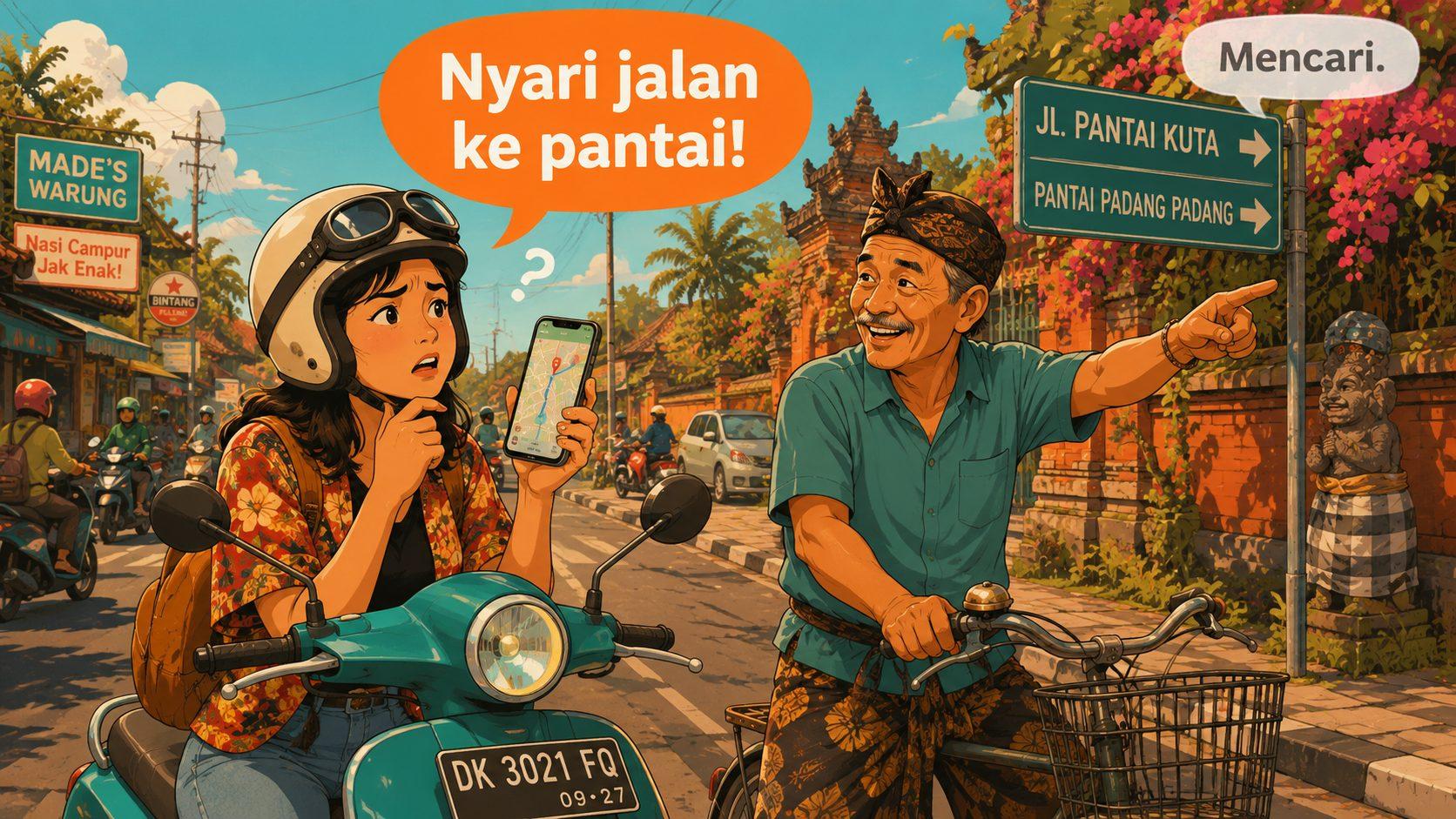
How to Say 'Mencari' in Casual Indonesian (Cari, Nyari)
Learn the casual ways Indonesians actually say 'to search' in everyday speech. From formal mencari to street-level nyari.