
Indonesian Pronoun Cheat Sheet: Saya/Aku/Gue and When to Use Each
Indonesian pronouns are.. a lot. Not because there are complicated grammar rules. There aren't. But because the social rules are doing all the heavy lifting.
Pick the wrong pronoun and you sound like a robot. Or worse, you sound rude.
This is your cheat sheet. Pin it. Screenshot it. Whatever works.
First Person (I / Me / We)
Saya is what the textbook teaches you. It's formal. Use it with strangers, in business meetings, with immigration officers. Safe, clean, distant.
Aku is the casual universal. Friends, texting, love songs. If you're not sure whether to go slang, aku is your safe bet.
"Aku nggak ngerti." (I don't understand.)
Gue (also spelled gua) is Jakarta slang. Very casual. Friends only. If you say gue in a job interview.. good luck. In texts it shrinks to gw because Jakartans are efficient like that.
"Gw lagi males." (I'm feeling lazy.)
For "we," there's a formal distinction. Kita technically includes the listener (inclusive we). Kami excludes the listener (exclusive we). But honestly.. in casual speech most people just use kita for everything. Kami sounds like a press conference.
Second Person (You)
This is where it gets interesting. Indonesian has maybe too many ways to say "you."
Anda is textbook formal. You'll see it in ads, official documents, formal letters. Regular people almost never say it out loud.
Kamu is your casual default. Works with friends, works with peers. Safe choice.
Lo (or lu) is Jakarta slang. It pairs with gue. If someone says gue to you, lo is fair game back.
"Lo udah makan?" (Have you eaten?)
Then there are the title-based pronouns. Bapak/Ibu (Sir/Madam) for elders and formal settings. Mas/Mbak (older brother/sister) for semi-formal daily interactions, like talking to a cashier or someone you just met. Bang is "bro," super casual, especially with ojol drivers and street food vendors.
And here's the thing that trips up English speakers.. Indonesians constantly use someone's name instead of "you." It's not weird. It's normal. Even affectionate.
"Rina mau ikut nggak?" (Do you want to come, Rina?) (literally: "Rina wants to join or not?")
Third Person (He / She / They)
Good news. Indonesian doesn't have gendered pronouns. No he vs she drama. 🎉
Dia means he or she. Just dia. Done.
Beliau is the respectful version. Reserved for elders, leaders, VIPs. Your boss's boss? Beliau.
Mereka is they/them. Straightforward.
Doi is slang for dia, but with romantic energy. Think "bae" or "that special someone." You'll hear it in gossip constantly.
"Doi udah chat belum?" (Has bae texted yet?)
The Big Table
| Pronoun | Meaning | Formality | When to Use |
|---|---|---|---|
| saya | I/me | Formal | Business, strangers, officials |
| aku | I/me | Casual | Friends, texting, songs |
| gue/gua | I/me | Slang | Jakarta friends only |
| gw | I/me | Slang (text) | Texting shorthand of gue |
| kita | we (inclusive) | Casual | Includes listener (used broadly) |
| kami | we (exclusive) | Formal | Excludes listener, press conferences |
| Anda | you | Very formal | Ads, official letters |
| kamu | you | Casual | Safe default for peers |
| lo/lu | you | Slang | Jakarta, paired with gue |
| Bapak/Ibu | you (Sir/Madam) | Formal | Elders, formal settings |
| Mas/Mbak | you (brother/sister) | Semi-formal | Strangers, daily interactions |
| Bang | you (bro) | Very casual | Service workers, casual |
| [Name] | you | Any | Extremely common substitute |
| dia | he/she | Neutral | Standard, no gender |
| beliau | he/she | Very respectful | Elders, VIPs |
| mereka | they | Neutral | Standard plural |
| doi | he/she | Slang | Romantic context, gossip |
The Real Rule
Pronouns in Indonesian aren't really about grammar. They're about relationship. How close are you? How old are they? How formal is the situation? That's what picks the pronoun.
Start with kamu and aku. Listen to what people use with you. Mirror it back. You'll calibrate fast.
So.. which pronouns do your Indonesian friends actually use with you? 🤔
Keep learning
Related articles
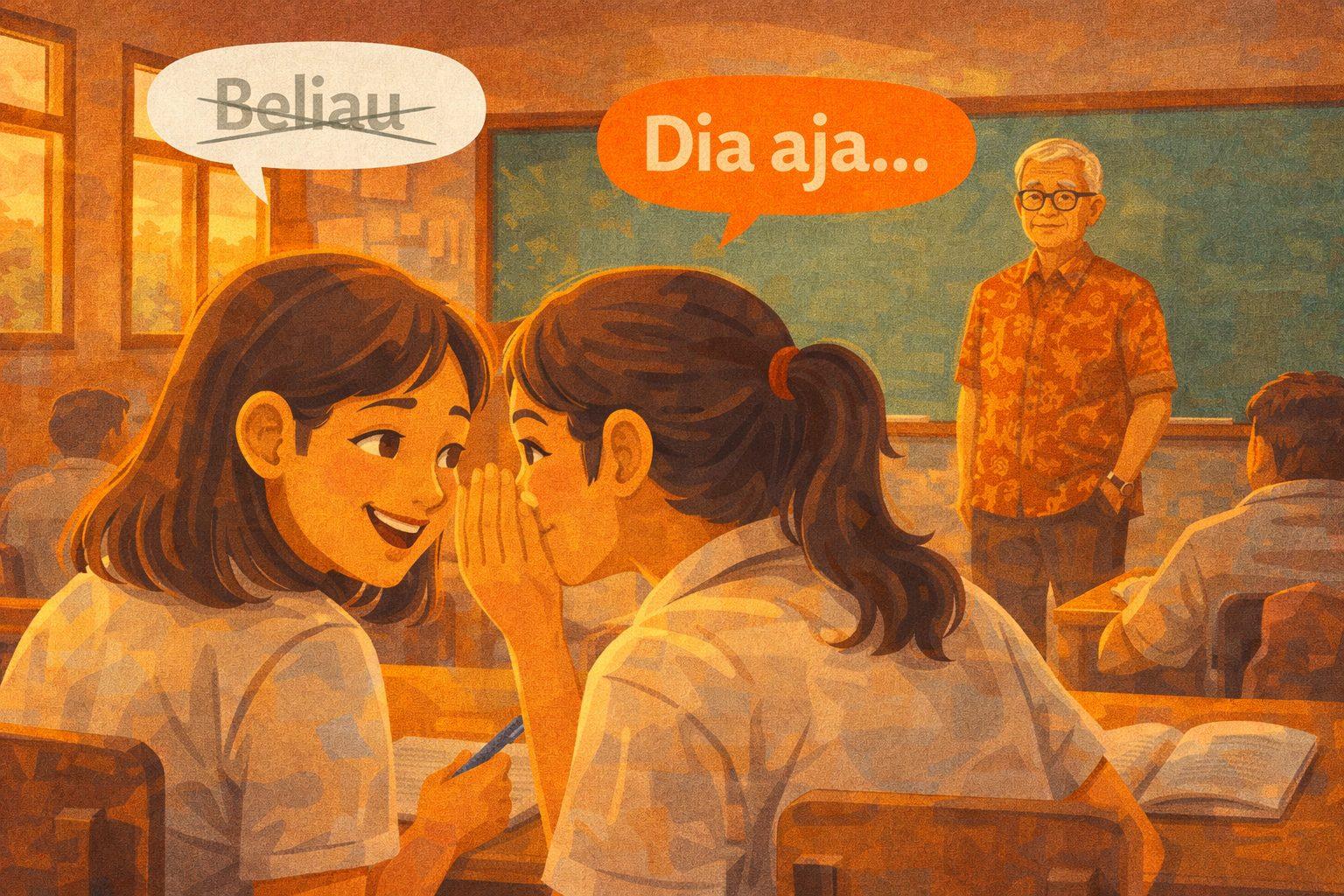
How to Say Beliau in Casual Indonesian (Spoiler: Just Say Dia)
Beliau is the ultra-respectful Indonesian pronoun you'll learn in textbooks. But nobody uses it at the warung. Here's what Indonesians actually say instead — dia, doi, si dia, and more.

How to Say 'Mohon' in Casual Indonesian (Hint: You Don't)
Mohon is way too formal for everyday Indonesian. Learn the casual alternatives — tolong, dong, and the -in + dong pattern that makes any verb a friendly request.
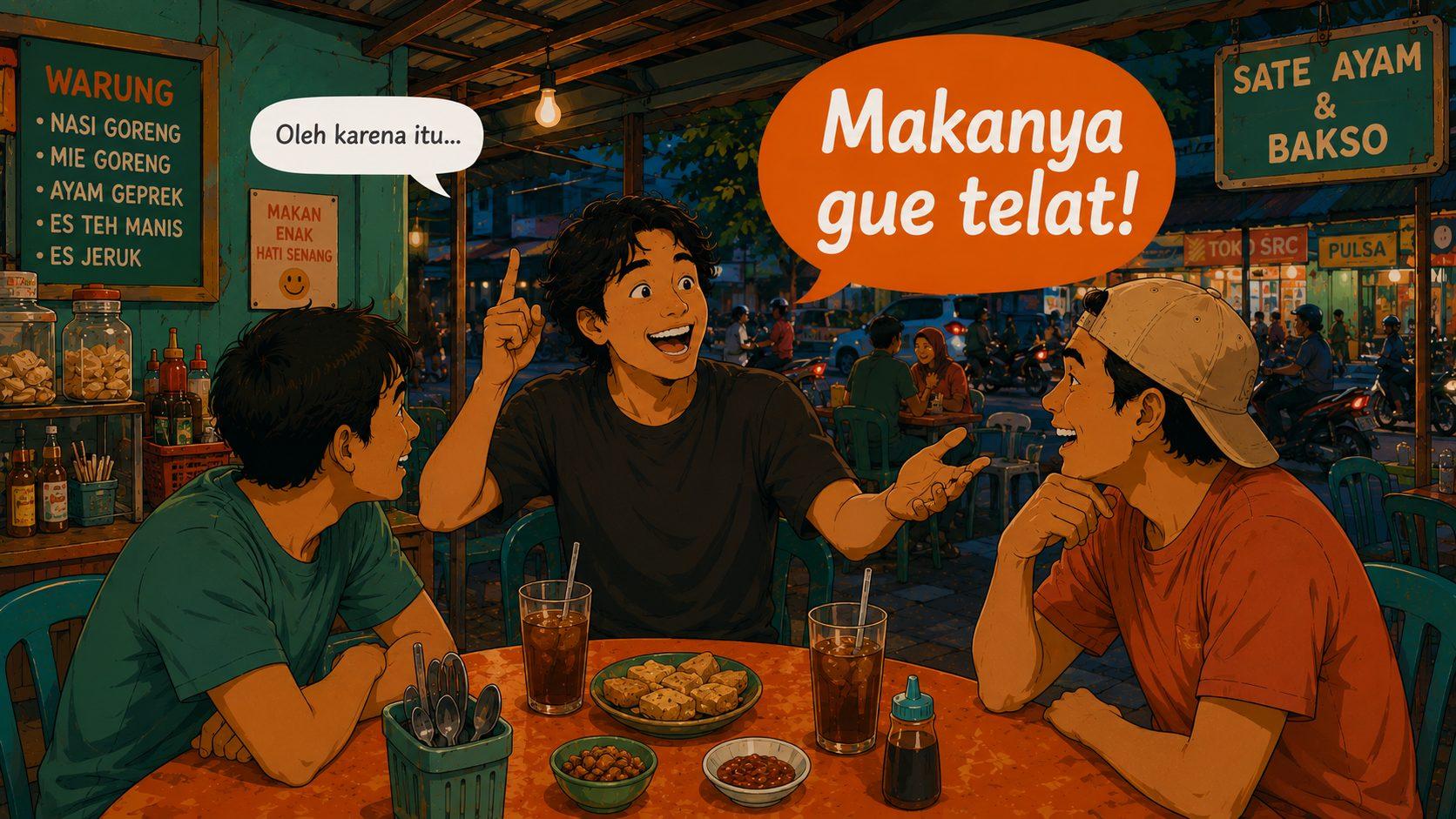
How to Say 'Oleh Karena Itu' in Casual Indonesian (Hint: Nobody Says That)
Stop sounding like a textbook. Learn the casual Indonesian connectors real people use — makanya, jadinya, terus, abis itu, soalnya, biar — and ditch oleh karena itu forever.