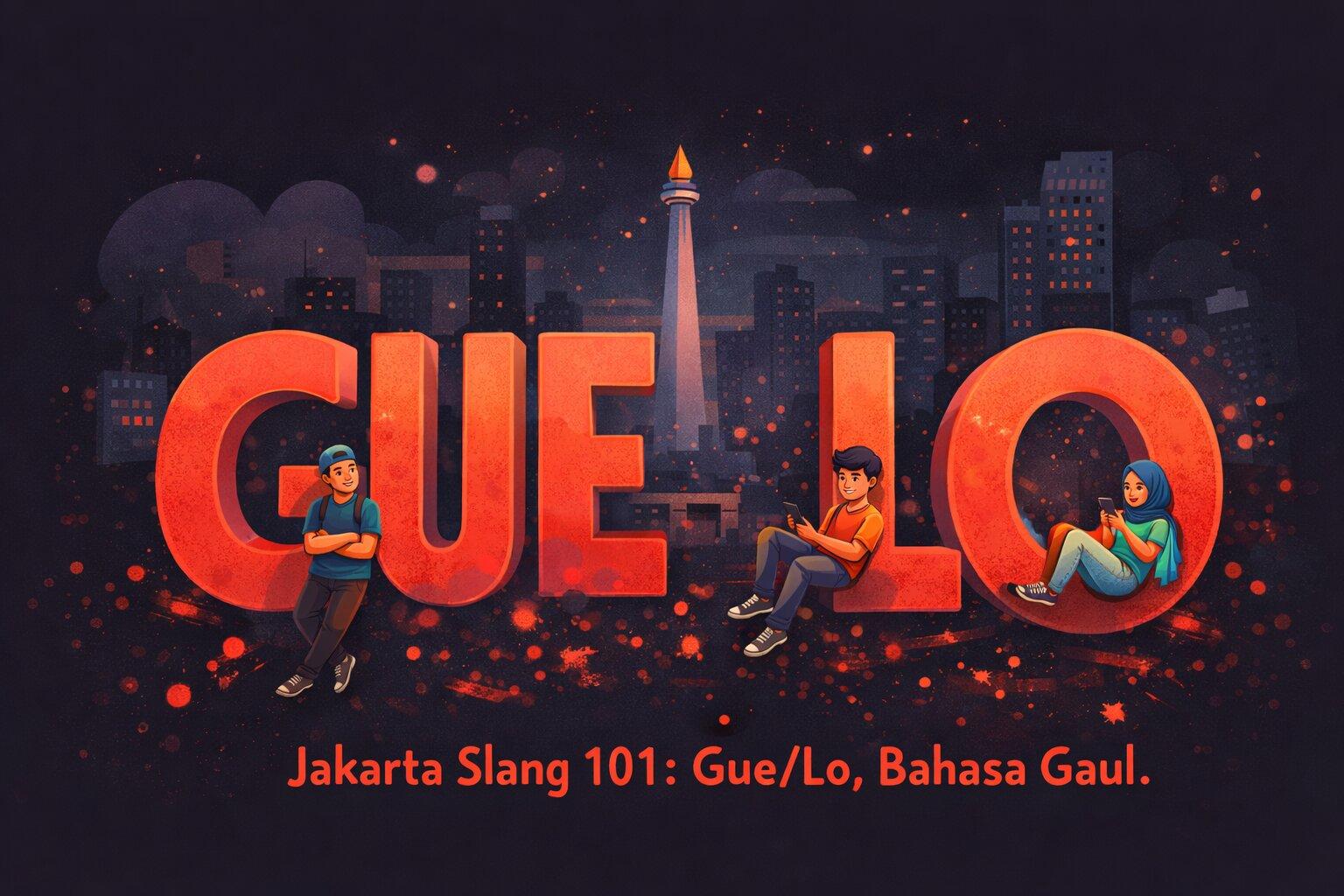
Jakarta Slang 101: Gue/Lo, Bahasa Gaul, and Why It Matters
You studied Indonesian for months. You memorized saya and anda. You practiced your formal greetings.
Then you land in Jakarta and hear this:
"Gue udah bilang ke lo, kagak bisa kayak gitu."
And you understand.. nothing. 🤯
Welcome to bahasa gaul.
What Is Bahasa Gaul?
Literally: "sociable language." The casual, slang-filled Indonesian that real people actually speak. Especially young people. Especially in Jakarta.
It's not a separate language. It's Indonesian with the stiffness ripped out. Shorter words. Borrowed slang. Betawi (native Jakarta) influence everywhere.
And here's the thing. Jakarta is the epicenter. Always has been. TV shows, movies, TikTok, Instagram reels.. they all broadcast Jakarta slang to the entire archipelago. If you're under 40 in Indonesia, you probably speak some version of this. Whether you're from Medan or Makassar.
Jakarta slang is casual Indonesian now.
The Pronouns That Change Everything
Your textbook gave you these:
- Saya = I (formal)
- Anda = you (formal)
Fine for business meetings. Job interviews. Talking to your professor.
But among friends? Nobody says saya. Nobody says anda. You have two options.
Option 1: Gue / Lo (Jakarta Style)
- Gue = I, me
- Lo = you
This is pure Jakarta. Comes from Hokkien Chinese via Betawi culture. It sounds confident. Direct. A little rough around the edges.
"Lo mau ke mana?" (Where are you going?) "Gue lagi di rumah." (I'm at home.)
Option 2: Aku / Kamu (Universal)
- Aku = I, me
- Kamu = you
Works everywhere in Indonesia. Softer. Warmer. Less regional.
"Aku kangen kamu." (I miss you.)
So Which One Do You Use?
It depends on the vibe.
Hanging out with Jakarta friends? Gue/lo. Chatting with someone from Jogja or Bali? Aku/kamu. Mixed group, not sure of the energy? Aku/kamu is always safe. Texting your crush? Aku/kamu (more romantic). Joking with your bros? Gue/lo (more casual, more banter).
Get it wrong and.. honestly, people won't be mad. They'll just think it's funny. A non-Jakartan dropping gue/lo confidently? That gets respect. Or laughs. Sometimes both. 🙈
Beyond Pronouns: Jakarta Slang You Need
Okay. Pronouns are just the start. Here are the words you'll hear constantly.
Kagak = no, nope (emphatic). Regular negation is gak or nggak. But kagak? That's a hard no. Jakarta energy.
"Lo mau ikut?" / "Kagak." (You coming? / Nope.)
Bokap / Nyokap = dad / mom. Slang. You would never say this to your parents' faces (well.. maybe). But talking about them with friends? Always.
"Nyokap gue marah banget." (My mom is so mad.)
Cewek / Cowok = girl / guy. Universal at this point. Textbooks teach perempuan and laki-laki. Real life uses cewek and cowok.
Nongkrong = hanging out. Sitting at a warung. Doing nothing in particular. This is an entire lifestyle in Jakarta. 😬
"Yuk nongkrong di sana." (Let's hang out there.)
Kepo = nosy. From Hokkien kaypoh. Used all the time.
"Jangan kepo deh." (Don't be nosy.)
Baper = overly emotional, taking things too personally. Short for bawa perasaan (carrying feelings). One of the most useful slang words in modern Indonesian.
"Lo jangan baper gitu dong." (Don't be so sensitive about it.)
Santai = relax, chill. Used constantly. As a greeting, as advice, as a whole philosophy.
"Santai aja, bro." (Just chill, bro.)
Gokil = crazy, awesome, wild. Always positive (or at least impressed).
"Gokil sih makanannya." (The food is insane.)
Why This Actually Matters
Here's the real point. If you only learn formal Indonesian, you'll survive. You can order food. Ask directions. Handle bureaucracy.
But you won't connect.
Bahasa gaul is how Indonesians build friendships. It signals that you're in the circle. That you're not treating the conversation like a textbook exercise. When you drop a casual gue instead of a stiff saya, people relax. The wall comes down.
And that's the whole game. Language isn't just vocabulary and grammar. It's social glue. The slang is the shortcut to real connection.
Jakarta slang has already gone national. It's in every Netflix Indonesian series. Every viral tweet. Every group chat. You can learn it now, or keep wondering why your Indonesian sounds like a government press release.
So.. lo udah siap belajar bahasa gaul? 🤯
Keep learning
Related articles

How to Say Pekerjaan in Casual Indonesian (Hint: Nobody Says Pekerjaan)
Learn how Indonesians actually talk about work in everyday conversation. Forget 'pekerjaan' — it's 'kerjaan.' Plus the casual work vocab you need to survive small talk in Jakarta.

How to Say 'Mengirim' in Casual Indonesian (Kirim, Ngirim)
Mengirim is the textbook word for 'to send' in Indonesian.. but nobody actually says it. Here's how kirim and ngirim work in real life.
How to Say 'Mengatakan' in Casual Indonesian (Bilang, Ngomong)
Mengatakan is the formal Indonesian word for 'to say' or 'to tell.' In real life, everyone just says bilang. Here's how it works and why you'll use it 20 times a day.