Why You Sound Like a Textbook When Speaking Indonesian (And How to Fix It)
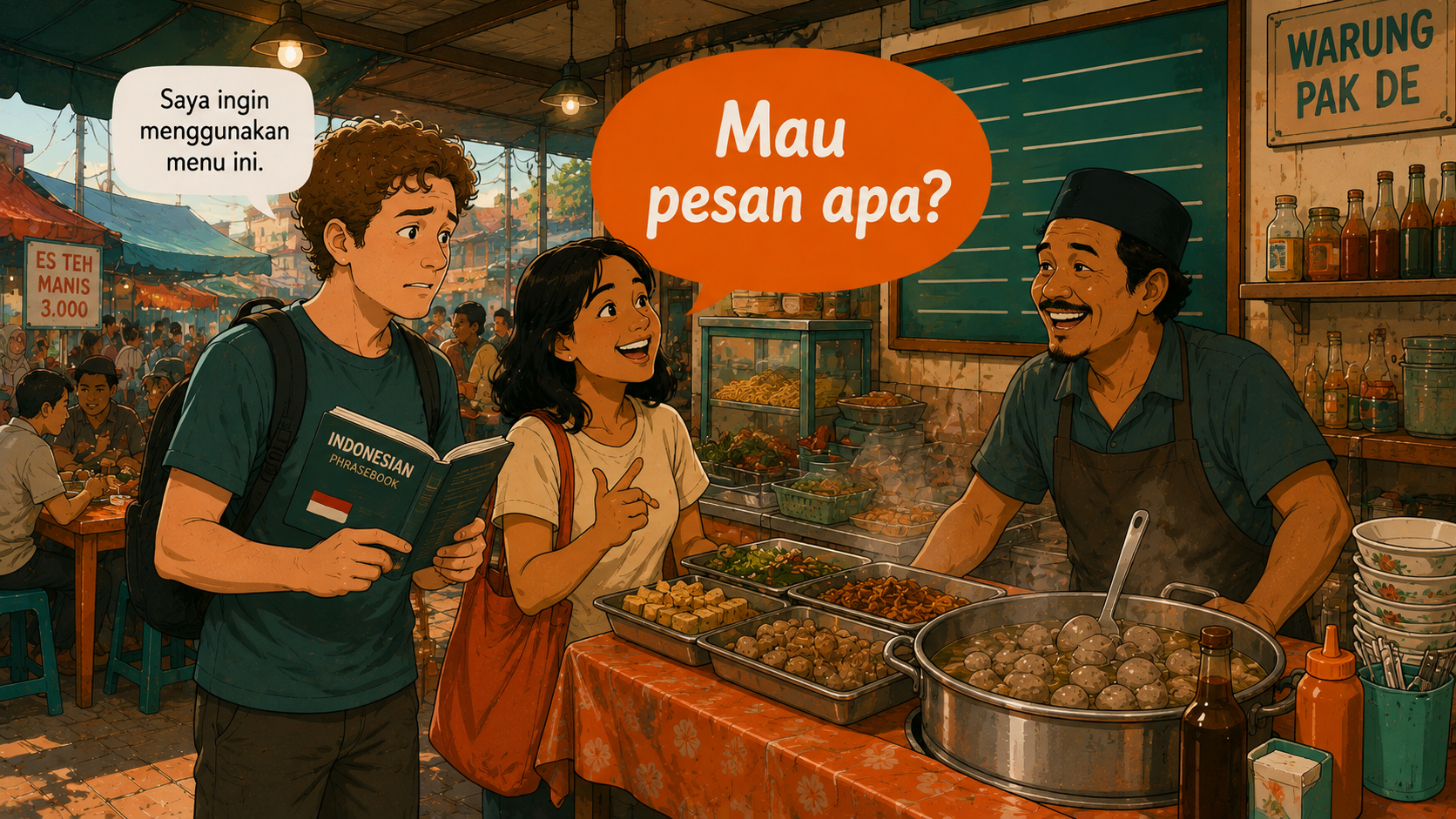
You studied Indonesian. You passed the exam. You landed in Jakarta, walked into a warung, and said:
"Saya ingin menggunakan menu ini. Apakah Anda bisa membantu saya?"
Grammatically perfect. The person behind the counter understood every word.
They also immediately clocked you as someone who learned Indonesian from a textbook. 🙈
The gap is HUGE
Here's the thing most courses won't tell you. Indonesian has two languages living inside it. There's Bahasa Indonesia - the formal, standardized version you find in textbooks, news broadcasts, and government documents. Then there's bahasa gaul - the colloquial, everyday Indonesian that actual humans use when they talk to each other.
Every language has this gap. English has it too. But in Indonesian? The gap is enormous. It's like learning English from Shakespeare and then trying to order an oat milk latte.
You'll be understood. You'll just sound.. off. Stiff. Like you're giving a speech when everyone else is having a conversation.
The 5 biggest giveaways
Let's get specific. These are the things that instantly mark you as a textbook speaker.
1. Using "saya" with friends
Textbook: Saya mau pergi ke toko. (I want to go to the store.)
Real life: Gue mau ke toko. or Aku mau ke toko.
"Saya" is for job interviews and talking to your partner's parents for the first time. With friends? It's "gue" (Jakarta style) or "aku" (everywhere else). Using "saya" in casual conversation is like saying "I would like to inform you that.." before every sentence. 😬
2. Keeping all those prefixes
Textbook: Saya sedang menggunakan komputer. (I am using the computer.)
Real life: Gue lagi pake komputer.
Indonesian textbooks love the me-/men-/meng- verb prefixes. Real spoken Indonesian? People drop them constantly. "Menggunakan" becomes "pake." "Membicarakan" becomes "ngomongin." The prefixes aren't wrong. They're just.. formal. And nobody talks like that at a coffee shop.
3. Saying "tidak" instead of "gak"
Textbook: Saya tidak mengerti. (I don't understand.)
Real life: Gue gak ngerti.
"Tidak" is three syllables of formality. "Gak" or "nggak" is what people actually say. This one alone will change how natural you sound overnight.
4. "Sangat" instead of "banget"
Textbook: Ini sangat enak. (This is very delicious.)
Real life: Ini enak banget.
Two problems here. First, "sangat" sounds like you're writing an essay. "Banget" is what people say. Second - and this is the sneaky part - "sangat" goes before the adjective (sangat enak), but "banget" goes after it (enak banget). Get both right and you sound ten times more natural. 🤯
5. Formal question words
Textbook: Bagaimana cara pergi ke sana? (How do I get there?)
Real life: Gimana caranya ke sana?
"Bagaimana" becomes "gimana." "Mengapa" becomes "kenapa." "Apakah" gets dropped entirely. These swaps are so automatic for native speakers that hearing the formal versions in casual conversation genuinely sounds strange to them.
The quiet problem
Here's what makes this tricky. Indonesians won't correct you.
They're incredibly polite. They'll understand your textbook Indonesian perfectly. They'll smile. They'll respond. They might even compliment your Indonesian.
But internally? They'll register you as formal. Distant. Not quite in the circle. It's not rudeness on their part. It's just that language signals belonging, and formal language signals "I'm keeping my distance."
Nobody will tell you this. You have to figure it out yourself.
How to actually fix it
Three things that work.
Consume casual content. Indonesian YouTube and TikTok are goldmines. Watch vlogs, not news. Listen to how people actually talk. Pay attention to what's missing compared to your textbook.
Find friends who'll correct you. This is hard because most Indonesians default to being supportive. You need to explicitly ask them: "Please correct me when I sound too formal." And then remind them. Repeatedly.
Use tools that catch it in real-time. This is exactly why we're building what we're building. Imagine speaking Indonesian and getting instant feedback when you slip into textbook mode. Not grammar correction - vibe correction.
The formal version of you sounds competent. The colloquial version of you sounds like someone people actually want to hang out with.
So here's my question: what was your moment when you realized your Indonesian sounded weirdly formal? Did someone finally tell you, or did you figure it out on your own?
Keep learning
Related articles
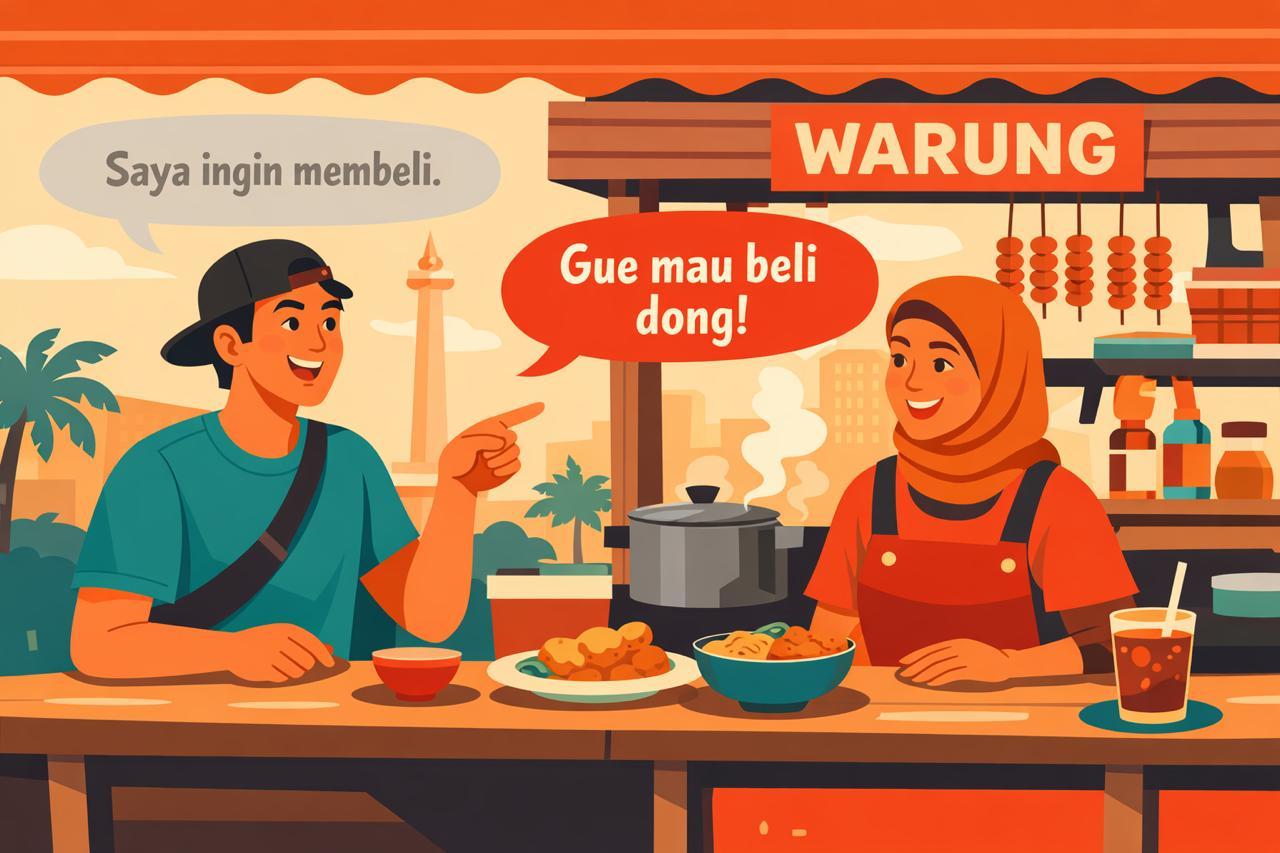
Bahasa Gaul: A Beginner's Guide to Indonesian Slang
Textbook Indonesian won't prepare you for real conversations. Here's your intro to bahasa gaul — the language Indonesians actually speak.
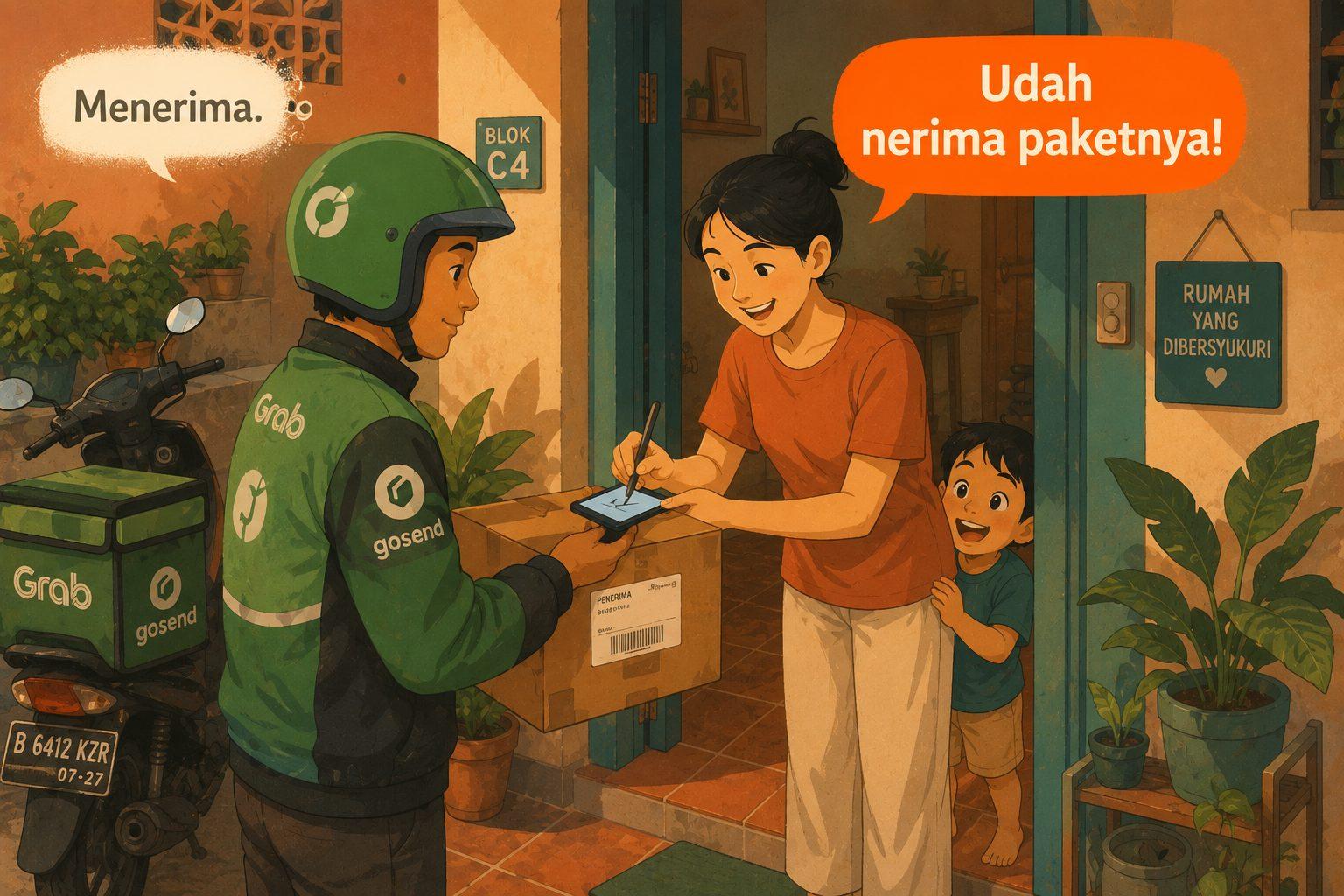
How to Say Menerima in Casual Indonesian: Terima, Nerima, and Why Online Shopping Made It Essential
Learn how Indonesians actually say 'menerima' in everyday conversation. Hint: nobody says menerima. It's terima or nerima — and thanks to Shopee and Tokopedia, you'll hear it everywhere.
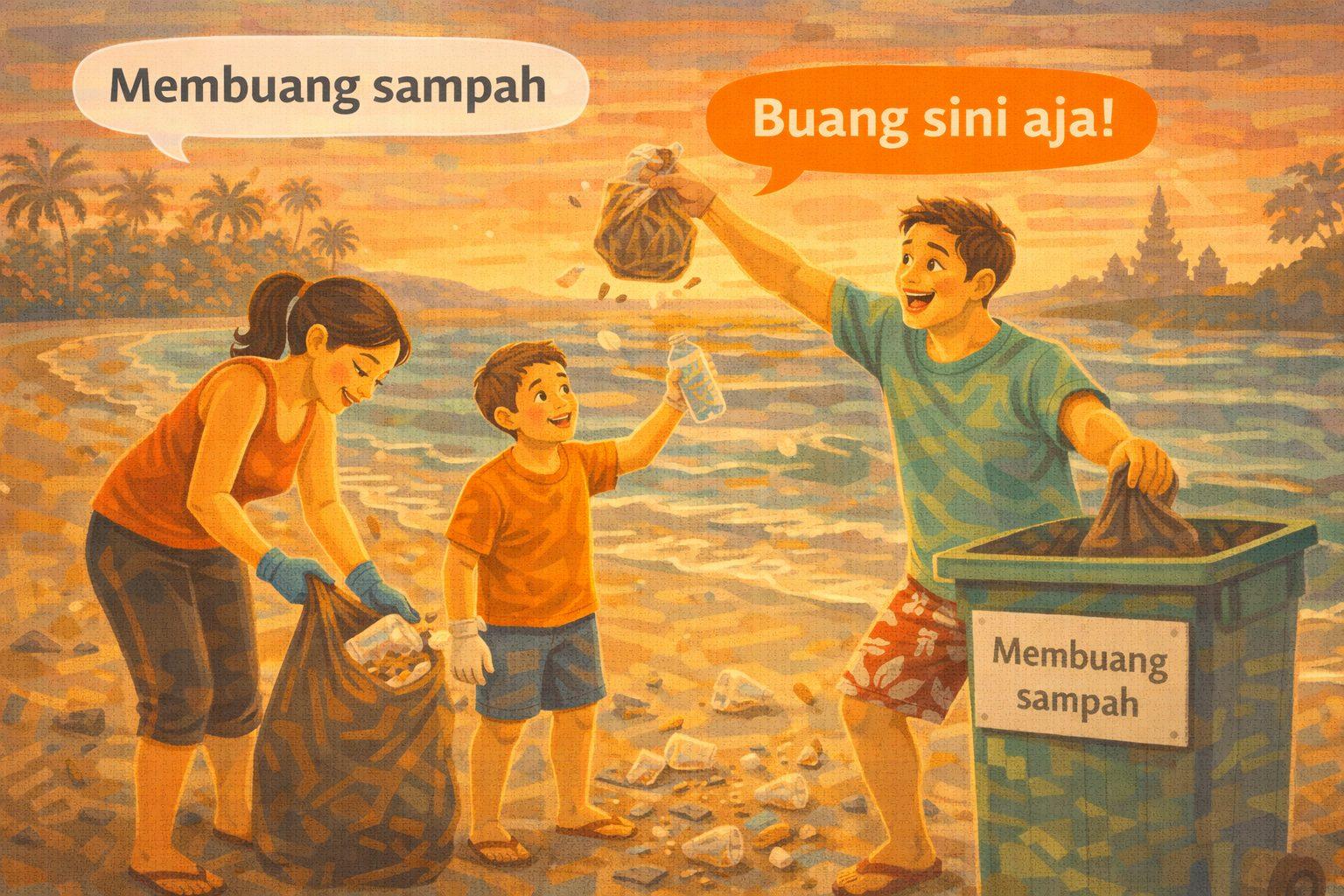
How to Say Membuang in Casual Indonesian
Membuang is textbook Indonesian. Real people say buang. Learn how Indonesians actually use buang in everyday conversation — from throwing trash to bathroom euphemisms.