
How to Say 'Mohon' in Casual Indonesian (Hint: You Don't)
Stop saying "mohon."
Seriously. Unless you're writing a formal letter or standing in a government office, "mohon" makes you sound like a bureaucratic robot. I learned this the hard way at a warung in Jogja when the ibu behind the counter gave me the most confused look after I said "mohon maaf." She literally laughed.
"Mohon" is petition-level formal. Think: stamped documents and official requests. Not conversations with actual humans.
So what do you say instead?
"Tolong" — Your Everyday "Please"
The word you actually want is tolong.
Tolong means both "please" and "help." It's the workhorse of polite requests in Indonesian. Works everywhere. Restaurants. Ojol drivers. Your kos-kosan landlord. Friends. Strangers. Everyone.
- Tolong ambilkan (please get/grab that)
- Tolong bantu saya (please help me)
- Tolong tunggu sebentar (please wait a moment)
It's polite. It's neutral. Nobody will look at you weird for using it. But it's still.. a bit textbook. A bit stiff. Like saying "would you kindly" in English.
You want to sound like a real person? Keep reading.
Enter "Dong" — The Magic Particle 🪄
"Dong" is a particle. No direct English translation. It softens a request and adds a casual, slightly pleading vibe. Think of it like "come on" or "won't you" but way shorter and way more natural.
Compare these two:
- Bantu saya (help me) — flat, almost demanding
- Bantu dong (help me out, would ya?) — friendly, casual, human
Hear the difference? "Dong" transforms a command into a request between friends. It's the difference between a cold email and a text message.
You'll hear "dong" constantly in Jakarta. In Bandung. In Bali. Literally everywhere Indonesians are speaking casually. Which is.. most of the time.
The "-in" + "dong" Pattern (This Is THE Move)
Okay here's the real unlock. This is the pattern that made my Indonesian go from "textbook tourist" to "oh wait, you actually speak?" overnight.
Take any verb root. Add -in. Add dong. You now have a casual request.
The suffix "-in" is the colloquial version of "-kan" (which you might know from formal Indonesian). It means you're asking someone to do the action for you or to something.
Let me show you:
| Verb Root | + "-in" + "dong" | Meaning |
|---|---|---|
| ambil (take/grab) | Ambilin dong | Grab that for me |
| beli (buy) | Beliin dong | Buy it for me |
| bantu (help) | Bantuin dong | Help me out |
| tolong (help) | Tolongin dong | Give me a hand |
| bawa (bring/carry) | Bawain dong | Bring it for me |
| cariin (find/look for) | Cariin dong | Find it for me |
| bikinin (make) | Bikinin dong | Make it for me |
| pinjemin (lend) | Pinjemin dong | Lend it to me |
See the pattern? Dead simple. Verb root + in + dong. That's it. That's the whole formula.
I use this probably 30 times a day when I'm in Indonesia. "Bikinin kopi dong" (make me a coffee). "Ambilin dong" (grab that for me). "Ajarin dong" (teach me). It flows. It's natural. People respond to it instantly because it's how they talk.
"Tolong" vs "Tolongin Dong" — Feel the Difference
Let's put them side by side:
Tolong bantu saya (please help me) → Polite. Correct. Fine for strangers or semi-formal situations.
Bantuin dong (help me out) → Casual. Warm. What you'd say to a friend, a colleague, your grab driver.
Tolongin dong (give me a hand, would you?) → Even more casual. Almost playful. You're leaning on the relationship.
The vibe shift is real. "Tolong" keeps distance. "Dong" closes it.
"Minta" and "Minta Tolong" — Asking For Stuff
Another word you need: minta.
"Minta" means "to ask for" or "to request." Less about helping, more about getting something.
- Minta air (asking for water — at a restaurant, totally normal)
- Minta maaf (asking for forgiveness — casual version of "mohon maaf")
- Minta tolong (asking for help — literally "asking for help")
"Minta tolong" is great. It's polite but not stiff. You'll hear it all the time:
Minta tolong dong, bisa anterin ke stasiun? (Could you help me out, can you take me to the station?)
See how "dong" snuck in there again? It's everywhere. Once you start hearing it, you can't stop. 😄
The Formal vs Casual Showdown
Let's really drive this home. Here's the same request at different formality levels:
Ultra formal (government letter): "Mohon dibantu untuk menyelesaikan masalah ini." (We respectfully request assistance in resolving this matter.)
Formal (office email): "Tolong bantu saya menyelesaikan masalah ini." (Please help me resolve this matter.)
Casual (texting a coworker): "Bantuin dong, ini ada masalah nih." (Help me out, there's a problem here.)
Super casual (your best friend): "Bantuin dong!" (Help!)
You see how "mohon" lives in a completely different universe? It's not wrong. But using it in conversation is like showing up to a beach party in a suit. Technically fine. Practically weird.
Quick Reference: When to Use What
Mohon → Formal letters. Government documents. Official announcements. Speeches. Prayer. That's it.
Tolong → Default polite "please." Safe everywhere. Good baseline.
Minta → Asking for things. Requesting. "Can I have.."
[Verb]-in dong → Casual requests to people you're comfortable with. The real Indonesian. The one they don't always teach in class.
Bonus: "Dong" Isn't Just for Requests
Quick side note. "Dong" works beyond requests too.
- Iya dong! (of course! / obviously!)
- Jangan dong (don't do that / come on, don't)
- Kasih tau dong (tell me! / come on, tell me)
It adds that nudge. That "come onnnn." I honestly think "dong" might be the most useful particle in all of casual Indonesian. Fight me on that. 🔥
The Takeaway
Forget "mohon" unless you're writing a formal document. For real life:
- Tolong for polite, neutral requests
- Verb-in + dong for casual, friendly requests
- Minta tolong when you need help from someone
The "-in dong" pattern alone will transform how natural your Indonesian sounds. It's one pattern. It works on virtually any verb. And Indonesians will immediately hear that you've moved past the textbook.
Start small. Next time you're at a warung, try "Bikinin nasi goreng dong" instead of "tolong buatkan nasi goreng." Watch the difference in how people respond to you.
So.. what's your go-to way to make requests in Indonesian? Still stuck on "tolong" or have you graduated to "dong" life? Drop your favorite "-in dong" combo below 👇
Keep learning
Related articles
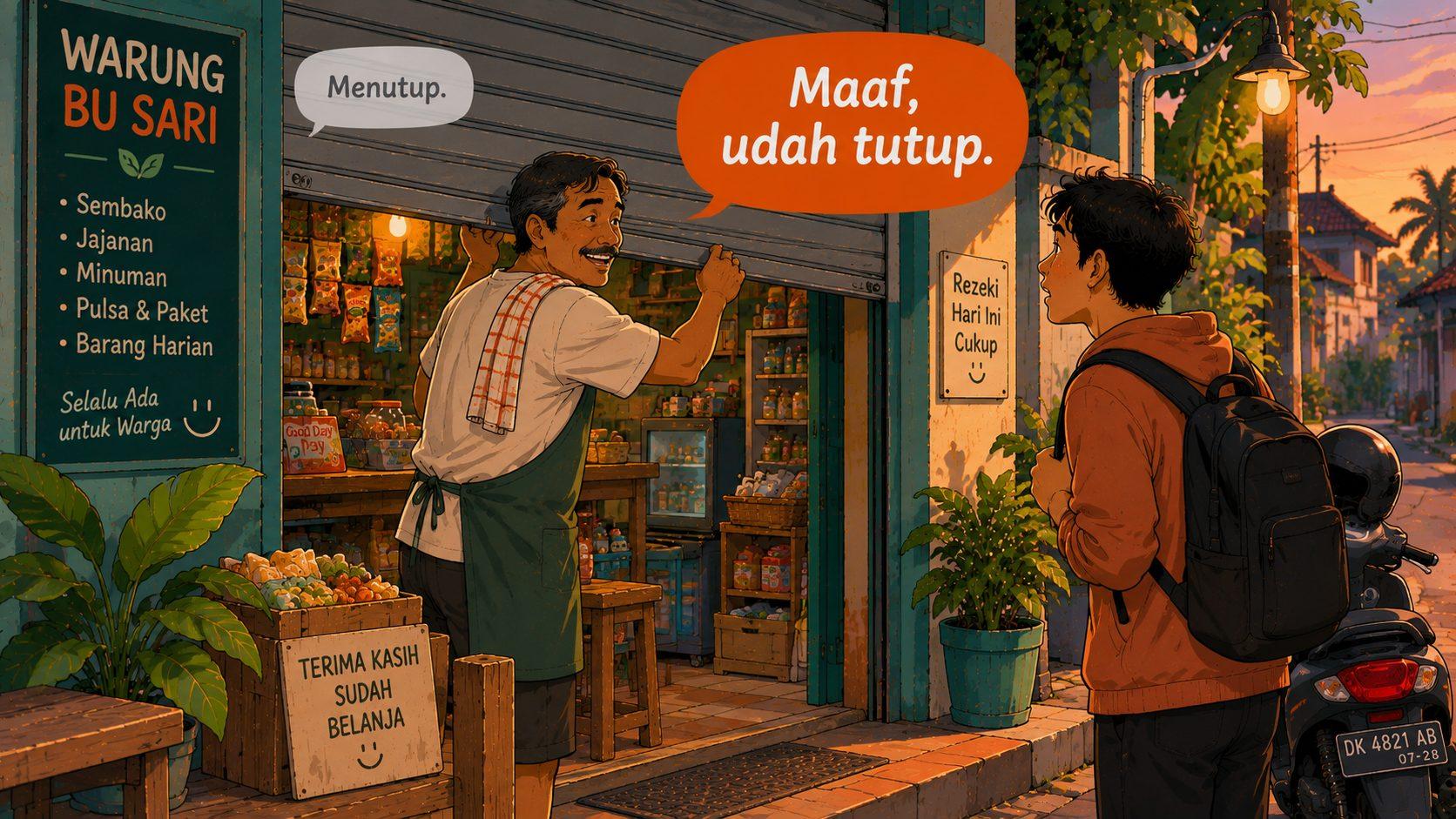
How to Say Menutup in Casual Indonesian: Nutup, Tutup & When Things Are 'Udah Tutup'
Nobody says 'menutup' on the street. Learn the casual Indonesian words for closing — tutup, nutup — plus everyday expressions like tutup mulut, tutup mata, and the flexible meaning of 'udah tutup.'
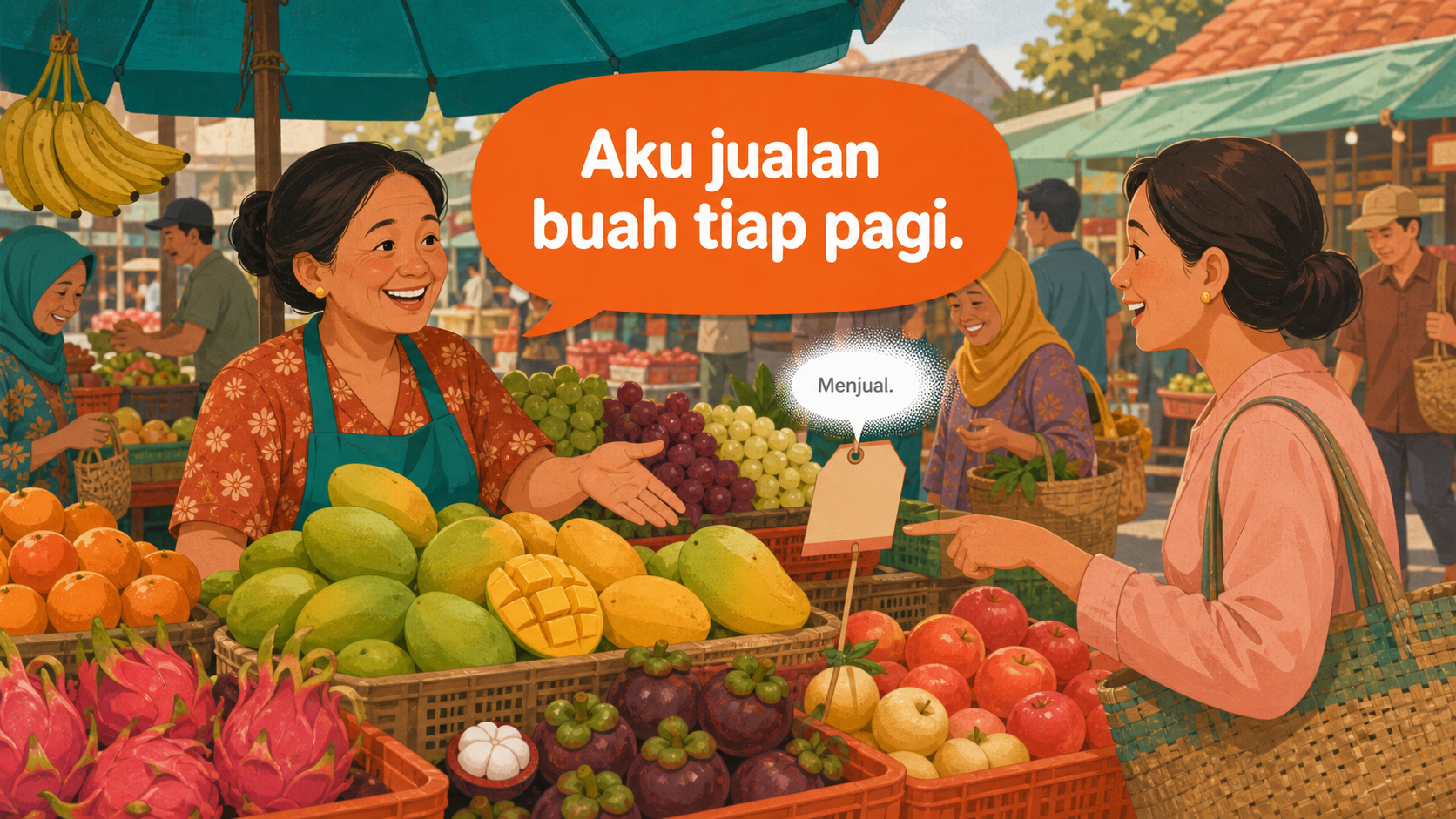
How to Say Menjual in Casual Indonesian: Jual, Jualan, and the Art of Selling Everything
Learn how Indonesians actually say 'menjual' in everyday conversation. Spoiler: nobody says menjual. It's jual, jualan, dijual — and it's everywhere.
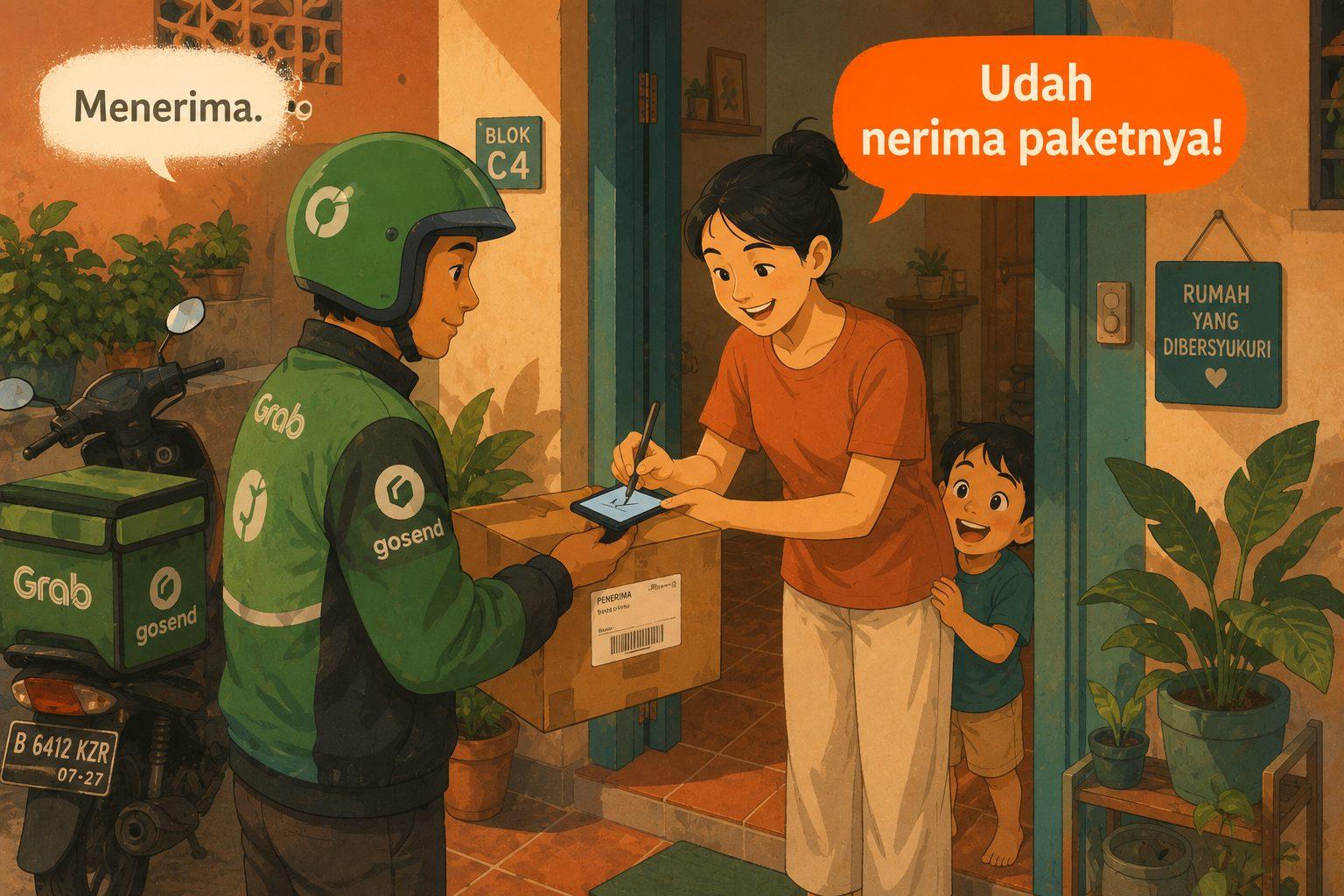
How to Say Menerima in Casual Indonesian: Terima, Nerima, and Why Online Shopping Made It Essential
Learn how Indonesians actually say 'menerima' in everyday conversation. Hint: nobody says menerima. It's terima or nerima — and thanks to Shopee and Tokopedia, you'll hear it everywhere.