
How to Say Mengajak in Casual Indonesian (Ngajak, Ajak & the Magic of Yuk)
Your textbook taught you mengajak. Nobody says that.
I mean.. technically it's correct. You'll see it in formal speeches. News articles. Government memos. But on the street? In WhatsApp chats? At the warung? Nah.
The word you actually need is ngajak. Or just ajak.
The Basics
Mengajak means "to invite" or "to ask someone to come along." It's one of those me-N- prefix verbs that gets its prefix chopped right off in daily conversation.
Mengajak → ngajak (casual) → ajak (even more casual)
That's it. That's the transformation. Drop the "me-" prefix, and you sound like an actual human being instead of a walking KBBI dictionary.
Some examples:
- Gue mau ngajak lo makan (I wanna invite you to eat)
- Ajak temen lo dong (Bring your friend, come on)
- Siapa yang ngajak? (Who invited/suggested it?)
Simple. But there's a word that makes all of this even simpler.
Yuk: The Most Important Casual Word in Indonesia
If I had to pick one single word that captures casual Indonesian social culture.. it would be yuk.
Yuk means "let's go" or "come on" or "let's do it." It's an invitation compressed into three letters. You can throw it at the beginning of a sentence, the end of a sentence, or just say it alone.
- Yuk makan (Let's eat)
- Ngopi yuk (Let's grab coffee)
- Yuk! (Let's go!)
- Ayuk (slightly longer version, same meaning)
I heard "yuk" probably fifty times a day when I was living in Jakarta. It's everywhere. It IS the invite. You don't even need the verb ngajak half the time because yuk does all the heavy lifting.
Someone posts a photo of a cool cafe? Yuk kapan-kapan (Let's go sometime). Your friend mentions a new movie? Nonton yuk (Let's watch it). It's reflexive. Automatic. Indonesians just.. invite.
Ngajak Ngopi Yuk
Coffee culture in Indonesia is massive. And the phrase ngajak ngopi (to invite someone for coffee) might be the single most common use of this verb.
Here's how it usually goes down. You get a WhatsApp message:
"Bro ngopi yuk" (Bro let's get coffee)
That's it. No planning. No "are you free next Thursday at 2pm." Just ngopi yuk. And you either reply yuk or gas (let's go) or jam berapa (what time).
The whole exchange takes about four messages. Indonesians are incredibly efficient at making plans. Or maybe incredibly spontaneous. Both.
Other examples with ngajak:
- Ngajak jalan yuk (Let's go hang out)
- Gue ngajak dia tapi dia ga bisa (I invited her but she couldn't make it)
- Lo ngajak siapa aja? (Who all are you inviting?)
Diajak: Being on the Receiving End
Now flip it. Diajak is the passive form. It means "to be invited" or "to be asked along."
- Gue diajak nonton (I got invited to watch a movie)
- Dia ga diajak (She wasn't invited) 😬
- Enak ya diajak liburan (Nice, getting invited on a vacation)
That last example.. "dia ga diajak".. that one stings. Because in Indonesian social culture, not being invited is a big deal. Which brings me to the real point.
Rame-Rame: Nobody Does Anything Alone
Here's something that took me a while to understand about Indonesia. People don't really do things solo. The concept of rame-rame (doing things together, in a group, making it lively) is baked into the culture.
Going to the mall? Rame-rame. Eating lunch? Rame-rame. Road trip? Definitely rame-rame.
The word rame means crowded or lively. When you double it.. rame-rame.. it becomes this beautiful concept of "the more the merrier." It's not just tolerance for a big group. It's a preference. A default setting.
This is why ngajak is such a core verb. Indonesians are constantly inviting. Constantly including. If you're eating and someone walks by, you say mau ikut? (wanna join?) or just yuk makan (come eat). Even if there's barely enough food. The invite matters more than the logistics.
I once sat down at a warung by myself and within ten minutes had three strangers eating with me. Nobody asked permission. Someone just said "sini dong" (come here) and suddenly it was a group lunch. That's rame-rame in action.
The WhatsApp Invite Culture
Modern ngajak happens on WhatsApp. Almost exclusively.
Indonesian WhatsApp groups are legendary. Every friend circle has one. Every office has one. Every apartment building, neighborhood, school alumni batch.. groups everywhere. And they're all buzzing with casual invites.
A typical group chat invite looks like:
"Guys sabtu ngapain? Ngajak makan di tempat baru yuk" (Guys what are you doing Saturday? Let's go eat at a new place)
Then twenty people reply yuk and somehow only six show up. But that's fine. The invite was extended to everyone. That's what counts.
You'll also see:
- Ikut dong (Let me join / count me in)
- Boleh ikut ga? (Can I come along?)
- Ajak gue lah (Invite me, come on) 😄
That last one is key. In Indonesian culture, it's totally normal to invite yourself. Ajak gue lah is not rude. It's endearing. It means "I want to be included." And the answer is almost always yes.
Gue Ajak vs Gue Ngajak
Quick note on the difference. Both work but there's a subtle vibe shift.
Gue ngajak dia puts slight emphasis on the action of inviting. Gue ajak dia is even more casual. More abbreviated. Like the difference between "I'm gonna invite him" and "I'll bring him."
In practice? Interchangeable. Don't overthink it. Both are correct. Both sound natural.
Common Phrases to Lock In
Here's your cheat sheet. Save these:
| Casual | Meaning |
|---|---|
| Ngajak siapa? | Who are you inviting? |
| Ajak temen lo | Bring your friend |
| Yuk ikut | Come join us |
| Gue diajak | I got invited |
| Dia ga mau diajak | She doesn't want to be invited / She declined |
| Ngajak ngopi yuk | Let's go grab coffee |
| Ajak aja | Just invite them |
| Yuk kapan-kapan | Let's do it sometime |
| Rame-rame yuk | Let's all go together |
Why This Matters
Learning mengajak from a textbook is fine. But switching to ngajak and ajak in conversation? That's when people stop treating you like a tourist and start treating you like.. a person.
And learning yuk? That's when you start getting invited to things. 🔥
Indonesian social life runs on casual invites. Quick WhatsApp messages. Spontaneous plans. The assumption that more people equals more fun. If you can throw out a natural-sounding yuk ngopi or respond to an invite with a confident gas! you're already ahead of 90% of Indonesian learners.
The formal word mengajak has its place. But ajak, ngajak, and yuk? Those are the words that build friendships.
So here's my question. What's the best thing you've ever been randomly diajak to in Indonesia? Drop it below. I wanna hear the stories. 👇
Keep learning
Related articles

How to Say Mengantar in Casual Indonesian
Nobody in Indonesia actually says mengantar. Learn the casual forms — ngantar, antar, anterin — and how ojek and delivery culture made this one of the most-used verbs in daily life.
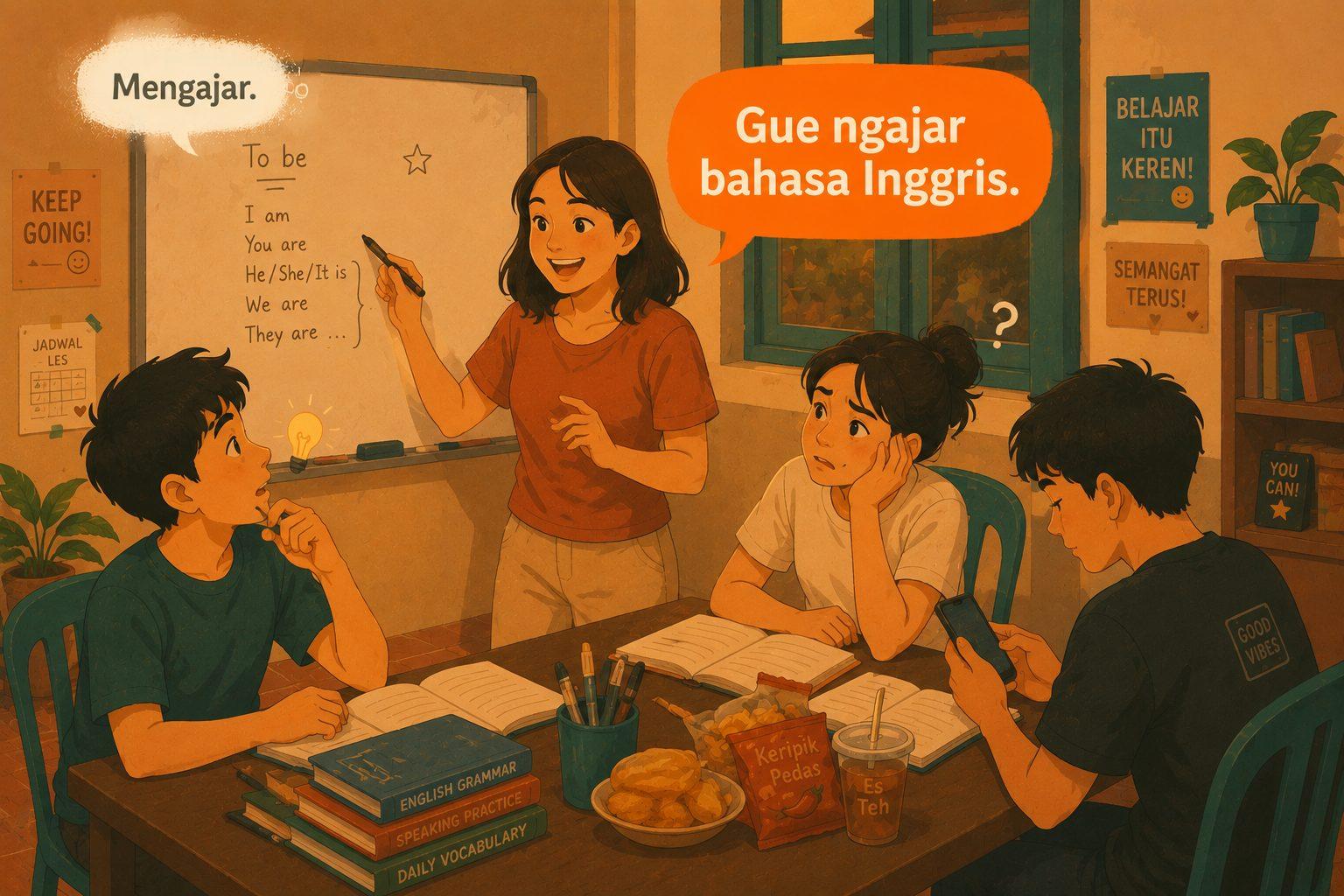
How to Say Mengajar in Casual Indonesian (Hint: It's Ngajar)
Learn how Indonesians actually say 'teach' in everyday conversation. Mengajar becomes ngajar, plus all the casual education vocab you need — from les privat to bimbel culture.

How to Say Memotong in Casual Indonesian: Just Say Motong
Nobody says memotong in real life. Learn how Indonesians actually say 'to cut' using motong, potong, and all the slang variations you'll hear daily on the streets.