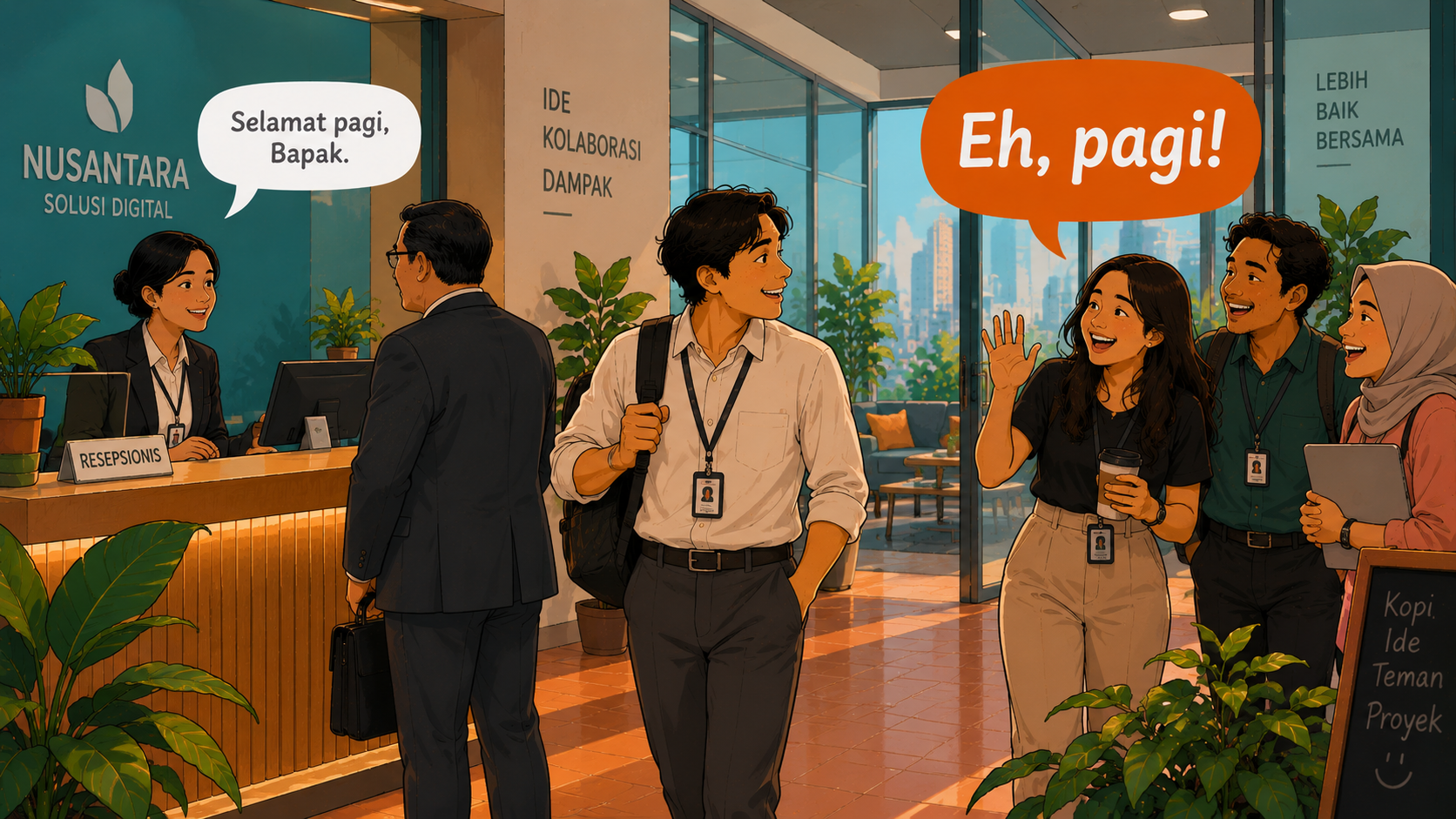
Indonesian Code-Switching: When Formal IS Actually Appropriate
OK so.. we've been telling you to ditch the textbook. Talk like a real person. Use gue, drop the -kan suffixes, stop saying saya to your friends.
All of that still stands.
But here's the thing. Formal Indonesian has its place. A very important place. And if you go full casual in the wrong situation.. you're going to have a bad time.
The real skill isn't "always be casual." It's reading the room and matching the register.
When Formal is Expected
Some situations are non-negotiable. You keep it formal. Period.
1. Job interviews and first business meetings. Saya, Anda, Bapak/Ibu. Proper verb forms. No slang. You can casualize later once rapport is built.. but that first impression matters. A lot.
2. Meeting someone's parents for the first time. This is huge in Indonesian culture. You use saya, you say Bapak and Ibu, you use formal verbs like berbicara instead of ngomong. You show respect. Always.
3. Government offices, police, hospitals. Dealing with officials? Keep it formal. Saya ingin bertanya.. (I'd like to ask..) not Gue mau nanya.. This isn't the time to flex your street Indonesian.
4. Religious contexts. Sermons, prayers, ceremonies. Formal Indonesian or even high Javanese/Sundanese depending on the region. Read the room here.. or rather, read the ruangan.
5. Public speaking and presentations. Formal events, speeches, conferences. Standard Indonesian. Clean grammar. No dong or sih sprinkled in.
6. Written formal contexts. Emails to your boss. Official letters. Academic papers. These have their own conventions and.. yeah. Keep it buttoned up.
The Gray Zone 🤔
This is where it gets interesting. And where most learners struggle.
New colleague at work. Start semi-formal. Watch how they talk. Mirror their register. If they say gue to you, that's your green light. If they stick with saya.. you stick with saya too.
Older person you see regularly. Like a neighbor. Start formal. Almost guaranteed they'll eventually say: "Gak usah formal" (don't need to be formal). That's your cue. They're giving you permission to relax.
A friend's parents. If they say "Panggil aja tante/om" (just call me auntie/uncle).. that's a signal. They're telling you the formal wall can come down a bit. Not all the way. But a bit.
The pattern here? Start formal. Wait for the signal. Then adjust.
The Constant Switch
Here's what blew my mind when I first noticed it. Indonesians code-switch constantly. Like.. mid-sentence constantly.
Formal with the boss. Casual with the colleague sitting next to them. Formal again when the boss walks by. Back to casual. All in the span of 30 seconds.
It's not fake. It's not performative. It's just.. how it works. Different relationships get different registers. And Indonesians navigate this without even thinking about it.
"Baik, Pak, saya akan selesaikan hari ini" (Yes sir, I'll finish it today) to the boss. Then turning to their desk mate: "Duh males banget sih" (Ugh I so don't want to). Same person. Same minute. Totally normal.
The Foreigner Advantage
Here's the good news. As a foreigner, you get a massive grace period.
Err on the side of slightly formal with new people. They'll appreciate the respect. And 9 times out of 10 they'll quickly tell you to relax. "Santai aja" (just be relaxed). "Gak usah kaku" (don't be stiff).
That moment? That's actually a bonding moment. They're welcoming you in. Telling you that you don't need the armor of formality with them.
But you had to put the armor on first to earn that invitation.
The Real Skill
So no.. we're not taking back everything we said about casual Indonesian. You still need it. Desperately.
But the real flex? Knowing both registers. And switching between them the way Indonesians do. Smoothly. Naturally. Based on who you're talking to and what the situation calls for.
That's fluency. Not just knowing the words.. but knowing which words belong where.
So what situations have caught you off guard? Where did you go too casual or too formal and felt that awkward oh no moment? 🙃
Keep learning
Related articles
How to Say 'Memakan' in Casual Indonesian (Makan)
Learn why nobody says memakan in real Indonesian conversation.. and how makan is way more than just 'to eat.'

Indonesian Greetings Ranked by Formality: From 'Selamat Pagi' to 'Woi'
A guide to Indonesian greetings from the most formal to the most casual. Learn when to use 'Selamat pagi' and when to just nod.
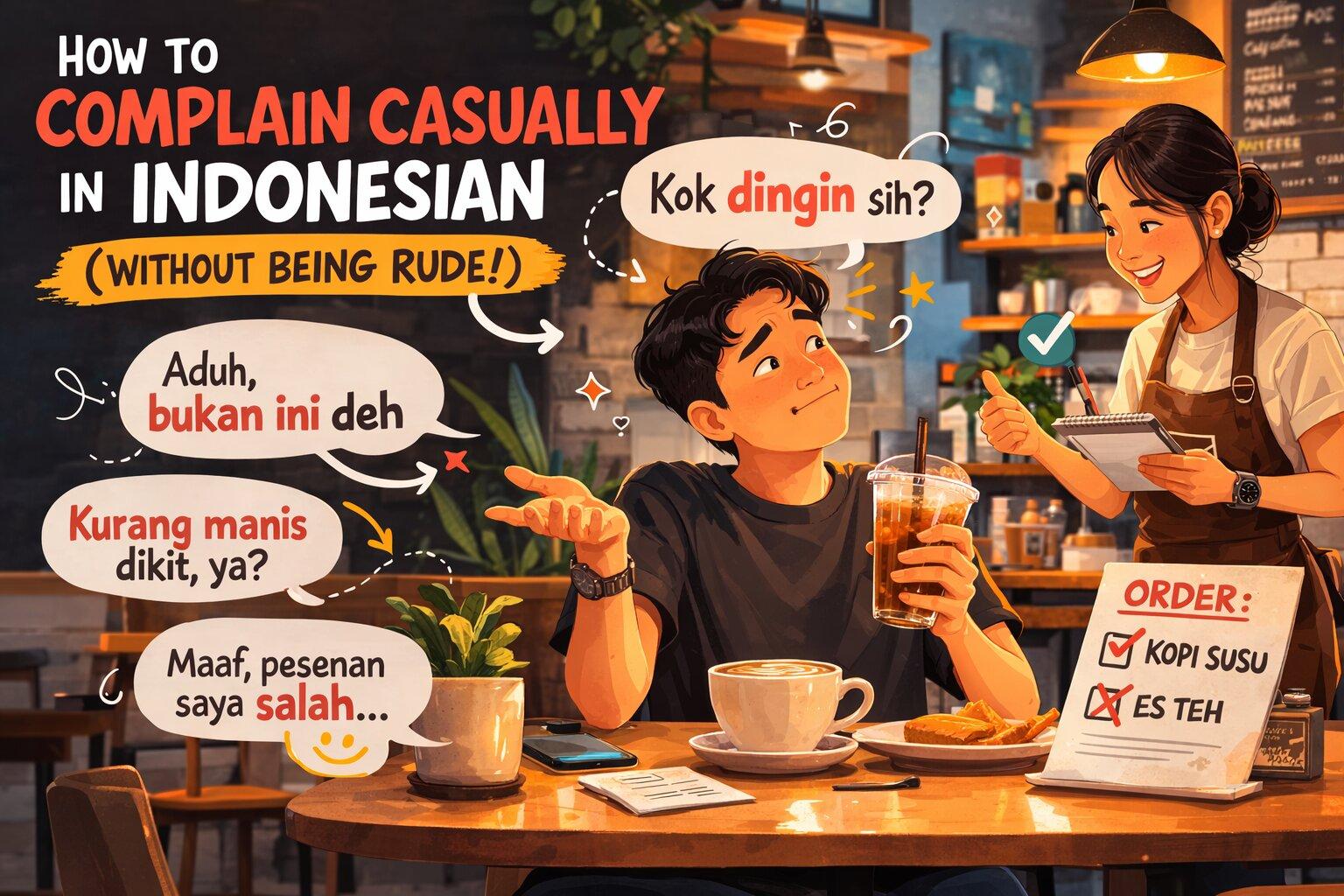
How to Complain Casually in Indonesian (Without Being Rude)
Learn the art of complaining in Indonesian the way locals do. Soft, indirect, and surprisingly effective.